
Diplomacy Meets Commerce: Türkiye and the United States Forge Ahead Toward a $100 Billion Trade Horizon
WASHINGTON — In a series of high-level discussions this week, Türkiye’s Trade Minister Ömer Bolat asserted that recent talks in the U.S. have significantly strengthened the shared commitment between Ankara and Washington to dramatically expand bilateral trade—potentially reshaping economic ties between two longstanding geopolitical partners.
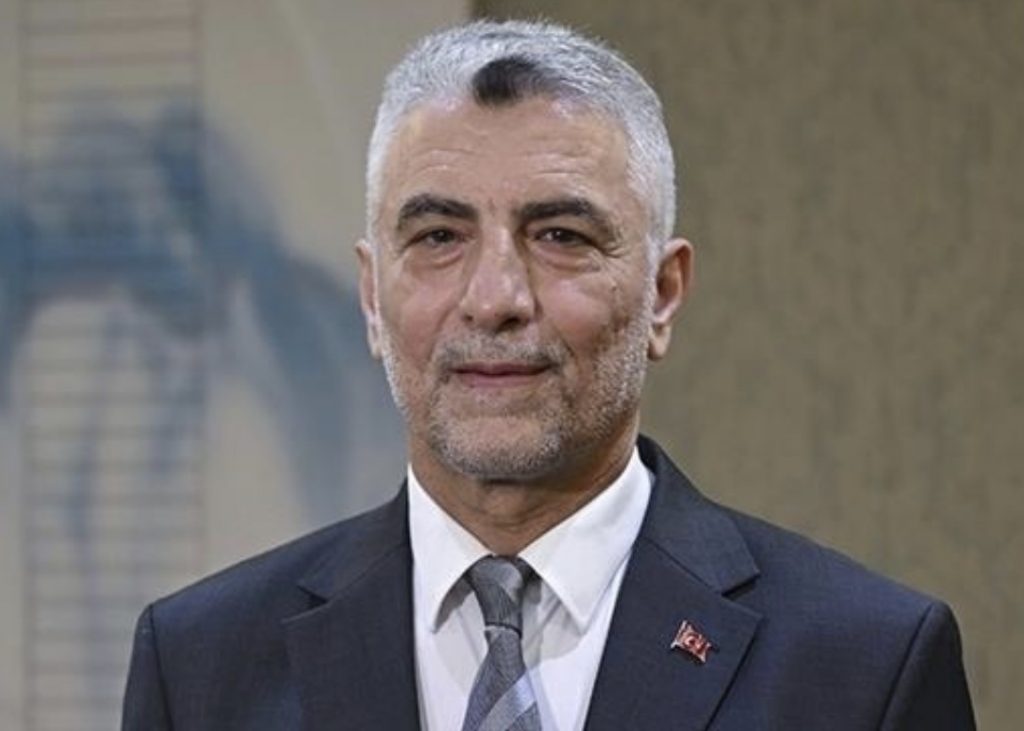
Against the backdrop of volatile global markets and ongoing tariff negotiations, Bolat’s Washington visit brought senior officials from both governments and the private sector to the table. In meetings with U.S. Trade Representative Ambassador Jamieson Greer and U.S. Secretary of Commerce Howard Lutnick, the conversations moved beyond technical tariff barriers to broader themes of economic cooperation, mutual investment, and strategic partnership.
“We believe that our meeting has strengthened our common will to reach $100 billion in trade,” Bolat said, underscoring Ankara’s intent to pursue a long-term, predictable, and mutually beneficial partnership with the United States. He emphasized that sustained economic collaboration would yield not only expanded commerce but also greater investment and jobs on both sides of the Atlantic.
Analysts note that the $100 billion target—a benchmark agreed to by leaders of both nations—serves as more than a numerical ambition. It reflects a broader strategic vision that seeks to deepen market access, diversify key supply chains, and integrate commercial ties across pivotal sectors such as energy, technology, and advanced manufacturing.
During the visit, Bolat also engaged with U.S. business leaders through the U.S. Chamber of Commerce, spotlighting Türkiye’s economic resilience—marked by steady growth across 21 consecutive quarters—and its appeal as a hub for foreign direct investment. The minister’s message was clear: Türkiye aspires to be not only a trading partner, but a gateway into Eurasian markets that complements U.S. commercial strategy worldwide.
Nevertheless, challenges persist. Ongoing U.S. tariff policies, including a baseline 10% tariff regime affecting multiple trading partners, have injected uncertainty into negotiations and underscored the need for more nuanced trade frameworks between the two economies. Still, both sides appear poised to intensify engagement on market access, investment facilitation, and regulatory alignment—efforts that could unlock the next phase of commercial ties.
For policymakers and business leaders alike, the fruits of these diplomatic and economic efforts will be watched closely. Should the $100 billion target be realized, it would signify a remarkable expansion from current bilateral trade figures and signal a deepening of the U.S.–Türkiye economic relationship at a time when global alliances are being recalibrated.
Source:
Anadolu Agency, Türkiye’s Trade Minister Says Talks in U.S. ‘Strengthened’ Path Toward $100B Trade Goal (Dec. 12–13, 2025) Anadolu Ajansı