
Turkey’s Bid to Rejoin F-35 Program Stumbles on Israeli Objections and Strategic Rift
January 2026
Ankara’s efforts to rejoin the United States-led F-35 fighter jet program have collided with a formidable obstacle: close cooperation between Washington and Jerusalem on advanced military technology, and Israel’s explicit opposition to equipping Turkey with the stealth aircraft.
Turkish President Recep Tayyip Erdoğan has repeatedly urged the United States to restore Turkey’s role in the F-35 Joint Strike Fighter program—a partnership Ankara once helped build and financially supported before its expulsion in 2019. At the time, the Trump administration removed Turkey from the program after it purchased a Russian S-400 air defense system, which Washington said posed a threat to the security of F-35 technology and interoperability with NATO systems.
But even if Ankara and Washington can resolve their disagreements over the S-400s and broader bilateral tensions, a more intractable barrier remains: Israel’s effective veto over the export of F-35 technology in the Middle East.
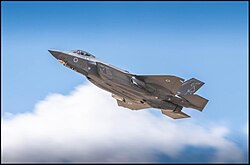
Under U.S. law, Washington is committed to maintaining Israel’s “Qualitative Military Edge” over potential adversaries—a legal and strategic obligation that has become central to discussions about future F-35 sales. Israeli officials have asserted that much of the stealth fighter’s sensitive technology incorporates Israeli-produced systems, making Jerusalem’s approval key to any export decisions.
Israel’s Deputy Foreign Minister Sharren Haskel recently underscored this position, telling foreign press that Israeli concerns go beyond technical risk: deteriorating bilateral ties with Turkey have deepened mistrust, particularly over Ankara’s support for groups such as Hamas and its vocal opposition to Israeli policies in Gaza.
That stance places Washington in a delicate position. While U.S. officials have indicated that reopening discussions with Ankara could improve strained U.S.–Turkey relations—including cooperation on F-16 modernization and broader defense ties—Israeli objections will complicate any bid to transfer ultra-sensitive technology to Ankara.
The contest over F-35 access also reflects larger strategic realignments in the Middle East. Turkey’s military cooperation with Russia, disagreements with NATO partners, and efforts to balance relations with both Moscow and Washington have put Ankara at odds with longstanding U.S. allies. Israel, which has invested heavily in its own F-35 fleet and integrated the jets into its regional deterrence strategy, views any potential expansion of advanced U.S. fighters to Turkey as a risk to its edge.
Despite these tensions, Turkish officials insist their country remains a committed NATO ally and argue that reinstating their participation in the F-35 program would benefit both alliances. President Erdoğan has repeatedly labeled his country’s removal as unjust and raised the issue directly with U.S. leadership.
But for the foreseeable future, Israel’s objections make Ankara’s pathway back into the F-35 fold highly uncertain—an enduring symbol of how regional rivalries and shifting strategic priorities can reshape alliances in the 21st century.
Israel’s F-35 Veto on Turkey Is Strategic, Not Personal
By a Contributing Columnist
January 2026
As Turkey seeks to rejoin the U.S.-led F-35 fighter program it once helped build—and paid into—one truth has emerged clearly: the barriers are not only technical or bureaucratic, but deeply geopolitical.
Turkish President Recep Tayyip Erdoğan argues that his country’s removal from the F-35 Joint Strike Fighter program in 2019 was unfair and has repeatedly pressed Washington to reverse course. Ankara’s exclusion followed its acquisition of Russia’s S-400 air defense system, which Pentagon officials said posed an unacceptable threat to the F-35’s stealth and sensor security.
But resolving that dispute alone won’t open the door for Turkey’s return. Israel has positioned itself as a decisive player in determining who gets access to the world’s most advanced fighter jet outside the U.S. military—a position few outside Jerusalem fully appreciate.
Under U.S. law, Washington is bound to protect Israel’s qualitative military edge (QME) in the Middle East. The F-35 is not just another aircraft; it is the lynchpin of Israeli airpower and deterrence strategy in a volatile region. Much of the jet’s sophisticated sensor suite and networked systems incorporate components developed in cooperation with, or specialized for, Israeli defense needs, giving Tel Aviv a proprietary stake in its dissemination.
Israel’s reluctance to countenance a future where Ankara—whose ties with Jerusalem have deteriorated in recent years—is granted access to that technology is neither surprising nor vindictive. It is a calculated decision rooted in strategic calculus: Turkey’s unpredictable policy orientations, its past cooperation with Russia, and its vocal support for groups hostile to Israel would inject instability into the region’s military balance.
Critics of Israel’s stance have called it protectionist. But the reality is that the very concept of “trusted ally” has evolvedsince Turkey’s F-35 participation began nearly a quarter century ago. The alliance that once bound Ankara, Washington and Jerusalem in a common defense architecture is fraying under the pressures of conflicting interests—from Syria to the Eastern Mediterranean, to North Africa and beyond.
Moreover, giving Turkey access to the F-35’s most advanced technology risks eroding the very edge that U.S. lawmakers have pledged to safeguard for Israel. In an era of shifting allegiances, an F-35 in Turkish hands could carry intelligence and operational implications that extend far beyond simple weapons transfers.
For Washington, the challenge is credibility. If the U.S. signal to allies is that advanced systems will be distributed based on fleeting political convenience rather than long-term strategic alignment, the foundations of America’s defense partnerships will weaken.
Turkey can and should remain a NATO partner. But the path to re-entry in elite defense programs such as the F-35 must run through demonstrated commitment to allied security norms—not superficial complaints about fairness.
In this case, Israel’s veto isn’t a spoiler’s tantrum; it is a sober reminder that alliance trust must be earned, not assumedin an increasingly complex global order.