
Türkiye’s Delicate Stand on the U.S. Capture of Maduro: Sovereignty, Diplomacy and Strategic Ambiguity
January 2026
ANKARA — As the United States executed an audacious military operation in early January to capture Venezuelan President Nicolás Maduro and fly him to New York to face federal charges, world capitals scrambled to define their response. Among them, Türkiye’s reaction has been carefully calibrated, reflecting Ankara’s nuanced foreign policy — one that seeks to balance principles of sovereignty with pragmatic relations with Washington.
While several governments issued sharp condemnations of the U.S. raid as a violation of Venezuelan sovereignty, Türkiye’s public statements avoided outright confrontation with Washington. Early comments from the Turkish Foreign Ministry framed the crisis in broad diplomatic terms, calling for restraint, respect for Venezuela’s stability and an approach anchored in international law.
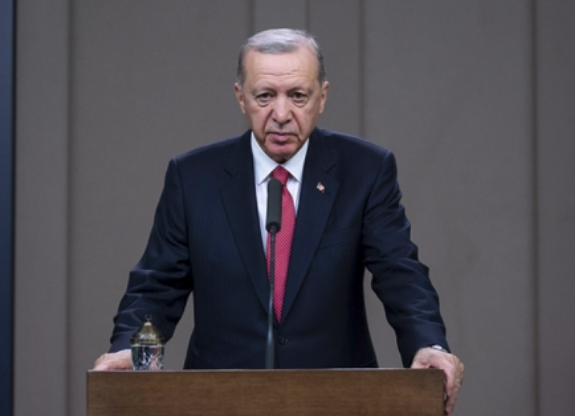
President Recep Tayyip Erdoğan eventually spoke directly about the situation after days of relative silence — a pause that domestic critics interpreted as strategic caution. In a phone call with U.S. President Donald Trump, Erdoğan relayed Ankara’s concerns about the military operation, emphasizing that Venezuela “must not be dragged into instability.” He stressed the importance of upholding sovereignty and the norms of international law, even as he reaffirmed that Türkiye would continue to support the “friendly people of Venezuela.”
Erdoğan’s comments mark a subtle but clear diplomatic message: Türkiye disapproves of actions perceived as unilateral and destabilizing, yet it seeks to preserve its relationship with the United States — a crucial military and economic partner with which Ankara has cultivated a notably warmer rapport in recent years.
A Principled Appeal for Law and Stability
In public remarks following a Cabinet meeting, Erdoğan framed his remarks in legal and geopolitical terms. He stated that Türkiye does not endorse actions that “violate international law” and underscored that respect for sovereignty is a cornerstone of the country’s foreign policy. By focusing on principles rather than direct criticism of Washington, Ankara maintains its posture as an independent middle power that champions legal norms while avoiding a rupture in bilateral ties.
Türkiye’s diplomats and officials have consistently pushed back against military interventions in sovereign nations, whether in Latin America or the Middle East. This stance aligns with Ankara’s broader worldview: strong opposition to foreign intervention, particularly by great powers, and advocacy for diplomatic solutions to international disputes.
Domestic Debate and Strategic Ambiguity
Inside Türkiye, the government’s response has generated domestic debate. Opposition figures criticized what they describe as President Erdoğan’s muted reaction in the immediate aftermath of the U.S. operation, suggesting that Ankara’s reluctance to issue a more forceful condemnation reflects a desire to avoid conflict with Washington. Some critics characterized the silence as demonstrating the limits of Turkey’s strategic autonomy when pitted against a superpower.
Analysts note that this episode highlights a broader tension in Turkish foreign policy: the struggle between ideological affinity with leaders like Maduro — with whom Erdoğan cultivated warm personal ties over the past decade — and the realities of a relationship with the United States that remains central to Turkish security and economic interests.
The Broader Regional Context
Türkiye’s cautious diplomacy must also be understood in the context of a sharply polarized international response to the U.S. operation. Latin American governments from Brazil to Mexico condemned the intervention as a violation of sovereignty, while European and global leaders emphasized adherence to international law. Countries such as Russia and China similarly criticized the U.S. action as a form of neo-colonial interference — commentary Ankara has echoed in principle, even if it chose not to adopt the strongest possible language of condemnation.
At the same time, Ankara was navigating its own diplomatic concerns. In phone conversations with President Trump, Erdoğan raised not only Venezuela but broader regional issues, underscoring the complex agenda between the two governments that extends beyond this single crisis.
Looking Ahead: Turkish Diplomacy in a Shifting World
Türkiye’s handling of the Venezuelan crisis underscores a broader pattern in its foreign policy: expressed support for sovereignty and nonintervention, combined with a pragmatic approach toward major powers. Erdoğan’s government appears intent on positioning Ankara as a respected voice for diplomatic solutions — even in crises sparked by its closest strategic partners.
For now, Ankara’s stance is neither a full condemnation of the United States nor an embrace of unilateral action. It is a diplomatic balancing act, one that reflects both Türkiye’s principled rhetoric on international law and its desire to remain a central actor on the global stage — capable of voicing concerns without derailing strategic relationships.
As the situation in Venezuela continues to evolve, Türkiye’s voice may yet play a role in advocating for negotiated transitions and caution against further escalation, illustrating once again that nations today must navigate principle and pragmatism in an increasingly complex world
Source: