
As Aleppo Flashes Again, U.S. Foreign Policy Faces a Strategic Crossroads With Türkiye
January 2026
ANKARA — Rising violence in Syria’s Aleppo has thrust an enduring question back onto Washington’s foreign policy agenda: how should the United States shape its strategy in a conflict where its NATO ally Türkiye’s interests increasingly diverge from its own?
Turkish officials signaled last week that Ankara was ready to “provide support for the immediate end of the clashes in Aleppo and the establishment of peace and stability” if Damascus requested it — a statement that illustrates both Türkiye’s ambitions and the diplomatic tightrope that Washington must now walk.
The renewed fighting between Syrian government forces and Kurdish-led fighters has once again underscored deep fractures in Syria’s post-Assad landscape and placed American and Turkish policy priorities in sharp relief.
Turkish and American Priorities at Odds
For Washington, Syria’s primary goals have evolved since the defeat of the Islamic State: preventing a resurgence of jihadist extremism, securing the release and detention of remaining ISIS fighters, and encouraging political transition in a fractured country. U.S. forces have carved out a limited presence in eastern and northern Syria geared more toward stabilization and risk containment than large-scale counterinsurgency.
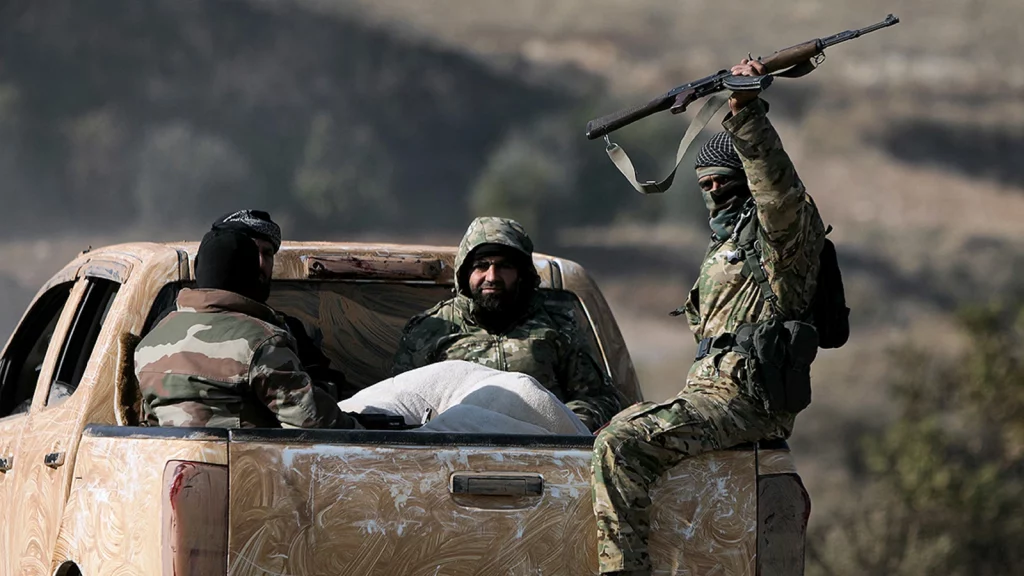
But Ankara’s priorities are different. Since the beginning of Syria’s civil war in 2011, Türkiye has focused on curbing perceived Kurdish autonomy along its border and preventing the emergence of an autonomous Kurdish enclave that it sees as linked to the Kurdistan Workers’ Party (PKK) — an armed group Ankara considers a terrorist organization. Washington’s support for the Kurdish-led Syrian Democratic Forces (SDF) during the fight against ISIS has long been a source of tension between the once-close partners.
The Aleppo clashes highlight this enduring friction: Ankara’s statements signal willingness to support stability, but implicitly — and at times explicitly — along the lines of its own security concerns. That may include countering SDF influence and reinforcing a unified Syrian state under Damascus, a position that aligns uneasily with U.S. support for local Kurdish governance structures.
Challenges for U.S. Strategy
The Biden and Trump administrations alike have faced difficult choices in Syria. A fragile settlement after the fall of Bashar al-Assad in December 2024 catalyzed a new phase of diplomacy, but underlying tensions remain unresolved. A key U.S. objective has been to prevent large-scale conflict from spiraling again while ensuring that ISIS remains contained — a task complicated by fractious local dynamics and the presence of multiple outside powers.
The Aleppo flare-up also exposes the limitations of Washington’s de-escalation efforts. U.S. officials have acted as mediators in attempts to bring the SDF and Damascus to negotiations — yet those talks have repeatedly stalled, illustrating how U.S. diplomatic leverage is constrained by conflicting local stakes.
For Washington, another challenge is balancing support for Kurdish forces with alliance obligations to Türkiye. The SDF’s vulnerabilities revealed in Aleppo may offer an opportunity for renewed negotiations, but they also create space for Ankara to assert influence and expand its strategic reach in northern Syria — a dynamic that could widen the U.S.–Turkey divide.
NATO, Regional Power Plays and Broader Implications
The crisis in Aleppo shines a light on the broader strategic misalignment between the United States and its NATO ally. The two countries have cooperated on counterterrorism and defense posture, but diverging priorities in Syria — and disagreements over Kurdish forces, regional influence, and security objectives — have strained ties. Analysts have identified this divergence as one of the most persistent sources of discord in U.S.–Türkiye relations for years.
At the same time, Washington must account for other regional players: Russia and Iran, which support the Syrian government; Israel, which remains wary of Kurdish empowerment; and Gulf states, which seek influence through partnerships with both Ankara and Washington. U.S. foreign policy in the Middle East is no longer defined solely by bilateral alliances but by fluid multilateral pressures and competing interests.
The Human Cost and Strategic Dilemmas
Aleppo’s resurgence of combat has displaced thousands of civilians and sparked fresh humanitarian tragedy, underscoring the limits of external military and diplomatic efforts in shaping outcomes on the ground. Ankara’s geographic proximity and historical involvement give it outsized influence in northern Syria — and its willingness to engage, if carefully calibrated, could be a stabilizing force. But Washington must weigh that possibility against the risk that Turkish interventions may deepen divisions or empower factions at odds with broader U.S. goals.
For U.S. policymakers, the Syrian conflict poses a stark choice: rely on gradual diplomatic mediation that acknowledges regional stakes — including Türkiye’s security concerns — or risk further marginalization by maintaining rigid positions that few local actors are willing to accept.
A New Phase of Engagement?
The way forward for U.S. foreign policy may involve a more nuanced partnership with Türkiye, one that integrates Ankara’s strategic concerns with American commitments to stabilization, human security, and the containment of extremist violence. It might require Washington to engage with Damascus, reluctantly if necessary, while using its diplomatic heft to push for inclusive governance structures that address Kurdish, Arab and minority rights.
Such an approach would not satisfy all stakeholders, but it could offer the most promising path toward reducing violence and preventing further fragmentation of Syria — while preserving key U.S. interests and alliances in a highly volatile region.
As Aleppo’s battle lines shift once again and Türkiye signals its willingness to play a more active role, Washington’s response will likely define American influence in the Levant for years to come.