
Ankara Urges Restraint as Washington Weighs Iran Options: What Turkish Americans Need to Know
As protests rock Iran and President Trump considers military action, Türkiye emerges as a crucial voice for regional stability—with implications for US-Turkish relations
January 16, 2026
WASHINGTON — As anti-government protests continue to convulse Iran and President Donald Trump weighs military options, Türkiye has emerged as one of the most vocal opponents of foreign intervention, warning that any external military action could trigger catastrophic regional instability that would reverberate far beyond Iran’s borders.
The Turkish government’s position, articulated forcefully by ruling Justice and Development Party (AKP) spokesperson Ömer Çelik and Foreign Minister Hakan Fidan, represents a delicate balancing act for Ankara: acknowledging the legitimate grievances of Iranian protesters while firmly opposing any U.S. or Israeli military strikes that could destabilize Türkiye’s eastern neighbor and unleash a cascade of consequences across the Middle East.
For Turkish Americans watching these developments unfold, the crisis offers a window into Türkiye’s evolving role as a regional power broker—and the complex dynamics shaping the relationship between Washington and Ankara.
Türkiye’s Warning: “Even Worse Outcomes”
Speaking after a party meeting chaired by President Recep Tayyip Erdoğan on January 12, Çelik acknowledged the depth of Iran’s domestic problems but issued a stark warning against outside intervention.
“The solution to these problems must come through the Iranian state’s own national will,” Çelik told reporters. “Any external intervention would lead to even worse outcomes.” The AKP spokesperson went further, arguing that Israel was seeking to instrumentalize the unrest to push regime change in Iran. “We see and anticipate that interventions carried out as part of Israel’s objectives would lead to bigger crises and deeper turmoil,” he said.
Foreign Minister Fidan echoed these concerns in an interview with Turkey’s public broadcaster TRT, framing any attempt to push the unrest toward regime change as “a geopolitical project that would ultimately serve the regional interests of Israel amid escalated tensions between Ankara and the Jewish state.”
The Stakes for Türkiye
Türkiye’s opposition to military intervention in Iran is rooted in hard-headed calculations about national security and regional stability. While predominantly Sunni Türkiye and majority-Shiite Iran have long been geopolitical rivals—competing for influence in Syria, Iraq, and across the Middle East—Ankara is deeply wary that any prolonged instability or power vacuum across its eastern border could trigger new waves of displacement into Türkiye.
The country already hosts the world’s largest refugee population, including nearly 3 million registered Syrians—a politically sensitive issue that has fueled domestic tensions and shaped Turkish politics for over a decade.
Beyond the refugee concern, Türkiye shares a more than 530-kilometer (330-mile) border with Iran, with three active crossings that make Iran a key gateway for trade and transit. Bilateral trade exceeded $5.6 billion in 2024, according to official Turkish statistics, with Türkiye exporting machinery, plastics, chemicals, agricultural products, and metal ores to Iran while importing natural gas, metal products, and farm goods.
Perhaps most significantly, Türkiye is concerned about the potential for Iran to unravel along ethnic lines. Iran has a Kurdish population of around eight million living near the Turkish border, and Ankara fears that chaos in Iran could embolden Kurdish militant groups like the Kurdistan Free Life Party (PJAK)—the Iranian arm of the Kurdistan Workers’ Party (PKK), which has waged a decades-long insurgency against the Turkish state.
“Despite the underlying tension and competition in Iran–Turkey relations, preserving Iran’s territorial integrity and stability is a priority for Turkey,” Mustafa Caner, an analyst on Iran and the region affiliated with the SETA think tank, told Middle East Eye.
Diplomatic Offensive: Türkiye as Regional Mediator
As tensions mounted in mid-January, Türkiye joined Saudi Arabia, Qatar, Oman, and Egypt in an intensive diplomatic campaign urging President Trump not to launch airstrikes against Iran. The warnings from these longstanding U.S. allies appear to have helped persuade Trump to hold off—at least temporarily—on military action.
Saudi Arabia even denied the United States use of its airspace to mount any potential attacks, underscoring the depth of regional opposition to military intervention.
Foreign Minister Fidan has been particularly active, calling for dialogue and positioning Türkiye as a potential facilitatorfor renewed engagement between Iran and the West.
“What we’re trying to do is to support an agreement with Iran that benefits both sides, primarily the Americans, because the stability of the region depends on it,” Fidan told Reuters.
He added that Iran needs to pursue “very genuine reconciliation and cooperation” with its regional neighbors, positioning Türkiye as a bridge between Tehran and the West.
“Hopefully, the United States and Iran will resolve this issue among themselves—whether through mediators, other actors, or direct dialogue,” Fidan said. “We are closely following these developments.”
The Protests and the Death Toll
The protests that have convulsed Iran since late December began as demonstrations against the country’s deepening economic crisis but have since grown into one of the largest waves of unrest in years. The Iranian rial dropped to about 1.4 million to the U.S. dollar, further harming an already beleaguered economy.
While no official figures are available from the Iranian government, the U.S.-based Human Rights Activists News Agency (HRANA) reported that at least 2,403 protesters and 147 security personnel have been killed, with over 18,000 arrested. The Norway-based Iran Human Rights group has cited unverified reports suggesting the death toll could be as high as 3,400.
The Iranian government has imposed a near-total internet blackout for over a week, making it nearly impossible for Iranians to communicate with the outside world and fueling concerns that the true death toll could be much higher.
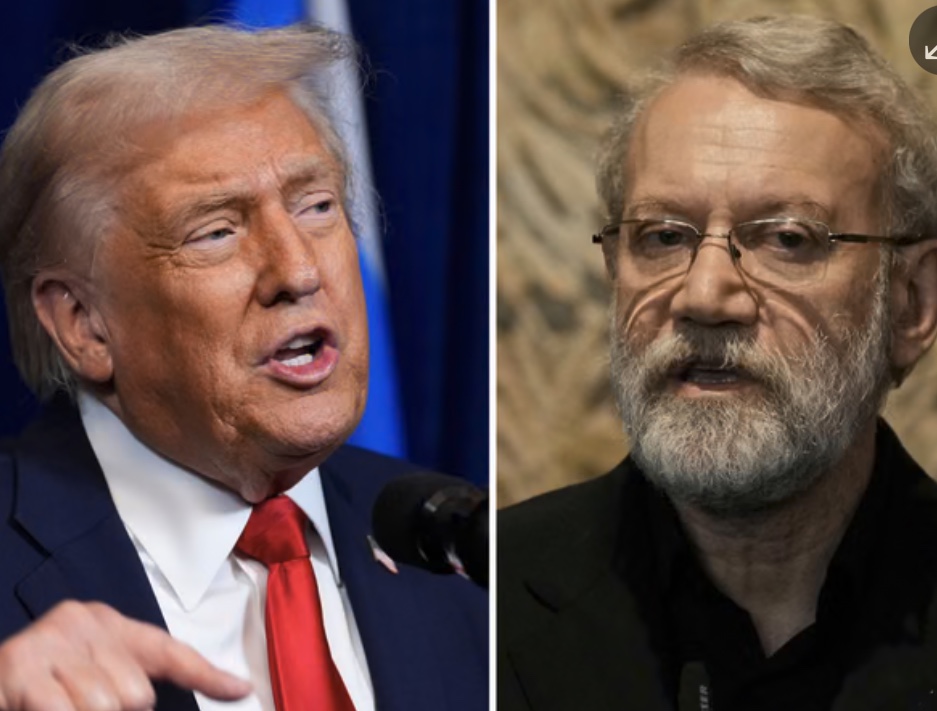
President Trump has repeatedly threatened to intervene on behalf of protesters, declaring on social media that the United States was “locked and loaded and ready to go” and urging Iranians to “keep protesting” because “help is on the way.”
Implications for US-Türkiye Relations
The Iran crisis has highlighted both the enduring importance of the U.S.-Turkish alliance and the significant policy differences that have emerged in recent years.
As a NATO member since 1952 and home to key U.S. military installations, Türkiye remains a crucial strategic partner for Washington. Yet under President Erdoğan, Ankara has pursued what it calls “strategic autonomy”—maintaining its Western alliances while developing pragmatic relationships with Russia, China, and Iran.
This approach has sometimes put Türkiye at odds with U.S. policy. Ankara’s purchase of Russian S-400 air defense systems led to Türkiye’s expulsion from the F-35 fighter jet program and U.S. sanctions. Türkiye’s military operations against Kurdish forces in Syria—groups that the United States has supported in the fight against ISIS—have been another source of friction.
Yet the current crisis also demonstrates areas of potential convergence. Both Washington and Ankara share an interest in regional stability, even if they disagree on the means to achieve it. Türkiye’s diplomatic efforts to de-escalate tensions and facilitate dialogue between Iran and the West could serve U.S. interests by preventing a wider regional conflict that would disrupt energy markets, trigger refugee flows, and potentially draw in other powers.
For Turkish Americans, the crisis underscores Türkiye’s complex role in the Middle East—neither fully aligned with the West nor with its regional rivals, but pursuing an independent course shaped by its unique geography, history, and interests.
What Comes Next?
As of mid-January, the situation remains fluid. President Trump has indicated that Iran has told him “killing has stopped,”though the veracity of this claim remains unclear. The United States has moved a carrier strike group to the Middle Eastand temporarily withdrew some personnel from key bases in the region as a precautionary measure.
Turkish officials continue to monitor the situation closely. “Iran really needs to make a genuine effort” at reconciliation with its neighbors and the West, Foreign Minister Fidan said. “We need to be able to reach a common ground where everyone’s truths converge.”
He added that President Erdoğan could play a role in helping Iran recalibrate its ties with the region—a signal that Ankara sees an opportunity to enhance its influence as a regional mediator.
For now, Türkiye’s message is clear: while it acknowledges the legitimate grievances driving protests in Iran, it firmly opposes any external military intervention that could destabilize the region and threaten Turkish national security interests.
As the crisis continues to unfold, Turkish Americans should watch closely how Ankara navigates these competing pressures—and what it means for the future of U.S.-Turkish relations in an increasingly multipolar Middle East.
Sources
Al-Monitor: “Turkey warns against foreign intervention in Iran as Trump mulls options”
The Guardian: “Iran officials warn Trump of red line after his threat to ‘rescue’ protesters”
The Guardian: “Gulf states and Turkey warned Trump strikes on Iran could lead to major conflict”
Reuters: “Turkey says it opposes military intervention in Iran, priority is avoiding destabilisation”
Reuters: “Turkey cautions against foreign intervention in Iran”
Reuters: “Iran warns of retaliation if Trump strikes, US withdraws some personnel from bases”
Middle East Eye: “How Turkey sees the protests in Iran”
The New York Times: “Many Fiery Remarks, Little Clarity on What’s Next at Security Council Meeting on Iran”
The Washington Times: “For one U.S. ally and NATO member, regime change in Iran spells disaster”