
Fraud, Ethnicity and a Political Fight in Los Angeles
CMS chief Mehmet Oz says Los Angeles is a hub of Medicare fraud. Governor Gavin Newsom calls his claims “baseless and racist,” as Armenian and Turkish‑American groups clash over what is really at stake.
When Dr. Mehmet Oz, the physician‑turned‑television personality who now runs the federal Centers for Medicare and Medicaid Services, filmed a short video on his phone while driving through Los Angeles this month, he probably expected political controversy. He may not have anticipated igniting an interstate civil‑rights battle and a bitter dispute between two influential diaspora communities.
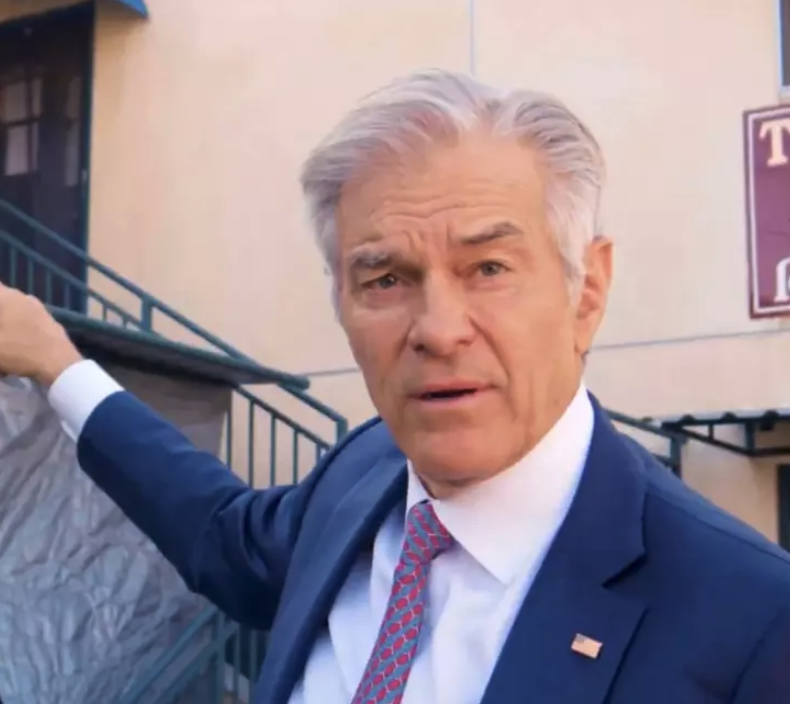
In a series of videos shot on a cell phone and posted to his social‑media accounts and official CMS channels, Dr. Oz is driven through the Van Nuys neighborhood of Los Angeles, pointing out what he describes as a dense cluster of hospice and home‑health agencies. He claims that Los Angeles is the “epicenter” of health‑care fraud in the United States and alleges that “roughly $3.5 billion of fraud” is taking place in hospice and home‑care programs in the city, “run, quite a bit of it, by the Russian‑Armenian mafia.”[^2][^4]
At one point, the CMS administrator steps out of the car and records himself standing under the sign of Sherman Way Marketplace, a family‑run Armenian bakery and grocery. Gesturing toward the Armenian‑language lettering above him, he tells the camera, “You notice the lettering and language behind me is of that dialect,” adding that the scene “highlights the fact that this is an organized crime mafia deal.”[^3][^8]
The videos were filmed in and around a small commercial corridor of Van Nuys in the San Fernando Valley, on and near Sherman Way and Van Nuys Boulevard, an area that mixes medical offices, small shops and Armenian‑owned businesses. Local coverage has identified the bakery in the background as Sherman Way Marketplace in Van Nuys, whose owner later complained of a sharp drop in business after the footage went viral.[^3][^8]
Newsom pushes back
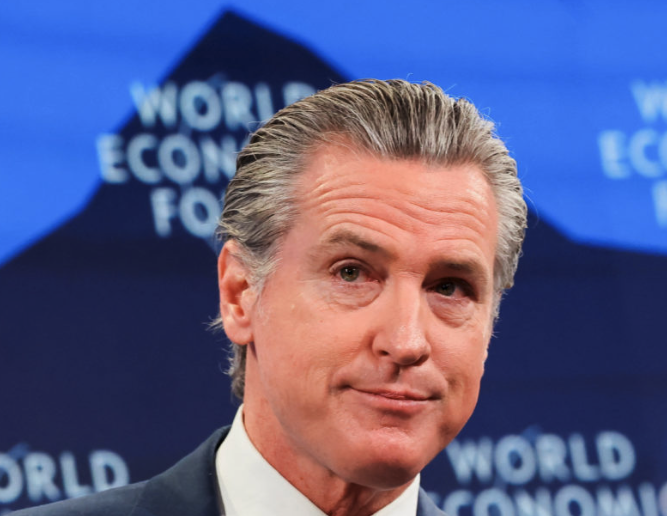
California Governor Gavin Newsom, a Democrat and frequent antagonist of the Trump administration, responded with unusual speed and force.
Within days of the video’s release, Mr. Newsom announced that his office had filed a civil‑rights complaint with the U.S. Department of Health and Human Services, accusing Dr. Oz of discrimination against Armenian‑Americans. The complaint argues that he “spewed baseless and racially charged allegations” that could deter people in the targeted community from seeking hospice or home‑care services, and that the publicity had “already caused real‑world harm” by depressing business at the bakery featured in the video.[^1][^3][^6]
“Our office is reviewing reports that Dr. Mehmet Oz targeted the Armenian American community in Southern California recently — making racially charged claims of fraud outside Armenian‑owned businesses, including a popular bakery,” Mr. Newsom’s press office wrote on X. “Any and all acts of hate have no place in California.”[^3][^8]
Newsom aides point out that California itself has been investigating hospice‑related fraud for years. Following a 2020 Los Angeles Times exposé on abuses in the industry, the state revoked more than 280 hospice licenses and imposed a moratorium on new licenses beginning in 2022, while the Department of Justice brought 109 criminal cases and 24 civil suits involving hospice fraud.[^2] From Sacramento’s perspective, Dr. Oz is taking credit for an enforcement effort the state launched first — and, in the process, unfairly smearing an ethnic community.
Armenian groups see profiling
Armenian‑American organizations have reacted with anger and alarm. The Armenian National Committee of America and the Armenian Bar Association argue that Dr. Oz’s emphasis on Armenian script and his reference to a “Russian Armenian mafia” amount to ethnic profiling that revives “easy stereotypes” and ignores the difference between documented criminal organizations and ordinary families.[^2][^6]
“This isn’t the first time he’s picked on the Armenians,” Garen Jinbachian of the Armenian National Congress in Southern California told ABC7, citing Dr. Oz’s “close ties” to the Turkish government.[^8] In community statements, activists have linked the controversy to the unresolved trauma of the Armenian genocide and longstanding tensions between Armenia and Turkey.
Movses Bislamyan, owner of Sherman Way Marketplace, told ABC7 that he woke up to find his storefront appearing on national news as a symbol of organized crime. “Recording my signs, my location, and talking about some kind of fraud going on here — we have nothing to do with it,” he said. “There is no Armenian mafia going on here. We’re just hard‑working businessmen.”[^3][^8] He estimates that customer traffic fell by around 30 percent in a single day after the video began circulating.[^3][^8]
CMS stands by its fraud focus
Dr. Oz and CMS have not publicly released the full evidentiary record behind his $3.5‑billion estimate or the specific list of “42 hospices” he says operate within a four‑block radius in Van Nuys.[^2][^4] However, federal and state data do show an abnormal concentration of hospice licenses in parts of Los Angeles County, including a corridor along Victory Boulevard in the San Fernando Valley.[^2]
The administration has framed the Los Angeles trip as part of a broader anti‑fraud campaign targeting what it says is widespread misuse of federal funds in Democratic‑led states, including Minnesota and California.[^1][^5] After Mr. Newsom’s complaint was announced, Dr. Oz responded on X that “If there were a real defense for California’s fraud crisis, we’d hear it. CMS and law enforcement will keep doing the actual work: going after fraudsters, period.”[^2][^4]
Supportive conservative outlets argue that Mr. Newsom is more interested in protecting political constituencies than in confronting fraud. Blaze Media, for instance, praised Dr. Oz for “exposing alleged government funding fraud” and accused the governor of opening an investigation into “racially charged” claims instead of the underlying fraud itself.[^2]
Turkish‑American groups warn against “identity vetoes”
The uproar has also drawn in Turkish‑American organizations, who see in Mr. Newsom’s response a different danger: the suggestion that certain communities should be insulated from law‑enforcement scrutiny because of their ethnicity or political influence.
The Assembly of Turkish American Associations (ATAA) — in a statement you provided that has also been circulated publicly — said it was “deeply concerning” that the governor had characterized CMS’s enforcement work as “racially charged.” The group stressed that investigations into large‑scale healthcare fraud “are matters of fiscal responsibility and legal accountability, not ethnic identity,” and that criminal conduct by specific individuals “must never be conflated with an entire community.”
ATAA warned that attempts to cast anti‑fraud enforcement as an attack on Armenians risk “inappropriately invoking such allegations to cast aspersions on the Turkish‑American community or its public servants,” and could undermine public trust in federal oversight. The statement calls on officials to reject “narratives that invert reality by portraying those combating fraud as villains, while allowing those responsible for misusing public resources to shield themselves behind claims of discrimination.”
Turkish‑American advocates emphasize that Medicare and Medicaid fraud is fundamentally about taxpayer money — “my money, your money,” as one activist put it — and about harm to vulnerable patients, many of whom are elderly, disabled or low‑income. They argue that fair enforcement must follow the evidence wherever it leads, whether against Armenian, Turkish, Russian, or any other individuals, and that identity politics should not become a veto power over federal investigations.
A broader test of enforcement and identity
The standoff between Dr. Oz and Governor Newsom may ultimately be resolved in the relatively quiet fora of federal civil‑rights offices and oversight hearings. But it highlights a larger dilemma for an increasingly diverse United States: how to speak honestly about the demographics of certain criminal networks without criminalizing entire communities — and how to ensure that legitimate enforcement is not chilled by accusations of bias, nor that prejudice is excused as mere “data‑driven” policing.
Los Angeles County’s hospice sector clearly has a fraud problem, as both state data and federal investigations attest.[^2] Armenian‑Americans clearly have reason to resent being painted as a monolithic “mafia” and to fear that rhetoric from high‑ranking officials could fuel harassment or economic retaliation.[^2][^3][^8] And federal officials, whether Turkish‑American or otherwise, clearly have a duty to safeguard programs like Medicare and Medicaid for the patients who depend on them.
For Turkish‑American readers of TCUSAPAC, one question now looms largest: Can the United States confront complex, often transnational fraud schemes without allowing any lobby, ethnic or otherwise, to place entire lines of inquiry off‑limits?
How HHS handles California’s complaint — and how both sides choose their words in the months ahead — will help determine the answer.
Sources Cited
Dr. Oz’s video claims and Newsom’s civil‑rights complaint:
– PBS NewsHour
– Los Angeles Times
– The GuardianDetails of the Van Nuys filming location, bakery identification, and business impact:
– ABC7 Los Angeles – initial review of the video and location
– ABC7 Los Angeles – civil‑rights complaint and 30% drop in businessConservative and national coverage of the feud, including Oz’s social‑media responses:
– Blaze Media
– NewserBackground on hospice fraud in California and state enforcement actions:
– Los Angeles Times investigation and follow‑ups
– PBS NewsHour