
Turkey, Iran, and the Caucasus: The Real Story Behind Calls to ‘Keep the Turks Out
In the complex geopolitics of the Middle East and the South Caucasus, few relationships are as historically layered as the one between Turkey and Iran. From centuries of imperial rivalry to modern strategic competition, Ankara and Tehran have long navigated a mix of cooperation, suspicion, and quiet rivalry.
A recent commentary titled “Keep the Turks Out of Iran,” published by the Middle East Forum, argues that Turkey is seeking to expand influence among ethnic Azeris inside Iran and potentially create a buffer zone along the border. The article claims Ankara has historically encouraged ethnic separatism and may attempt to leverage regional instability to expand its reach.
Yet a broader examination of regional dynamics suggests the reality is more complicated—and far less dramatic than some analysts portray.
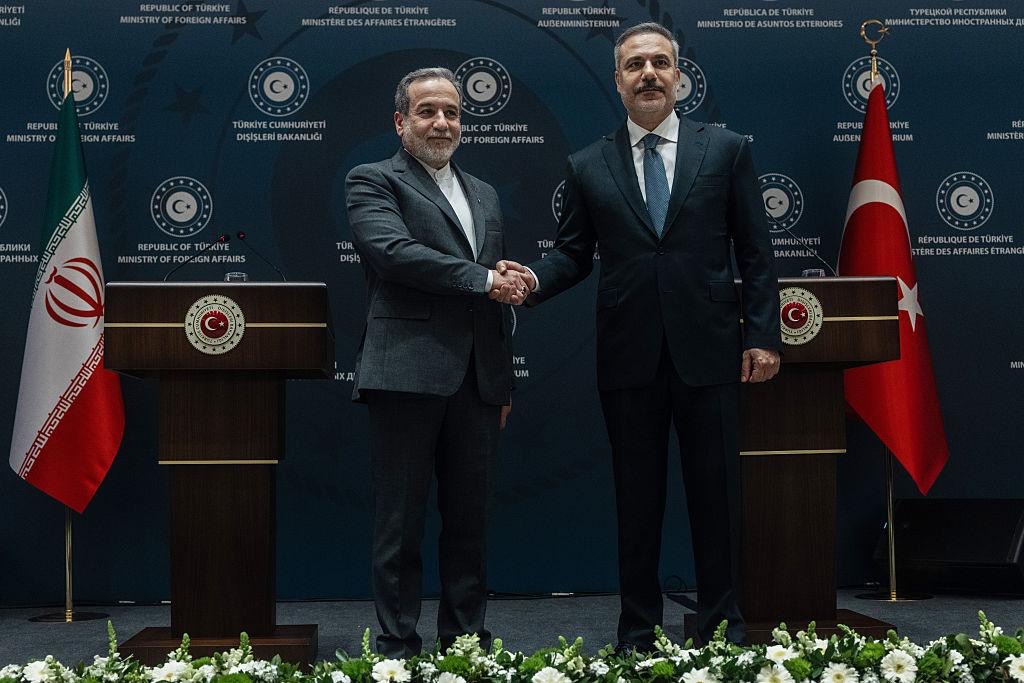
A Region Defined by Strategic Competition
Turkey and Iran are two of the oldest political powers in the region, and competition between them has existed for centuries. Modern geopolitical tensions are largely shaped by the South Caucasus, where Turkey strongly supports Azerbaijan while Iran maintains complex relations with Armenia and Azerbaijan alike.
Iran has long viewed Turkey’s growing partnership with Azerbaijan—especially after Azerbaijan’s victory in the Second Nagorno-Karabakh War—as a strategic challenge.
This rivalry intensified after Ankara and Baku signed the Shusha Declaration in 2021, formalizing a deep military and political alliance.
For Tehran, the concern is not simply military cooperation but the possibility that stronger Turkish-Azerbaijani ties could reshape regional trade routes and political alliances.
The Azeri Factor
One of the most sensitive issues in the relationship is the presence of a large ethnic Azerbaijani population inside Iran. Estimates suggest that millions of ethnic Azeris live in northern Iran, forming one of the country’s largest minority communities.
Iranian authorities have often expressed concern about nationalist rhetoric that could encourage separatism, although evidence of coordinated political movements tied to Ankara remains limited.
The issue surfaced dramatically in 2020 when Turkish President Recep Tayyip Erdoğan recited a poem in Azerbaijan referencing the Aras River—a moment that Iranian officials interpreted as questioning Iran’s territorial integrity.
The episode illustrates how symbolic gestures in the region can quickly trigger diplomatic tension.
A Changing Strategic Landscape
The geopolitical environment has become even more volatile in recent years.
Regional analysts warn that conflicts involving Iran, Israel, and regional allies could spill into neighboring states. In early 2026, tensions rose further when Iranian drones struck Azerbaijan’s Nakhchivan exclave, an area bordering Turkey and Iran.
Such incidents underscore how fragile the balance of power has become.
Meanwhile, broader shifts—such as new transport corridors linking Turkey, Azerbaijan, and Europe—are reshaping trade routes and regional alliances. Iran has expressed concern that these projects could sideline its own economic influence.
Turkey’s Strategic Calculation
For Ankara, the priority is less about territorial expansion and more about regional connectivity, energy routes, and security cooperation with Azerbaijan and Central Asia.
Turkey’s foreign policy has increasingly focused on strengthening the so-called “Middle Corridor”—a trade route linking Europe to Asia through the Caucasus and Central Asia. The corridor is viewed as a strategic alternative to routes dominated by Russia or Iran.
At the same time, Turkey must balance this ambition with the reality that Iran remains a major regional power and a critical neighbor with whom Ankara shares a long and stable border.
Why This Debate Matters for Turkish Americans
For Turkish-American readers, discussions framing Turkey as an aggressor in Iran often overlook the broader strategic environment shaping Ankara’s policies.
Turkey today sits at the intersection of several major geopolitical shifts:
The transformation of the South Caucasus after the Karabakh conflict
New energy and trade corridors linking Europe and Asia
Escalating tensions between Iran and Western powers
Growing regional competition involving Russia, Israel, and Gulf states
In this environment, Ankara’s policies are best understood not as attempts to redraw borders but as part of a broader effort to secure influence in a rapidly evolving region.
The Middle East and the Caucasus are entering a new geopolitical era. As traditional alliances shift and new corridors reshape global trade, Turkey and Iran will continue to compete—sometimes quietly, sometimes openly—for influence.
But history suggests that rivalry between these two regional powers rarely leads to direct confrontation. Instead, it unfolds through diplomacy, economic competition, and regional alliances.
Understanding that nuance is essential for anyone trying to interpret the region’s future.
Sources
Keep the Turks Out of Iran – Michael Rubin, Middle East Forum (March 2026).
Research on Iran–Turkey relations and regional competition –
Azerbaijani separatism debates in Iran –
Shusha Declaration between Turkey and Azerbaijan (2021) –
Regional tensions after Iranian drone strike in Azerbaijan’s Nakhchivan –
Geopolitical impact of South Caucasus transport corridors –