
The $400 Million Question: Trump's Qatar-Gifted Air Force One Was Too Unsafe to Fly Out of Turkey — Here's What That Means
Washington, D.C. / Ankara / London — It was supposed to be the most glamorous airplane in the world. The most powerful symbol of American prestige. A “beautiful plane for a beautiful price,” in President Donald Trump’s own words. A dazzling gift from the nation of Qatar, painted red, white, blue, and gold, unveiled with fanfare at Joint Base Andrews just weeks ago.
But when it was time to leave Ankara — one of the most strategically sensitive cities in the Middle East, following a NATO summit held against the backdrop of an escalating conflict with Iran — the United States Secret Service told President Trump the same thing: Do not get on that plane. So Trump boarded the old Air Force One instead. The same plane that has served American presidents since 1990. A plane without gold interiors. A plane with one thing the Qatari jet apparently does not have: the ability to keep the President of the United States alive if someone tried to shoot it down. This is the story of the most controversial airplane in American history — and why it matters for every Turkish American who watched that NATO summit in Ankara and felt proud of the moment, only to learn that the plane that carried the president there may not have been safe enough to carry him home.
How Did We Get Here? The Story of the Qatar Jet
Let us start at the beginning, because this story is more complicated — and more revealing — than the headlines suggest. For years, the United States Air Force has been working to replace the aging Boeing VC-25A aircraft that serve as Air Force One. Two brand-new, purpose-built planes — designated VC-25B — were ordered from Boeing. They were supposed to be delivered years ago. They are not. Boeing has struggled with manufacturing delays, cost overruns, and technical problems. The new presidential jets are now not expected until 2027 or 2028 at the earliest. That left the White House with a problem: aging planes, a president who travels constantly, and no replacement in sight.
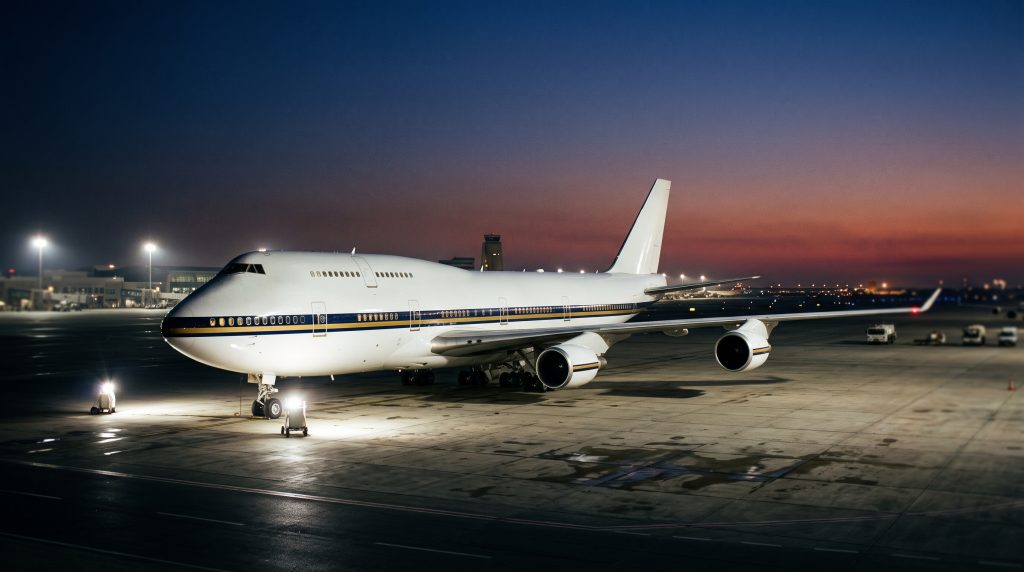
Enter Qatar. In May 2025, the government of Qatar — one of the wealthiest nations on earth, a tiny but powerful Gulf state that hosts the largest American military base in the Middle East — offered the United States a gift. Not a diplomatic gift basket. Not a ceremonial sword. A Boeing 747-8. One of the largest and most luxurious commercial aircraft ever built. A plane the Qatari royal family had been using as a personal “flying palace.” A plane worth, by most estimates, $400 million.
Trump accepted it. He called it a “nice gesture.” He said it would be “stupid” to turn it down. Attorney General Pam Bondi’s Justice Department issued a memo saying it was legal. The Pentagon signed a memorandum of understanding describing it as an “unconditional donation.” Then the Air Force handed it to defense contractor L3Harris and said: make it into Air Force One. Quickly. They had roughly ten months to do a job that typically takes three to four years.
What Did Qatar Actually Give — and What Did It Cost the American Taxpayer?
This is where the story gets complicated. The plane itself was free. But making a luxury jumbo jet into a secure presidential command center is not free. The Air Force fast-tracked a series of modifications, stripping the aircraft of its original Qatari interior and installing classified communications systems, electronic warfare equipment, and diplomatic furnishings. The official government figure for the retrofit: less than $400 million. Some independent experts and congressional investigators believe the real cost is closer to $1 billion. And here is the part that made some lawmakers furious: the money to pay for it was quietly redirected from the Sentinel program — America’s next-generation nuclear intercontinental ballistic missile system. In other words, money meant to modernize the United States nuclear arsenal was used to retrofit a foreign-gifted luxury jet for temporary presidential use. The White House’s defense? The plane will serve the country until the new VC-25Bs are ready, and then it will be donated to the Donald J. Trump Presidential Library Foundation — where it will presumably sit on display as the most extravagant museum exhibit in American history.
Critics, including Democratic Senator Elizabeth Warren and Republican Senator Ted Cruz — political opposites who rarely agree on anything — both raised alarms. Warren questioned the ethics and cost. Cruz raised concerns about “significant espionage and surveillance problems” — meaning: what if Qatar had hidden listening devices in the plane? What if its systems had been compromised before the retrofit? Cruz’s concerns were reportedly dismissed by other Republicans, including Senator Markwayne Mullin, who called such worries “ignorant” of U.S. intelligence capabilities. The answer to that question — whether the plane was truly clean — remains classified.
The Moment That Changed Everything: Leaving Turkey
On July 7 and 8, 2026, President Trump flew to Ankara for the NATO summit. He arrived on the new Qatari-gifted jet — gleaming in its new paint scheme, full of American officials, reporters, and support staff. The summit went well — for Turkey, at least. Trump praised Erdoğan, lifted sanctions, and opened the door to F-35 discussions. He shook hands and made history. Then it was time to leave. According to multiple reports from The New York Times, ABC News, NBC News, CBS News, Forbes, USA Today, and the Los Angeles Times — all citing officials familiar with the matter — the Secret Service pulled Trump aside and delivered a clear recommendation:
Do not fly out of Turkey on the Qatari jet. Use the old Air Force One instead. The reasoning was serious. Tensions with Iran had escalated dramatically during the NATO summit week. Trump had publicly acknowledged that he is considered the No. 1 target on Iran’s “kill list.” The Middle East — Turkey’s neighborhood — was volatile. And the Qatari-gifted plane, despite its gold-plated reputation, was missing some of the most critical defensive systems that make a presidential aircraft survivable in hostile airspace. Specifically, according to aviation experts and officials who spoke to CNN, Forbes, and CBS News, the Qatari jet lacks:
Midair refueling capability — The nose of the old Air Force One has a distinctive “bump” where its refueling probe connects. This allows the plane to stay airborne virtually indefinitely in an emergency. The Qatari jet has no such system. If it needed to fly longer or escape a threat, it would be limited by its fuel supply.
Laser-based missile defense systems — The older presidential jets carry directional infrared countermeasures — essentially laser systems designed to blind and redirect heat-seeking missiles. Aviation observers noted the absence of the external tail modifications that typically house such systems on the Qatari jet.
Hardened command-and-control communications — The old Air Force One is a “flying situation room.” The President can receive classified military intelligence, issue nuclear orders, and coordinate with the full chain of command from the air. Experts questioned whether the Qatari jet’s communications suite — installed during a rushed retrofit — could match those capabilities.
Electromagnetic pulse (EMP) protection — The older presidential jets are hardened against the kind of electromagnetic attacks that could fry electronics in a conflict scenario. The Qatari jet’s EMP hardening status is unclear.
Full medical operating room — The old Air Force One includes a permanent surgical suite. Whether the Qatari jet’s medical facilities match that standard has been questioned.
So Trump boarded the old plane. Reporters on the press plane were told to lower their window blinds before takeoff from Ankara. Trump himself later acknowledged the move was related to the “dangerous” flight path over a conflict zone. He also said — somewhat unconvincingly — that he switched planes partly so that U.S. service members at a British military base could tour the new jet. The new Qatari plane was flown ahead to RAF Mildenhall in England. Once Trump arrived there on the safe, battle-tested old Air Force One, he transferred back to the Qatari jet for the flight home to Washington.
The White House Explanation — and Why Critics Aren’t Buying It
White House Communications Director Steven Cheung defended the switch by saying the administration routinely uses “distraction and misdirection” as security tools. In other words: maybe the switch was intentional misdirection, maybe it wasn’t — and they don’t want adversaries to know for certain. That is a fair point, as far as it goes. Presidential security genuinely does involve deliberate unpredictability. But then Forbes reported — and multiple other outlets confirmed — that the Qatari jet had been effectively grounded by the Secret Service, not just used flexibly. Sources told Forbes that the White House made a deliberate decision not to use the Qatari plane for operations in sensitive or high-threat environments until its defensive capabilities are more fully established.
That is not a communications strategy. That is an operational security limitation. The White House pushed back. Officials insisted the plane is “safe, secure, and equipped with the most advanced technologies.” They noted that details of the aircraft’s defensive systems are classified, and that just because something cannot be seen from the outside does not mean it isn’t there. That may be true. But the fact that the President of the United States — the most protected person on earth — was advised by his own security detail not to fly out of Turkey on his brand-new, heavily publicized, $400 million aircraft is not nothing. It is, at minimum, a significant moment of transparency about the difference between a plane that looks like Air Force One and a plane that is Air Force One in every meaningful sense.
The Qatar Connection — What Is Really Going On?
This brings us to the bigger picture — the one that Turkish Americans, as people who understand Middle Eastern geopolitics, should pay close attention to. Why did Qatar give the United States a $400 million airplane? The official answer: friendship, partnership, and a gesture of goodwill between two allied nations. The cynical answer — offered by critics including ethics watchdog Citizens for Responsibility and Ethics in Washington (CREW) — is that Qatar is buying influence. And the receipts are hard to ignore:
Qatar hosts Al Udeid Air Base, home to approximately 10,000 American troops and the forward headquarters of U.S. Central Command. The base gives Qatar enormous leverage. Qatar wants to make sure it keeps American protection.
The Trump Organization has $5.5 billion in Qatari investments tied to a golf resort deal. Qatar has invested heavily in Trump family business ventures.
Multiple former Trump administration officials and advisers have worked for firms that lobby on behalf of Qatarin Washington.
Qatar has spent hundreds of millions of dollars on American universities, think tanks, and lobbying operations.
The Qatari Prime Minister denied the gift was a bribe, calling it a standard institutional exchange. But Democratic and Republican critics alike noted that the coincidence of a $400 million gift alongside billions in Trump business ties and significant pending U.S. policy decisions — including arms sales and the Iran situation — is hard to explain away. The Foreign Emoluments Clause of the U.S. Constitution prohibits American officials from accepting gifts from foreign governments without congressional consent. The Trump administration got around this by having the Pentagon accept the gift — making it, technically, U.S. government property rather than a personal gift to Trump. The plane being donated to his presidential library after he leaves office, critics note, somewhat complicates that distinction.
What Congress Is Saying — Both Sides
The Qatar jet has done something rare in Washington: it has managed to upset both Democrats and Republicans.
Democrats have largely focused on the ethics and constitutional dimension — the emoluments issue, the conflict of interest, and the cost to taxpayers of a retrofit that funds the president’s temporary travel needs while diverting money from nuclear modernization.
Republicans have been more divided. Some, like Senator Ted Cruz, raised genuine national security concerns about the aircraft’s origins and whether its systems could have been compromised. Others, like Senator Markwayne Mullin, defended the administration and dismissed critics. House Republicans largely blocked Democratic attempts to pass resolutions of disapproval. What is notable is that no one — not a single lawmaker from either party — has asked Congress to approve the acceptance of this gift as the Constitution arguably requires. The administration bypassed that step entirely, and Congress has not forced the issue. The Hill’s reporting confirms that the Pentagon is now reviewing next-generation secure communication systems for presidential aircraft — an acknowledgment that the current systems, including whatever the Qatari jet has, may not be sufficient for a modern threat environment.
Why This Matters for Turkish Americans
You might be wondering: what does a Qatar-gifted airplane have to do with Turkish Americans? More than you might think.
First: It happened in Ankara. The moment this story crystallized — the moment the Secret Service told the president not to fly on his own plane — happened right after the historic NATO summit on Turkish soil. The backdrop was Turkey. The context was the Middle East. And the reason for the heightened security was the escalating conflict with Iran — a conflict that directly shapes the regional security environment Turkey navigates every day.
Second: It reveals the complexity of Middle Eastern alliances. Turkey and Qatar have a complex but generally warm relationship. Both are Muslim-majority nations with independent foreign policies that sometimes run contrary to U.S. preferences. Both have been criticized for their relationships with groups the U.S. considers problematic. Both have also been indispensable partners to Washington. The Qatar jet story is a window into how the United States manages those relationships — and the complications that arise when diplomacy and business interests mix.
Third: It matters who influences Washington. The Qatar story is ultimately about foreign influence in American politics. A $400 million gift. Billions in business investments. Lobbying firms. Policy decisions. Turkish Americans have spent years watching other communities — with deep lobbying budgets and organized political operations — shape U.S. policy in ways that sometimes worked against Turkey’s interests. The Qatar situation shows that foreign influence in Washington is real, it is legal (mostly), and it has consequences.
Fourth: It raises serious questions about the Iran crisis. The reason the Secret Service was concerned about flying the president out of Turkey on a less-protected plane was the Iran conflict. Turkish Americans should be paying close attention to where U.S.-Iran tensions are heading. Turkey — which shares borders with Iran and has historically maintained a nuanced relationship with Tehran — could find itself in a very difficult position if that conflict escalates further.
Fifth: It is a story about presidential leadership and credibility. For Turkish Americans who want a strong U.S.-Turkey relationship, a credible, respected, and secure American president is essential. Questions about whether the president is flying in an aircraft that cannot protect him properly — and whether that aircraft was accepted as a foreign gift that raises constitutional questions — touch on the dignity and effectiveness of American leadership.
What Turkish Americans Should Know and Do
This is a moment to be informed, not alarmed. Here is what matters: Stay informed about the Iran situation. The escalation between the U.S. and Iran is the most dangerous foreign policy development in the region right now. Turkey is caught between its NATO membership, its economic ties with Iran, and its own national interests. Watch this space closely. Advocate for diplomatic solutions. War in the region is bad for everyone — including Turkey.
Pay attention to Middle Eastern lobbying in Washington. Gulf states like Qatar and Saudi Arabia are spending enormous sums to shape American policy. This is legal, and it works. Turkish American organizations need to understand this landscape and ensure that pro-Turkey voices are present and credible in Washington policy circles — not just on issues directly involving Turkey, but on regional issues where Turkey’s interests are at stake.
Support government accountability on foreign gifts. Regardless of your political affiliation, the constitutional principle that foreign governments should not be giving the American president $400 million airplanes — especially when business relationships exist — is important. Support organizations and representatives who hold the line on government ethics and constitutional norms.
Connect the NATO summit to this story. Trump arrived in Ankara on that Qatari plane. He left on a different one. The story of the plane switch is inseparable from the story of the summit. Both are about how America is navigating a complicated Middle East, where old rules and alliances are shifting rapidly.
Talk to your community about what is happening. Many Turkish Americans are deeply engaged in business, medicine, academia, and community life — but may not be following these foreign policy developments closely. Share this information. Help your community understand how interconnected these stories are.
The Bottom Line
A $400 million airplane, given as a gift by a Gulf emirate with billions invested in the Trump Organization, retrofitted in ten months at taxpayer expense, and then deemed not safe enough to fly the president out of a NATO ally’s capital city because of an escalating conflict in the very neighborhood Turkey lives in. That is the story. It is a story about the blurring of business and government. It is a story about the limits of rushed security upgrades. It is a story about the volatile Middle East and America’s complicated relationships with its partners. And it is a story that unfolded, in its most dramatic chapter, right in Ankara — where Turkey just held its most successful international moment in decades. The glamour of Air Force One is intact. The gold paint gleams. But the questions — about security, ethics, foreign influence, and presidential credibility — are not going away. Turkish Americans deserve to understand all of it. Because what happens in that region, on those planes, and in those summit halls affects the country our families came from, the alliances we depend on, and the future we are building here.
Sources
The Hill, “Trump Air Force One Security,” July 2026
The Hill, “Trump Air Force One Security: Qatari Plane,” July 2026
The Hill, “Secret Service Advised Trump Not to Fly Qatari-Gifted Air Force One,” July 2026
The New York Times, “Trump Air Force One Security,” July 8, 2026
Forbes, “White House Grounded Trump’s Qatari Jet Over Security Concerns,” July 10, 2026
Forbes, “Trump Unexpectedly Ditches Qatari Plane for Old Air Force One,” July 8, 2026
ABC News, “Secret Service Urged Trump to Depart Turkey on Air Force One,” July 2026
NBC News, “Security Decision: Trump Uses Older Air Force One Leaving Turkey,” July 2026
CBS News, “Air Force One: Trump Turkey Secret Service,” July 2026
CNN, “Qatar Air Force One Trump,” July 2026
CNN, “Air Force One Threats,” July 10, 2026
USA Today, “Trump Air Force One Qatar Plane Security Concerns,” July 9, 2026
Los Angeles Times, “In Surprise Swap, Trump Flies Back from Turkey in Old Air Force One,” July 8, 2026
NPR, “Trump Takes First Flight on New Air Force One Gifted by Qatar,” July 2, 2026
The Guardian, “Trump Qatar Air Force One First Flight,” July 1, 2026
BBC News, “Qatar Boeing 747 to US,” 2026
Reuters, “Trump Says He Will Use Old Air Force One to Travel to UK,” July 8, 2026
CNBC, “Retrofitted Qatari Jet Flight Air Force One Trump,” July 1, 2026
Common Cause, “Trump’s $400 Million Gift from Qatar,” 2025
Times of India, “Qatar Gift to Trump: How Qatar Bought Influence in US,” 2025
NPR, “Trump Qatar Air Force One Republicans Congress,” May 2025
Legal Clarity, “Trump’s $400 Million Gift from Qatar: The Legal Debate,” 2025
FactCheck.org, “Unwrapping Qatar’s $400 Million Winged Gift to Trump,” 2025
Al Jazeera, “Five Key Takeaways from the NATO Summit in Ankara,” July 8, 2026
Atlantic Council, “Eleven Takeaways from the NATO Summit in Ankara,” July 2026
Citizens for Responsibility and Ethics in Washington (CREW), statements on Qatari jet gift