
From Istanbul to Miami: Haiti Assassination Case Renews Questions About Extradition and Justice
Samir Handal, whom a Turkish court declined to extradite to Haiti in 2022, now faces federal charges in the United States. He has pleaded not guilty.
For TC-USA PAC readers
November 14, 2026
Five years after Haiti’s president was assassinated in his home, an investigation that has crossed the Caribbean, the United States and Türkiye has brought a Haitian American businessman before a federal court in Miami. The businessman, Samir Handal, faces charges connected to the alleged conspiracy to kill or kidnap President Jovenel Moïse, who was shot dead in Port-au-Prince on July 7, 2021. Prosecutors accuse Handal of providing support to people involved in the plot. Handal has pleaded not guilty. His case is pending, and the allegations against him have not been proven at trial. local10.com His path to the Miami courtroom has brought renewed attention to a 2022 decision in Türkiye. Turkish authorities detained Handal while he was traveling through Istanbul, but a Turkish court declined Haiti’s request to extradite him after his lawyers raised concerns about how he would be treated there.
That decision is now being scrutinized in light of the U.S. charges. But the two proceedings addressed different questions: the Turkish court considered whether Handal should be sent to Haiti; the U.S. case will determine whether prosecutors can prove the charges against him.
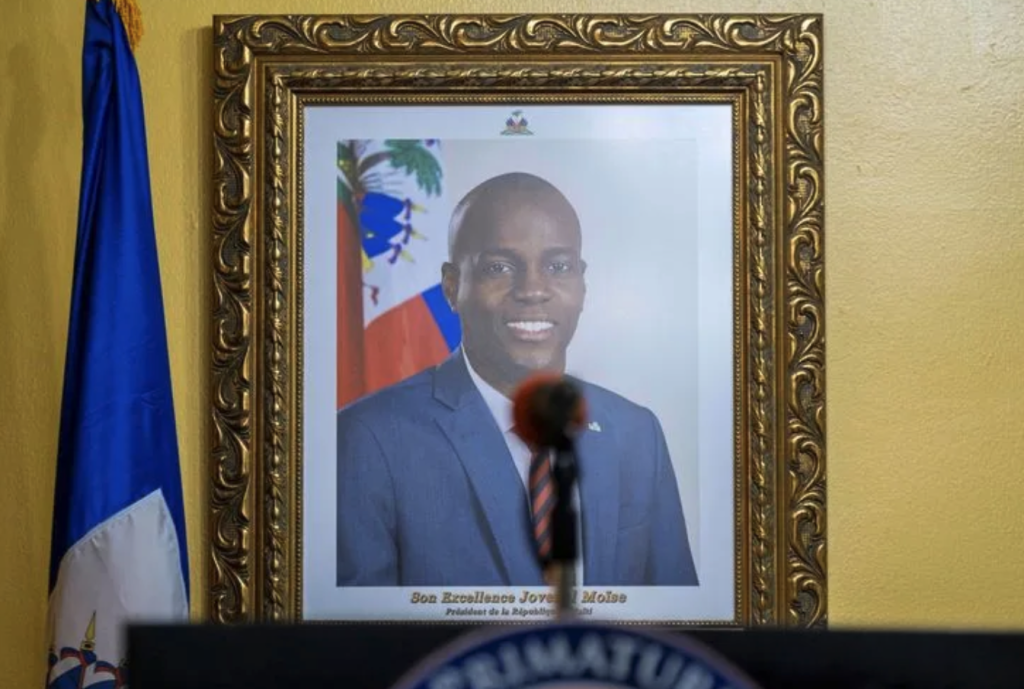
A presidential assassination that shook Haiti
Moïse, 53, was killed when armed attackers entered his private residence in the early hours of July 7, 2021. His wife, Martine Moïse, was wounded in the attack.
The assassination deepened a political crisis in a country already facing severe instability. Investigators pursued a sprawling international case involving Haitian political figures, businesspeople, security contractors and former Colombian soldiers.
U.S. authorities became involved because, according to prosecutors, parts of the alleged operation—including financing and preparations—were connected to South Florida. apnews.com
In May 2026, a federal jury in Miami convicted four other men in connection with the conspiracy. Those verdicts did not decide the charges against Handal, who was later named in an expanded indictment.
Why was Handal in Türkiye?
In November 2021, several months after the assassination, Turkish authorities detained Handal as he passed through Istanbul while traveling from the United States toward Jordan. Haiti had sought his arrest through an Interpol notice. Handal denied involvement in the assassination. He and his lawyers said he had rented property to Christian Emmanuel Sanon, another figure in the investigation, but did not know about plans to kill Moïse. Reuters reported that Handal told the Turkish court he had learned of the assassination through the news and social media. Euronews
Haiti requested his extradition so that he could face proceedings there. His lawyers argued against sending him back, citing the country’s political uncertainty, prison conditions and the risk that he could be mistreated. Haiti provided assurances concerning his treatment, including that he would not be sentenced to hard labor. On July 4, 2022, an Istanbul court rejected Haiti’s request and ordered Handal released from detention. According to the Middle East Forum article and its original source, Nordic Monitor, the court cited concerns about possible torture, ill-treatment or punishment incompatible with human dignity. Middle East Forum The decision did not amount to a finding that Handal was innocent. An extradition proceeding is different from a criminal trial: a court can decline to transfer a person because of concerns about conditions in the requesting country, regardless of whether the underlying accusations are serious.
What happened after the Turkish ruling?
Handal was not immediately free to leave after the July 2022 ruling. Reuters reported later that month that he remained in a deportation center while his lawyers challenged a travel restriction. His attorney said the continued restriction was unlawful. yahoo.com Nordic Monitor reported that he was eventually deported from Türkiye to Canada in August 2022. In September 2026, the Haitian newspaper Le Nouvelliste reported that the FBI had arrested him in Miami. Nordic Monitor That sequence is important: Handal was arrested in Miami; he was not among the 18 defendants transported from Haiti to Florida in the separate operation announced by the U.S. Justice Department in September 2026. AOL
What U.S. prosecutors allege
Handal is charged with conspiracy to provide material support and resources resulting in death, providing such support resulting in death, and conspiracy to kill and kidnap a person outside the United States, according to a federal detention order issued on Oct. 9, 2026. nordicmonitor.com The detention order describes the government’s evidence as strong. According to the account of that order published by Nordic Monitor, cooperating alleged co-conspirators identified Handal as someone who provided lodging and meeting space, along with cash, fuel, radios and weapons-related resources.
The reported order also refers to communications concerning Sanon’s political ambitions and the possibility of a diplomatic post for Handal. These are allegations and findings made for a pretrial detention decision; they are not a jury verdict on Handal’s guilt. Nordic Monitor The judge ordered Handal held while the case proceeds, finding that he presented a risk of flight and a danger to the community. Handal’s defense has challenged the conditions of his confinement. His lawyers say his medical needs and restrictions on meeting with counsel have made it difficult to prepare his defense. nordicmonitor.com
A larger prosecution—and unanswered questions
The Justice Department announced in September 2026 that 18 defendants had been transferred from Haiti to South Florida to face newly unsealed federal charges. It said they were among 30 defendants named in an expanded indictment covering alleged roles in the assassination plot and a related alleged fraud and money-laundering scheme. Prosecutors allege that some U.S. pandemic-relief funds were used to help finance the operation. The department emphasized that an indictment is an allegation and that defendants are presumed innocent unless proven guilty. United States Department of Justice While the May convictions represented a significant development, the wider case has continued to raise questions about who organized the assassination, how the operation was financed and whether everyone responsible has been identified. The accused have taken different positions, and their cases are at different stages. Some people have been convicted or pleaded guilty; others, including Handal, face unresolved charges. Their individual circumstances should not be treated as interchangeable.
What the Türkiye connection does—and does not—show
The Middle East Forum article presents the 2022 Turkish decision as part of a broader critique of Türkiye’s judicial system. It also cites the later U.S. detention order as a reason to revisit the extradition ruling. The documented sequence supports a narrower conclusion: a Turkish court declined Haiti’s request after concerns were raised about treatment in Haiti, and Handal was later charged in the United States. The later prosecution does not by itself prove that Turkish authorities assisted the alleged plot, knew the allegations were true, or acted at the direction of Turkish political leaders. It is also significant that the decision concerned transfer to Haiti. The reporting reviewed does not establish that the United States had asked Türkiye to extradite Handal to the United States at that time.
For Turkish Americans, that distinction matters. Headlines can compress a complicated legal history into a suggestion that a country “protected” a suspect. The record should be examined carefully, including the reasons the Turkish court gave and what authorities knew when they made the decision.
Why this story matters in the United States
The case demonstrates how an act of political violence in one country can lead to investigations and legal proceedings across several others. It also shows the limits and responsibilities of international cooperation: police may detain a wanted person, but courts must still consider the legal requirements for extradition. For Haitian Americans, the continuing cases are tied to a profound national loss and a long wait for answers. For Turkish Americans, the story is also a reminder to distinguish a court’s legal decision from allegations about a country or its people. The U.S. case now moves forward with two principles in view: the seriousness of the allegations and Handal’s right to defend himself. Whether prosecutors can establish his role beyond a reasonable doubt is a question for the court.