
Erdoğan Pushes Back on Claims Turkey Was Asked to Host Maduro Before U.S. Capture
In the wake of one of the most extraordinary U.S. military operations in recent memory — the capture of Venezuela’s embattled President Nicolás Maduro — Ankara is pushing back firmly against assertions that it was prepared to host the Venezuelan leader in exile.
Turkish President Recep Tayyip Erdoğan publicly denied this week that his government was ever approached by Washington with an offer to take in Mr. Maduro before American forces carried out a dramatic raid in Caracas on January 3, seizing him and his wife and flying them to New York to face federal charges.
The claim that Turkey had been floated as a refuge — and that Mr. Maduro had spurned an opportunity for a peaceful exit — originated with Republican U.S. Senator Lindsey Graham. In public remarks alongside President Donald J. Trump, Graham said Mr. Maduro “could be in Türkiye today, but he’s in New York,” implying that the Venezuelan leader had rejected an offer of exile.
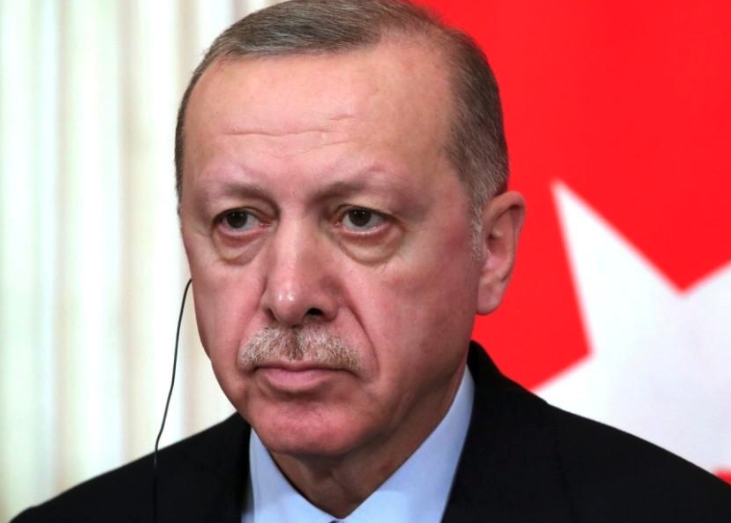
Erdoğan, however, made clear that Ankara did not receive any such proposal. Asked by reporters after a cabinet meeting, the Turkish president replied bluntly that his government had “not received any such news” about an offer to host Mr. Maduro, and dismissed the notion that the United States had coordinated with Turkey in this regard.
The denial comes amid a broader international outcry over Washington’s unilateral action, which included airstrikes on key Venezuelan military positions. The operation has raised questions about international law and respect for national sovereignty, sparking criticism not only from Caracas’s allies — including China, Russia and Iran — but also from nations such as Spain and South Africa that argue the U.S. move risks setting a dangerous precedent.
Observers say Erdoğan’s response reflects a delicate diplomatic calculation: balancing strong bilateral relations with the United States against the political optics of being seen as complicit in Washington’s most high-profile extraterritorial operation in decades. According to Turkish analysts, the episode has created an “awkward” moment for Ankara, one that has little to do with existential risk but carries potential domestic political costs.
Particularly in Ankara, where the opposition has criticized the government’s handling of the situation, Erdoğan’s comments signal intent to blunt narratives suggesting Turkish involvement without appearing to fracture important ties with Washington. There have been indications that Erdoğan raised concerns about the U.S. action directly with President Trump, urging that Venezuela not be driven into further instability and cautioning against violations of international law.
While the administration in Washington maintains that Mr. Maduro was offered a peaceful alternative to force — an assertion grounded in strategic messaging ahead of a fraught trial process — Turkey’s sharp denial underscores the complex geopolitical dance now unfolding between rival capitals.
As Mr. Maduro makes his first court appearance in New York, pleading not guilty to charges including narco-terrorism and weapons offenses, the diplomatic repercussions of his capture will continue to reverberate from Caracas to Ankara and Washington alike.
Implications for U.S.–Turkey Relations
Although Ankara and Washington remain NATO allies, their relationship has been marked by increasing strategic divergence — from Syria to defense procurement to energy politics.
The Maduro episode adds another layer of tension, not because Turkey directly opposed the operation, but because it appears unwilling to validate Washington’s narrative about it.
This signals a subtle but important shift:
Turkey is no longer content to be portrayed as a silent partner in U.S. geopolitical messaging, particularly when operations carry significant legal and ethical implications.
At the same time, Erdoğan’s response avoided overt confrontation. There was no condemnation of the U.S. action itself — only denial of involvement. That restraint suggests Ankara is seeking to protect diplomatic channels while asserting informational independence.
In today’s geopolitical climate, that may be the new form of strategic resistance.