
From London Flames to Washington Debate: A Quran Burning Case Tests the Boundaries of Free Speech and Asylum
n a case that has quietly evolved into a transatlantic flashpoint, a Turkish national’s controversial protest in London is now reverberating through legal systems, diplomatic circles, and policy debates in Washington.
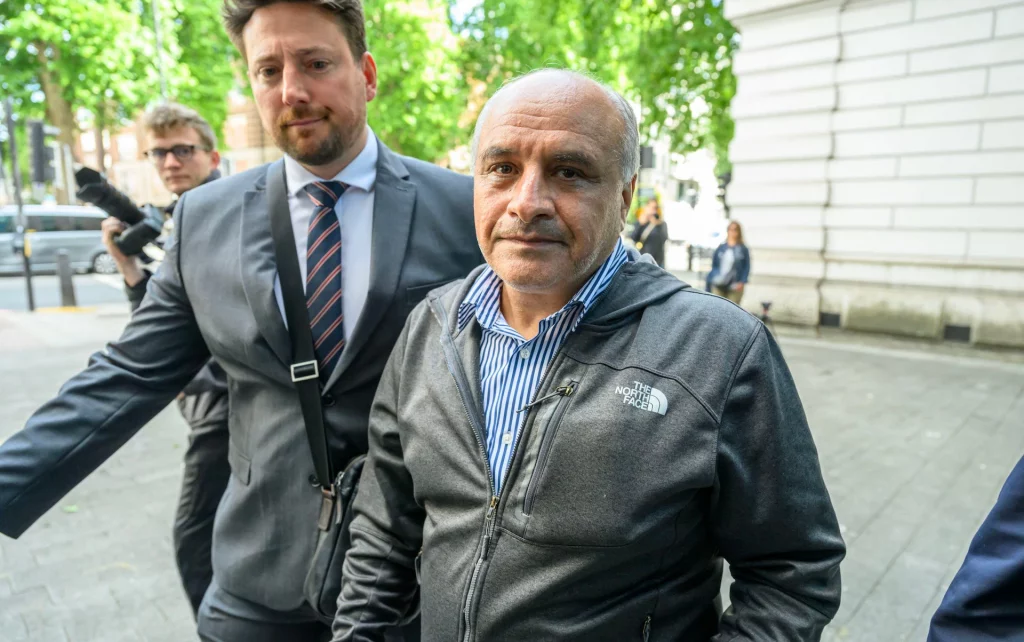
At the center is Hamit Coskun, a Turkish-born asylum seeker whose act of burning a Quran outside the Turkish Consulate in London in 2025 has sparked a broader reckoning: What are the limits of free expression in liberal democracies—and when does political dissent become grounds for asylum?
A Protest That Crossed Borders
Coskun’s demonstration was not subtle. Standing outside the Turkish Consulate, he set fire to Islam’s holy book while shouting anti-Islamic slogans, framing his act as a protest against what he described as Türkiye’s increasing embrace of political Islam.
What followed was immediate and violent. A bystander attacked him with a knife during the protest, an incident that underscored the volatility surrounding acts perceived as religious provocation.
British authorities initially convicted Coskun of a religiously aggravated public order offense. But in a significant reversal, higher courts overturned the conviction, ruling that—even deeply offensive expression—remains protected under principles of free speech in a democratic society.
The High Court later reinforced this view, emphasizing that speech must be evaluated objectively and that causing offense alone is not sufficient grounds for criminal liability.
The American Dimension
What might have remained a domestic legal dispute in the United Kingdom has taken on new significance as reports emerged that the U.S. government—under the Trump administration—is considering granting Coskun asylum.
Such a move would be extraordinary.
Coskun originally sought refuge in the U.K., claiming persecution in Turkey tied to his opposition to Islamist movements. Now, his case is being reframed in Washington as a potential test of America’s commitment to protecting political expression—even when that expression is provocative, offensive, or controversial.
Officials reportedly view his case as emblematic of a broader concern: whether Western allies are narrowing the boundaries of free speech under pressure from religious sensitivities.
A Legal Battle Over Principles
The legal debate in Britain has been unusually sharp.
Prosecutors argued that burning a religious text in a public setting—especially when paired with inflammatory language—crosses into disorderly conduct and risks inciting public unrest.
But Coskun’s defense, supported by free speech advocates, warned that criminalizing such acts could effectively revive blasphemy laws abolished in the U.K. nearly two decades ago.
The courts ultimately sided with that argument.
In their rulings, judges stressed that the right to free expression includes the right to express ideas that “offend, shock or disturb”—a principle deeply embedded in European human rights law.
Why This Case Matters for Turkish Americans
For Turkish Americans, this case sits at a complex intersection of identity, politics, and principle.
On one level, it touches on sensitive issues of religion, respect, and cultural dignity. Acts like Quran burning are deeply offensive to many Muslims and carry emotional weight far beyond the individual protester.
On another level, it raises questions about Turkey’s political trajectory and how dissent against the Turkish government is interpreted abroad.
And perhaps most importantly, it forces a difficult but necessary conversation:
Should freedom of expression protect even the most offensive forms of protest?
A Pattern, Not an Isolated Incident
Coskun’s case is not happening in isolation.
Across Europe, Quran-burning protests have repeatedly triggered diplomatic crises, violent reactions, and intense debates over free speech. In Sweden, a similar activist who burned Qurans became the target of international outrage—and was later killed in a high-profile incident that highlighted the real-world risks of such acts.
These events are part of a broader global pattern where symbolic acts—particularly involving religion—can rapidly escalate into geopolitical tensions.
The Road Ahead
For now, Coskun’s legal status remains uncertain.
If the United States ultimately grants him asylum, it would send a powerful signal—not only about American free speech values, but also about how political dissent tied to religion is interpreted in immigration policy.
If not, the case will still stand as a defining moment in an ongoing global debate.
Because at its core, this is not just about one man or one protest.
It is about the uneasy balance between freedom and respect, expression and consequence, and law and identity in an increasingly interconnected world.
Sources
- Reason (Feb. 19, 2026)
- Fox News reporting on asylum considerations
- The Telegraph coverage of White House discussions
- National Secular Society case summary
- Humanists UK legal analysis
- The Times legal commentary