
Is Türkiye Becoming Israel’s Next Target in the Battle for Washington’s Attention?
The Situation: Ankara Warns of a Strategic Shift in Israel’s Rhetoric
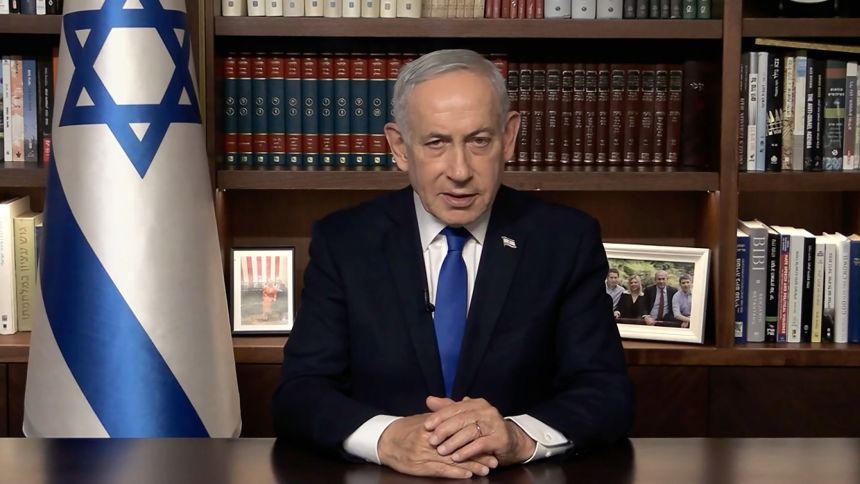
This month, Foreign Minister Hakan Fidan sounded a strategic alarm: Prime Minister Benjamin Netanyahu is seeking to designate Türkiye as a “new enemy” to fill a political vacuum after Iran. While political disputes in the Middle East are common, Ankara’s concern is that this isn’t just “election talk”—it is showing signs of becoming a deliberate state narrative designed to isolate Türkiye on the global stage. (Anadolu Agency) (Middle East Monitor)
The Impact on Turkish Americans
For the Turkish American community and TCUSAPAC, this is not a distant quarrel. When a key U.S. partner like Israel portrays Türkiye as an “enemy,” the consequences ripple directly into Washington D.C.:
- Pressure on the Alliance: A sustained “enemy” narrative can poison the atmosphere in Congress, making it harder to advocate for defense cooperation, trade incentives, and regional security partnerships.
- Targeting the Diaspora: History shows that when a home country is vilified abroad, the diaspora often faces unfair scrutiny. This makes our work in business, local government, and civic life more polarized and difficult.
- Affecting Our Neighbors: This rhetoric also puts undue pressure on our fellow citizens—the ~15,000 Turkish Jews who live in Türkiye as proud Turkish citizens. (World Jewish Congress) They, along with many Turkish Americans, recognize that the history of our two peoples is rooted in cooperation, not conflict—from Türkiye being the first Muslim-majority nation to recognize Israel in 1949 to the heroic Turkish diplomats who saved Jewish lives during the Holocaust. (LA Times)
Behind the Scenes: Donald Trump and Recep Tayyip Erdoğan
While institutions are under strain, the personal channel between President Trump and President Erdoğan remains a critical stabilizing force. However, personal rapport is not a substitute for institutional health. If Washington remains silent or allows an anti-Türkiye narrative to take root in policy circles, even the strongest personal relationship at the top may struggle to hold the alliance together. (Fox News)
As Turkish American advocates, we cannot afford to be passive. Silence is often interpreted as agreement. Here is how you can help:
1. Engage Your Representatives
Reach out to your local Congressional offices. Remind them that Türkiye is a cornerstone of NATO and a vital economic partner for the United States. Share the facts about Türkiye’s historic role in regional stability. Do not let “enemy” rhetoric go unchallenged in your district’s political conversation.
2. Support Inter-Community Dialogue
Reach out to your Jewish neighbors and colleagues. Reiterate that the current political friction between governments does not change our shared history or our commitment to a peaceful future. Highlighting the 1949 recognition and the rescue of Jews during WWII helps remind Americans that the current “enemy” narrative contradicts decades of cooperation.
3. Amplify the TCUSAPAC Voice
Share this newsletter and our official statements on social media. Use your platform to push back against the “Squeezed Washington” narrative. We must insist that a strong U.S.-Türkiye relationship is not an “alternative” to U.S.-Israel ties, but a requirement for a stable Middle East.
The Bottom Line
Language is the first draft of policy. If we allow the “new enemy” label to stand, we risk a long-term shift in how Washington views our community and our heritage. By speaking up now, we protect the alliance, our families, and our shared history.
For more information and to get involved in our advocacy efforts, visit the TCUSAPAC member portal.
Turkish officials say Benjamin Netanyahu is searching for a “new enemy” after Iran. Whether that is a passing escalation or the outline of a deeper strategy could matter not only for the Middle East, but for Turkish Americans, U.S.-Türkiye ties, and the political channel between President Trump and President Erdoğan.
When Turkey’s foreign minister, Hakan Fidan, said this month that Prime Minister Benjamin Netanyahu was seeking to designate Türkiye as a “new enemy,” the remark landed as more than another sharp exchange in an already inflamed region. It was a warning from Ankara that anti-Türkiye rhetoric in Israel may be hardening into something more deliberate: a political narrative with regional and international consequences.
Fidan’s comments, delivered during a meeting with editors at Anadolu Agency, were blunt. After Iran, he said, Israel “cannot live without an enemy,” and Ankara could be the next target of that search. Turkish and regional outlets quickly amplified the statement, framing it as a sign of how deeply relations between Israel and Türkiye have deteriorated amid the wars and diplomatic crises reshaping the Middle East. (Anadolu Agency) (Middle East Monitor) (Türkiye Today)
What makes the Turkish position notable is not only the accusation itself, but the reasoning behind it. In the Anadolu interview, Fidan argued that the clash is rooted in a broader geopolitical conflict: Türkiye opposes Israeli policy in Gaza, Lebanon and Syria; Israel, in Ankara’s view, sees Türkiye’s regional influence and President Recep Tayyip Erdoğan’s diplomatic reach as obstacles to its ambitions. Fidan went further, suggesting that anti-Türkiye language is no longer confined to isolated political outbursts but is showing signs of becoming part of a wider political vocabulary inside Israel — one that could migrate from campaign rhetoric into state posture. (Anadolu Agency)
That does not mean a formal rupture is inevitable. Publicly available evidence still points first to a war of rhetoric, not an announced state doctrine. There has been no official Israeli declaration naming Türkiye an enemy in a formal policy sense. But Ankara’s concern is that repeated political messaging can shape diplomatic realities over time — especially in Washington, where perceptions often matter almost as much as treaties.
That is where this story becomes especially important for Turkish Americans.
For the Turkish American community, this is not merely a distant quarrel among regional leaders. When Türkiye is portrayed through the language of threat, diaspora communities often feel the effects first. Turkish Americans may face sharper scrutiny in policy circles, greater polarization in public debate, and increased pressure to explain Ankara’s positions on Gaza, regional security, and relations with the West. Community leaders, advocacy organizations and business networks may also find themselves navigating a more charged environment in which Türkiye is discussed less as a strategic NATO ally and more as a geopolitical problem to be managed.
For TCUSAPAC readers, the implications are equally practical. A sustained anti-Türkiye narrative could affect congressional tone, policy conversations on defense cooperation, trade, Eastern Mediterranean strategy, and even the broader atmosphere for U.S.-Türkiye commercial ties. These shifts do not happen overnight. But rhetoric, repeated often enough, can prepare the ground for legislative hostility, diplomatic mistrust, and new barriers to cooperation.
The larger question is whether this is simply political talk — or whether deeper intentions are taking shape behind the scenes.
Based on the reporting now available, the answer appears to be: it is rhetoric, but rhetoric with strategic purpose.
One purpose may be domestic. Netanyahu has long operated in a political environment where external threats strengthen internal cohesion. Casting another regional power as confrontational can be useful in sustaining a politics of permanent emergency. A second purpose may be regional. Türkiye’s positions on Gaza, Syria and broader Muslim world diplomacy place it in direct opposition to Israeli regional calculations. A third purpose may be international: shaping elite opinion in the United States and Europe by presenting Türkiye less as a balancing power and more as a disruptive actor.
That does not prove a hidden master plan. But it does suggest that Ankara’s warning should not be dismissed as mere theater. Fidan explicitly argued that some of this rhetoric appears to be moving from “street politics” toward something more institutional and strategic inside Israel’s political system. That is a serious charge, and one with implications well beyond the current news cycle. (Anadolu Agency)
For the United States, the episode is another test of how Washington manages two difficult relationships at once: its close support for Israel and its longstanding alliance with Türkiye through NATO. Those relationships are not interchangeable. Türkiye remains strategically important to the United States across the Black Sea, the Middle East, energy transit, and European security. In the same Anadolu interview, Fidan underscored Ankara’s belief that President Donald Trump and President Erdoğan retain a meaningful personal channel, even suggesting that Trump is expected at the Ankara summit partly out of personal respect for Erdoğan. (Anadolu Agency)
That personal relationship could matter. Trump and Erdoğan have often maintained direct lines of communication even when institutions on both sides were under strain. But personal rapport has never fully erased structural disagreements. If anti-Türkiye rhetoric intensifies and begins to influence Washington’s political conversation, even a workable Trump-Erdoğan relationship may not be enough to prevent new friction. Personal diplomacy can lower the temperature; it does not eliminate competing interests.
In that sense, this story is not only about Netanyahu or Fidan. It is about who gets to define Türkiye’s place in the Western alliance at a moment of extraordinary regional upheaval. Is Türkiye a difficult but indispensable ally? Or can it be recast, by repetition and political framing, as the next convenient adversary?
For Turkish Americans, that debate is no abstraction. It touches public perception, advocacy, business, and identity. For U.S.-Türkiye relations, it could shape the next chapter of diplomacy. And for the region, it is a reminder that in times of war, language is rarely just language. It is often the first draft of policy.