
Michael Rubin Warned Congress That Türkiye Is Near a Democratic Breaking Point. How Much Does His Testimony Matter?
Rubin is not publicly identified as a Republican or Democrat, but his career is rooted in conservative foreign-policy institutions. His broad concerns about Türkiye found bipartisan support; his most controversial claims and recommendations did not receive a congressional endorsement.
The foreign-policy analyst raised concerns shared by members of both parties. But his close relationship with Armenian-American advocacy organizations—and the sweeping nature of several recommendations—make it essential to separate documented evidence from ideology and political advocacy.
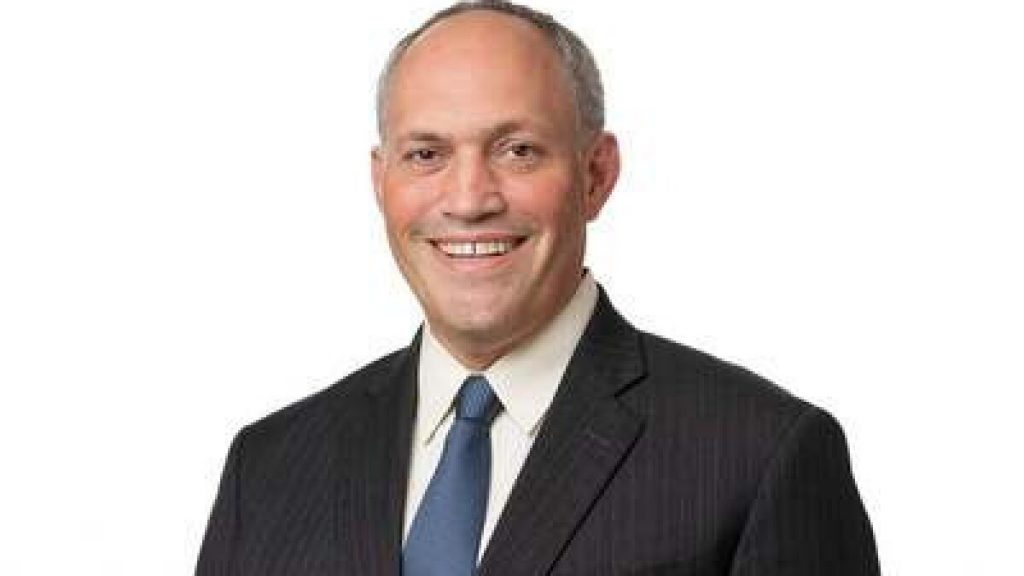
WASHINGTON —When Michael Rubin appeared before the Tom Lantos Human Rights Commission in June, he delivered one of the strongest recent indictments of President Recep Tayyip Erdoğan’s government heard on Capitol Hill. Rubin argued that Türkiye’s political repression was no longer merely a domestic human-rights problem. It had become, he said, a threat to American interests, regional security and the credibility of NATO. His testimony described a country approaching what he portrayed as an authoritarian point of no return: opposition leaders prosecuted or imprisoned, independent institutions weakened, journalists pressured and elections increasingly shaped by the courts rather than voters.
Those concerns deserve attention. But so does Rubin’s own record. Rubin is not a neutral investigator appointed by Congress. He is an experienced but deeply opinionated policy advocate whose work has frequently aligned with organizations seeking to restrict American military and diplomatic cooperation with Türkiye—including the Armenian National Committee of America, or ANCA.
In 2023, ANCA’s Eastern Region presented Rubin with its inaugural Advocacy Award for work supporting Hai Tahd, often translated as the Armenian Cause. ANCA praised him for advocating on behalf of Armenia and Artsakh and for helping elevate those issues in Washington.
That relationship does not automatically make Rubin’s criticism false. But it is relevant context that Congress, journalists and Turkish-American readers should know.
What Rubin Told Congress
Rubin’s testimony covered far more than conventional concerns about courts, elections and press freedom.
He blamed both Ankara and Washington for Türkiye’s political deterioration, arguing that President Trump and Ambassador Tom Barrack had given Erdoğan confidence that abuses would carry few consequences. He described the administration’s relationship with the Turkish president as dangerously accommodating.
Rubin also urged the United States to:
- reconsider and remove the PKK’s designation as a foreign terrorist organization;
- support a political process involving imprisoned PKK founder Abdullah Öcalan;
- consider designating the Turkish security company SADAT as a terrorist organization;
- impose sanctions connected to religious-property and minority-rights disputes;
- reopen the accepted account of the failed July 2016 coup;
- and place greater pressure on Türkiye over Armenian, Greek, Kurdish and Jewish concerns.
Some of his language was extraordinary. Rubin compared the 2016 coup attempt to the Reichstag Fire, suggesting that Erdoğa may have manipulated or exploited the event to consolidate power. He also made sweeping statements about the safety of Jewish residents and travelers in Türkiye and drew comparisons to Europe in the 1930s.
Those assertions were Rubin’s. They were not findings adopted by Congress, conclusions of an American intelligence assessment or rulings by a court. That distinction matters.
Who Is Michael Rubin?Rubin is director of policy analysis at the Middle East Forum and previously spent more than two decades at the American Enterprise Institute. He has taught national-security subjects to American military personnel, worked on Middle East policy and testified before Congress more than two dozen times. He holds a doctorate in history from Yale University. No reliable public biography identifies Rubin as Armenian or of Armenian descent. His official congressional biography describes him as a native of Philadelphia but does not state an Armenian ethnic background. His public biographies also do not identify him as a registered Republican or Democrat. He is best understood as a conservative or neoconservative foreign-policy analyst, rather than as an official representative of either political party. More importantly for this debate, Rubin has become a prominent outside ally of ANCA. ANCA did not simply invite him to speak at an event. It honored him for advocacy. Its 2023 announcement said Rubin had drawn attention to alleged Azerbaijani abuses against Armenians in Artsakh and had been “instrumental” in advancing the issue internationally. ANCA continues to promote Rubin’s testimony and policy arguments. In recent weeks, it has highlighted his congressional criticism of Türkiye while campaigning against Türkiye’s return to the F-35 program and against proposed American defense sales to Ankara. The most precise description is therefore this: ” Michael Rubin is not publicly known to be Armenian and does not appear to be an ANCA official. He is, however, a recognized ANCA ally whose arguments on Türkiye, Armenia, Azerbaijan, Artsakh and American arms policy frequently reinforce ANCA’s Washington agenda.
Does That Mean Rubin Is “Always Against Türkiye”?
That conclusion goes further than the evidence permits. It is fair to say that Rubin has developed a consistently hostile view of Erdoğan’s government and frequently supports policies that would impose political, diplomatic or military costs on Türkiye. His current testimony, recent writings and collaboration with ANCA demonstrate a strong and longstanding perspective.
It is not possible to establish as fact that Rubin will “always” oppose Türkiye, regardless of its government or policies.
The stronger argument is that Rubin should not be presented as a detached referee. His advocacy relationships and previous positions may influence what he emphasizes, which allegations he accepts and what remedies he recommends.
That is not unusual in Washington. Think-tank experts often work alongside advocacy organizations. But responsible journalism requires disclosing those relationships—especially when an expert recommends delisting an organization Türkiye and the United States have long regarded as terrorist, restricting defense cooperation with a NATO ally or imposing new sanctions.
How Much Support Did His Testimony Receive?
Rubin’s appearance carried real weight because the hearing was hosted by a bipartisan congressional commission.
Republican Co-Chair Christopher Smith and Democratic Co-Chair James McGovern both expressed serious concern about political repression, judicial independence and the treatment of opposition figures in Türkiye. Smith said Türkiye might be approaching a point where restoring democratic institutions would become extremely difficult. He specifically cited Rubin’s argument that freedom and the rule of law affect NATO’s strength and stability.
McGovern said the commission was united in wanting Türkiye’s government to respect human rights and democratic freedoms. He cited reports alleging an unprecedented legal campaign against the CHP and criticized the continued failure to implement binding European human-rights judgments.
That is meaningful bipartisan support for the general concern.
It is not the same as support for Rubin’s entire testimony.
Neither co-chair endorsed his proposal to remove the PKK from the terrorist list. Neither publicly adopted his theory about the 2016 coup. Neither endorsed every historical comparison, allegation against SADAT or claim concerning Jewish travelers.
The hearing produced no binding legislation, resolution or formal congressional finding accepting Rubin’s recommendations.
Rubin therefore succeeded in reinforcing an existing bipartisan concern about Türkiye’s democratic direction. He did not demonstrate that Congress had embraced his broader ideological agenda.
Yerevan Is Pursuing Normalization. Some Diaspora Advocates Are Not on the Same Track.
There is another important contradiction. Armenia’s elected government is actively pursuing normalization with Türkiye. Prime Minister Nikol Pashinyan has described completing the Armenia-Türkiye normalization process—including reopening regional transportation links—as important to regional stability. Armenian officials have expressed readiness to establish diplomatic relations and fully open the border.
Türkiye and Armenia simplified visa procedures in late 2025, reaffirming their stated goal of full normalization without preconditions. In May 2026, Türkiye removed customs obstacles that had prevented goods from being formally designated as traveling directly between the two countries, creating a path toward direct trade.
Armenia’s government appears to recognize that permanent hostility leaves the country isolated and economically constrained. Normalization does not require Armenians to abandon their history or Türkiye to accept every Armenian political demand. It means both governments have concluded that communication, trade and open borders may serve their people better than another generation of permanent confrontation.
ANCA is entitled to disagree. It represents an American advocacy constituency, not the Armenian government.
But its current agenda remains far more confrontational. ANCA continues urging Congress to block defense sales to Türkiye, oppose F-35 reintegration and condition U.S.–Türkiye relations on an extensive list of historical and regional demands.
In plain language, Yerevan appears to have received the message that normalization may be necessary for Armenia’s future. Parts of the diaspora advocacy establishment have not embraced the same approach.
That does not mean Armenian Americans must forget historical grievances. It means there is a widening difference between a government attempting to build a future with its neighbor and an advocacy network whose political influence has long depended on confronting that neighbor in Washington.
Rubin’s partnership with ANCA places his testimony within that larger tension.
What Turkish Americans Should Take Seriously
Turkish Americans should not dismiss every allegation simply because Rubin works with ANCA.
Concerns over judicial independence, prosecutions of opposition leaders, censorship and political polarization are not limited to Rubin. Republican and Democratic members of Congress, international rights organizations and other hearing witnesses have raised similar concerns.
Blindly rejecting all criticism would damage Turkish-American credibility.
But Turkish Americans should also insist that congressional testimony meet basic standards:
Relationships must be disclosed. Allegations must be separated from evidence. Policy advocacy must not be presented as objective analysis. Criticism of Erdoğan must not become hostility toward Türkiye as a country.
Rubin’s testimony mixed several different categories:
Documented concerns
Questions about judicial independence, political prosecutions, media pressure and electoral competition deserve serious investigation.
Disputed allegations
Claims about the origins of the 2016 coup, government connections to terrorist activity and predictions concerning the safety of entire religious communities require far stronger evidence.
Ideological policy proposals
Delisting the PKK, releasing Öcalan, sanctioning Turkish institutions or restricting American defense cooperation are political choices—not automatic conclusions derived from human-rights concerns.
Congress should evaluate each category separately.
TC-USA PAC supports open congressional examination of human rights and democracy in Türkiye. We also believe lawmakers should understand the institutional and advocacy relationships of every witness. Michael Rubin is an experienced analyst, but he is also a recognized ally of ANCA who received its 2023 Advocacy Award for work supporting Armenian and Artsakh causes. His testimony should be evaluated in that context. Documented concerns deserve attention; disputed allegations and sweeping policy recommendations require independent verification. Criticism of a government must never become a campaign against Türkiye, the Turkish people or the U.S.–Türkiye alliance.