
NATO Calls on Türkiye for Early F-16 Deployment as Baltic Air Defense Pressures Mount
Alliance seeks accelerated Turkish fighter jet rotation in Estonia amid surge in Russian airspace violations
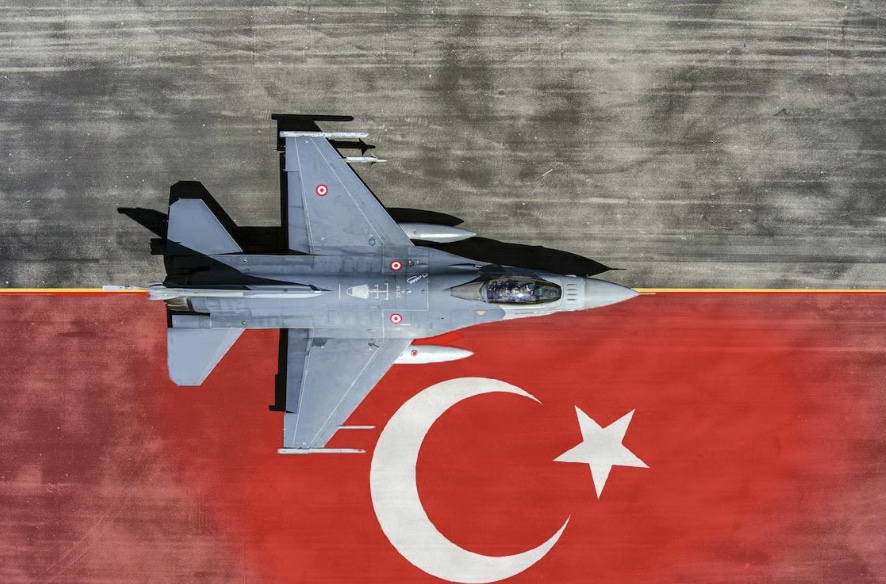
RAMSTEIN, Germany — NATO has requested that Türkiye deploy F-16 fighter jets to Estonia several months ahead of schedule, a move that underscores mounting pressure on the alliance’s air defenses as Russian military aircraft continue to test NATO airspace with increasing frequency.
The proposed four-month rotation would run from August through December 2026 at Ämari Air Base in Estonia, according to officials familiar with the matter who spoke on condition of anonymity due to the sensitivity of ongoing military planning. Ankara had originally been scheduled to deploy warplanes to Romania from December 2026 through March 2027 as part of its regular contributions to NATO’s Baltic Air Policing mission.
Turkish authorities have not yet decided whether to approve the accelerated deployment request, the officials said. Türkiye’s Defense Ministry declined to comment, while NATO did not immediately respond to requests for clarification.
Scrambles Surge to Highest Level Since 2022
The request comes as NATO jet scrambles in the Baltic region have surged to approximately 250 cases in 2025—the highest level since 2022—according to figures from the Lithuanian Defense Ministry. These rapid-response takeoffs typically involve intercepting Russian military aircraft that approach or violate NATO airspace without filing flight plans, using transponders, or communicating with air traffic control.
The spike in activity reflects what alliance officials describe as a deliberate pattern of Russian probing operations designed to test NATO’s readiness and response times along its eastern flank.
“The violation of Poland’s airspace earlier in the week was not an isolated incident and impacts more than just Poland,” NATO Supreme Allied Commander Europe General Alexus G. Grynkewich said in September 2025 following Russian drone incursions into Polish territory. “While a full assessment of the incident is ongoing, NATO is not waiting, we are acting.”
A Mission Six Decades in the Making
NATO’s Baltic Air Policing mission has been a cornerstone of alliance solidarity since the Baltic states—Estonia, Latvia, and Lithuania—joined NATO in 2004. None of the three nations possess their own fighter aircraft, making them dependent on rotating deployments from allied air forces to guard their skies 24 hours a day, 365 days a year.
The mission operates from two primary bases: Šiauliai Air Base in Lithuania and Ämari Air Base in Estonia, the latter established in 2014 following Russia’s annexation of Crimea. Fighter jets from across the alliance—including Spanish Eurofighters, Italian F-35s, German Typhoons, and Dutch F-35s—maintain a constant Quick Reaction Alert posture, ready to scramble within minutes.
In September 2025, three Russian MiG-31 fighter jets violated Estonian airspace for approximately 12 minutes, prompting Italian F-35s stationed at Ämari to intercept and escort the aircraft out. The Russian pilots acknowledged but disregarded communications from NATO interceptors before ultimately departing, according to Estonian authorities.
Türkiye’s Strategic Balancing Act
The timing of NATO’s request places Ankara in a delicate position as it balances alliance commitments with its own regional security priorities spanning the Black Sea, Syria, and southeastern Europe.
Türkiye last participated in Baltic Air Policing patrols in early 2025 and has been a regular contributor to the mission since 2006. The country operates one of NATO’s largest air forces, making it a valuable asset for the alliance during periods of heightened operational tempo.
The request also comes ahead of a NATO summit that Türkiye is scheduled to host in July 2026, adding diplomatic weight to Ankara’s response. Turkish President Recep Tayyip Erdoğan’s administration has sought to position itself as a key NATO ally while simultaneously maintaining complex relationships with Russia on issues ranging from energy to regional conflicts.
Recent incidents closer to home have demonstrated Türkiye’s own air defense challenges. In December, a Turkish F-16 shot down an unmanned aerial vehicle over the Black Sea as it approached Turkish airspace. Days later, a crashed drone believed to be Russian-made was discovered in northwestern Türkiye, highlighting the multiple theaters competing for Turkish military attention.
Eastern Sentry and Enhanced Deterrence
NATO has responded to the escalating airspace violations by launching Operation Eastern Sentry in September 2025, a multi-domain military activity designed to provide more focused and flexible deterrence across the alliance’s eastern flank.
“Eastern Sentry and this new approach will deliver even more focused and flexible deterrence and defense where and when needed to protect our people and deter against further reckless and dangerous acts,” General Grynkewich said.
The operation has seen French Rafale fighters conduct their first alert scrambles in support of the mission, while Dutch F-35s deployed to Poland under NATO’s Security Assistance and Training for Ukraine (NSATU) have been integrated into the enhanced air policing framework.
Russian Activity Linked to Kaliningrad Enclave
Much of the Russian air activity that triggers NATO scrambles is linked to the Kaliningrad exclave, where Russian aircraft regularly fly between mainland Russia and the isolated territory wedged between Poland and Lithuania. These flights frequently approach or cross NATO airspace without proper communication or identification protocols.
According to NATO officials, Russian aircraft often operate without transponders, refuse to communicate with air traffic control, and fail to file flight plans—all violations of international aviation norms that create safety risks for both military and civilian aircraft.
Swedish and Danish fighters have also been scrambled under national authority to intercept Russian aircraft, including Su-30 fighters and IL-20 reconnaissance planes, flying over the southern Baltic Sea, demonstrating the breadth of Russian probing operations beyond NATO’s immediate borders.
Alliance Solidarity Under Pressure
The accelerated deployment request reflects NATO’s assessment that existing rotation schedules may no longer be sufficient to deter or manage the volume of airspace incidents. Alliance officials view air policing as both a practical defense measure and a visible demonstration of collective commitment to the security of frontline states.
“I think what we have seen last night was a very successful reaction by NATO and Allies, including of course, Poland itself, but also the Dutch and the Italians and the Germans, everybody involved,” NATO Secretary General Mark Rutte said in September 2025 following the Polish airspace violations. “And I’m really impressed. So of course, we always have to make sure that we are one step ahead. But I think last night showed that we are able to defend every inch of NATO territory including, of course, its airspace.”
The three Baltic host nations have contributed millions of euros to support the mission, with NATO allocating €7 million in 2012 for Šiauliai airfield modernization from the Security Investment Programme.
Looking Ahead
As NATO awaits Türkiye’s decision on the accelerated deployment, the alliance continues to adapt its air defense posture to meet evolving threats. The integration of advanced F-35 fighters, AI-driven radar systems, and enhanced drone detection networks represents a technological evolution of a mission that has been safeguarding European skies for more than six decades.
Whether Ankara agrees to the early deployment will signal not only Türkiye’s commitment to Baltic security but also its willingness to shoulder additional operational burdens at a time when NATO faces mounting challenges across multiple fronts.
For the citizens of Estonia, Latvia, and Lithuania, the answer will determine whether the skies above their nations remain under the constant watch of allied fighters—or whether gaps in coverage could embolden further Russian testing of NATO’s resolve.
Sources:
- Turkish Minute – NATO asks Turkey to deploy fighter jets early for Baltic air patrol mission
- Clash Report – NATO Asks Türkiye Early Turkish F-16 Deployment For Baltic Air Policing
- NATO – Air Policing
- Allied Air Command – NATO Air Policing: Guarding the Skies When It Matters Most
- The Year 2026 – Russian Aircraft Violations of NATO Airspace 2025