
The End of the Friction? Washington’s Syria Pivot and Billion‑Dollar Energy Deals Transforming Ties with Türkiye
n recent weeks, Washington and Ankara have begun to sound—at least briefly—like two capitals rediscovering the advantages of cooperation. The shift is not being driven by a single summit or one dramatic announcement, but by two parallel tracks that touch the hardest parts of the relationship: Syria and strategic energy.
Al-Monitor, in a Turkey-focused newsletter headline, asked the question directly: “A new phase in Turkey-US ties?”The premise, summarized on Al‑Monitor’s Syria page, is that U.S.-Turkey relations are getting a “rare boost” as Washington signals it may scale back support for the Kurdish-led Syrian Democratic Forces (SDF)—a core Turkish demand for years—while warning that risks inside Syria remain unresolved. Al‑Monitor (Syria page) (see the newsletter blurb)
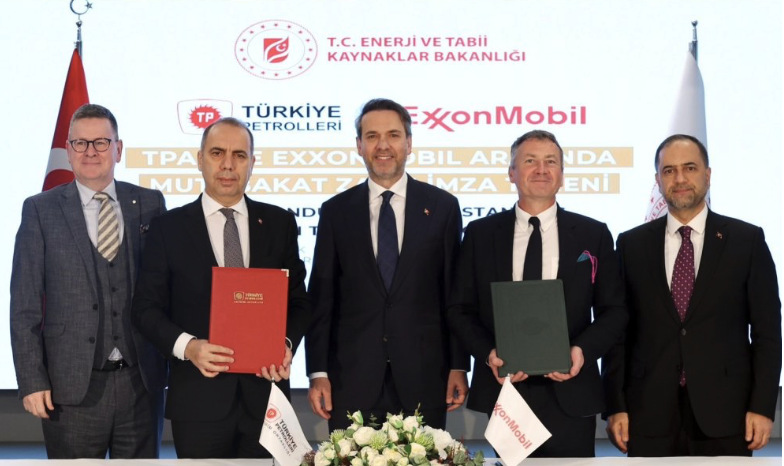
At the same time, Turkey’s state energy company is moving to deepen ties with the United States in a way that is less ideological and more durable: money, rigs and long-lead projects. Turkey has already signed an upstream exploration memorandum with ExxonMobil’s affiliate and is now in talks—expected to lead to an agreement— with Chevron. Daily Sabah Energy Intelligence AGBI Türkiye Today
Together, these moves suggest something familiar in modern diplomacy: a new phase is possible—but it is conditional, transactional, and reversible.
Syria: the issue that can thaw ties—or freeze them again
For much of the past decade, the U.S.-Turkey relationship has been haunted by an unresolved contradiction in northern Syria. Washington has relied on Kurdish-led forces as an effective partner against the Islamic State; Ankara has viewed key elements of those same forces as inseparable from the PKK threat it has fought at home.
Al-Monitor’s Syria page indicates that U.S. signals to scale back support for the SDF have created “new political momentum,” but also underscores that the situation on the ground remains fragile. The same page highlights a recent dynamic of U.S.-led diplomacy aimed at preventing escalation and pushing ceasefire and phased integration between the Kurdish-led SDF and Syria’s interim government—evidence that Washington is trying to reduce the risk of a wider collapse while also narrowing its exposure. Al‑Monitor (Syria page)
That, for Ankara, is more than a policy tweak. It is potentially the first meaningful movement on what Turkey has long treated as a non-negotiable national security file.
But it also comes with a cost to the United States: if Washington reduces support for the SDF without a stable, enforceable alternative for detention sites, counterterrorism operations and local governance, the U.S. could face renewed pressure over ISIS remnants and regional instability—the very risks Al‑Monitor flags as unresolved. Al‑Monitor (Syria page)
Energy: the “quiet” track that can outlast headlines
While Syria drives the politics, energy is supplying the ballast.
On Jan. 8, Turkey’s Energy Minister Alparslan Bayraktar announced a memorandum of understanding between Turkey’s national oil company TPAO and ESSO Exploration International Limited, an ExxonMobil affiliate, covering “new exploration areas” in the Black Sea and the Mediterranean, and potentially other areas. Daily Sabah
Then, on Jan. 22, Energy Intelligence reported that Bayraktar said Ankara expects to sign an upstream exploration agreement with Chevron next month, following the Exxon MoU earlier in January. Energy Intelligence
Other business outlets have described the Chevron talks similarly: joint seismic work and drilling with TPAO, with no concession areas publicly identified. AGBI Türkiye Today
If these projects proceed, they would do something diplomatic talking points rarely accomplish: create shared long-term stakes. Exxon and Chevron projects are not symbolic; they are multi-year commitments that require regulatory stability, operational cooperation and a baseline political relationship that can survive periodic crises.
What this “new phase” could mean for the United States (and for Trump)
For Washington, the upside is clear: a pathway—however narrow—to reduce one of NATO’s most persistent internal disputes, while building a second pillar of cooperation through energy.
But the downside is equally clear: Syria tradeoffs are political landmines in U.S. domestic debate, especially when they involve Kurdish partners and ISIS detention and stabilization responsibilities. Any perception of abandonment can become a story in itself.
For President Trump’s foreign-policy style, these developments also fit a recognizable pattern: relationships are judged by “deliverables” (deconfliction in Syria, smoother NATO management, U.S. firms getting upstream access), and sustained by leader-level channels rather than slow multilateral processes.
Energy deals—especially with household-name U.S. majors—are tailor-made for that approach.
What it means for Turkish Americans
For Turkish Americans, a “new phase” is less about triumphal narratives and more about managing visibility.
If Washington truly recalibrates its Syria posture and U.S.-Türkiye ties warm, diaspora communities can expect:
- More attention, not less—because major foreign-policy moves drag domestic constituencies into the conversation.
- A stronger, U.S.-interest-centered message available to advocates: energy cooperation, supply resilience, and reduced dependence on hostile suppliers are arguments that resonate beyond identity politics. (The Exxon and Chevron track is tangible proof.) Daily Sabah Energy Intelligence
- A need for discipline: the Syria file can turn fast. The same conditions that improve ties can also produce backlash if violence spikes or counterterrorism arrangements falter. Al‑Monitor (Syria page)