
Türkiye and Qatar Step Into the U.S.–Iran Firestorm — Washington Should Be Paying Attention
Türkiye and Qatar are quietly moving into the center of one of the most dangerous diplomatic fights in the world: the U.S.–Iran crisis. According to Middle East Eye, Turkish Foreign Minister Hakan Fidan spoke by phone with Qatar’s Prime Minister and Foreign Minister Sheikh Mohammed bin Abdulrahman Al Thani to discuss regional developments and the ongoing U.S.–Iran talks. The call came as Washington, Tehran, Doha, Ankara, and other regional players are trying to prevent the conflict from spiraling into a wider Middle East war.
This is not just another diplomatic phone call. It shows that Türkiye and Qatar are becoming key regional channels between Washington and Tehran at a time when direct trust is almost nonexistent.
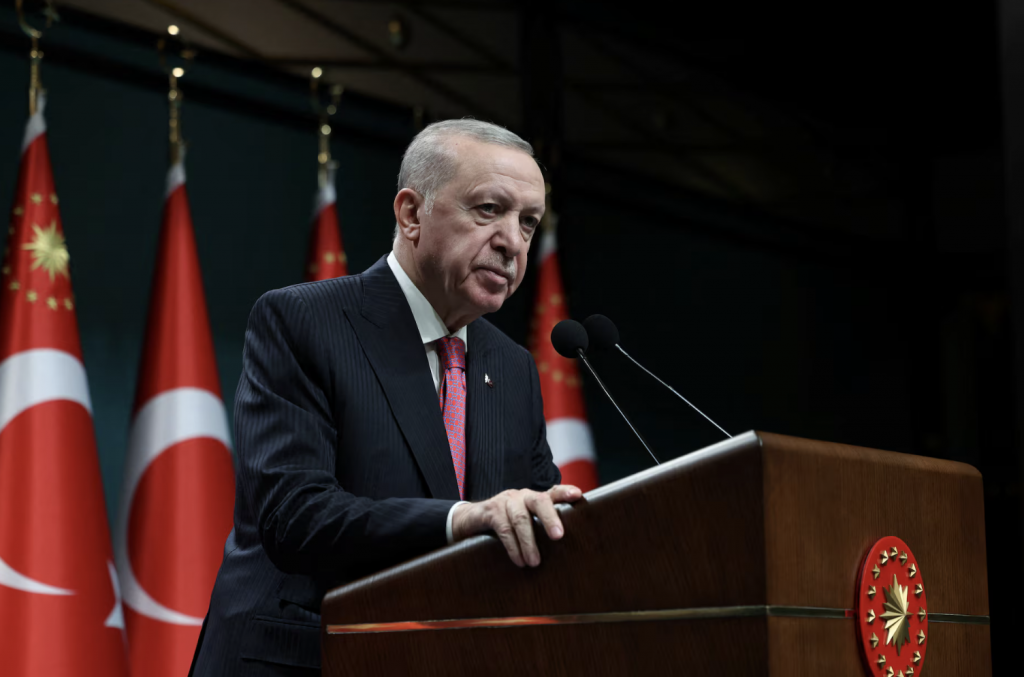
Reuters recently reported that Türkiye has been conveying messages between Iran and the United States, with Turkish officials pushing de-escalation and direct negotiations. Qatar has also remained in close contact with Washington and has supported efforts to reduce regional attacks, even while saying it is not formally acting as the direct mediator. The timing is critical. U.S.–Iran negotiations remain fragile, and President Trump recently rejected Iran’s response to a U.S. proposal as “totally unacceptable,” according to multiple reports. Iran’s demands reportedly included sanctions relief, control over the Strait of Hormuz, and broader guarantees, while Washington continues to demand limits on Iran’s nuclear program.
For Turkish Americans, the message is clear: Türkiye is not sitting on the sidelines. Ankara is acting as a serious diplomatic player in a crisis that directly affects NATO, global energy markets, U.S. military posture, and Middle East stability. Türkiye’s role matters because of geography. It borders Iran, anchors NATO’s southeastern flank, sits near the Black Sea, Syria, Iraq, the Caucasus, and the Eastern Mediterranean, and has channels of communication with actors that Washington often struggles to reach. Qatar’s role matters because Doha has become one of the most active diplomatic platforms in the Gulf. Reuters reported that U.S. Vice President JD Vance recently met with Qatar’s prime minister in Washington to discuss Iran, regional stability, U.S.–Qatar ties, and LNG markets. Together, Türkiye and Qatar represent something Washington badly needs: regional access, political credibility, and communication channels before escalation becomes uncontrollable.
This is where Turkish Americans must pay attention. For years, anti-Türkiye voices in Washington have tried to frame Ankara as a problem. But in moments of crisis, the facts tell a different story. Türkiye is not the weak link. Türkiye is one of the few NATO allies that can talk to Washington, Tehran, Moscow, Kyiv, Doha, and regional capitals at the same time. That does not mean Türkiye and the United States agree on everything. They do not. But disagreement is not the same as disloyalty. Strategic independence is not hostility. And diplomacy with difficult neighbors is not betrayal — it is geography, realism, and national interest.
For TC-USA PAC readers, this moment should be understood as part of a larger narrative battle in Washington. If Turkish Americans do not explain Türkiye’s strategic value, others will define it for them.
The real story is simple:
When the Middle East moves toward war, Washington still needs Ankara.
And when diplomacy becomes the only path away from disaster, Türkiye is not outside the room — Türkiye is helping keep the room open.
Sources: Middle East Eye, Reuters, Anadolu Agency, Daily Sabah.