
Türkiye's Balancing Act: How Ankara Turned Isolation Into Strategic Independence
As Washington and Brussels imposed sanctions and embargoes, Türkiye built its own defense empire—and emerged as a global power broker
WASHINGTON, D.C. — For decades, Türkiye has walked a diplomatic tightrope that few nations could navigate: maintaining its NATO membership while cultivating ties with Russia, mediating between Ukraine and Moscow, supporting Azerbaijan while managing relations with Iran, and building a formidable defense industry after being shut out of Western arms markets.
Now, as the United States grapples with escalating conflicts from the Middle East to the Caucasus, Türkiye has emerged not as a supplicant seeking American favor, but as an indispensable partner whose cooperation Washington can no longer take for granted.
A recent field note from the Stimson Center’s Reimagining US Grand Strategy Program, based on extensive interviews with Turkish officials, academics, and journalists in Ankara and Istanbul, reveals a nation that has transformed decades of Western pressure into a source of strength—and a cautionary tale about the unintended consequences of treating allies as adversaries.
The Paradox of Punishment
The story of Türkiye’s rise as a defense powerhouse is, paradoxically, a story of Western rejection.When the Turkish Parliament voted in March 2003 to block the United States from using Turkish territory to prosecute the war in Iraq, it marked a turning point in U.S.-Turkish relations. The decision was followed months later by the “Hood event,” in which 11 Turkish soldiers were apprehended, hooded, and detained by U.S. troops—an incident that remains seared into Turkish national memory.
“Strategic issues favor Türkiye, cultural or political ones favor those who are not friends of Türkiye: Armenia, Israel, and Greece,” one Turkish expert told Stimson researchers, capturing the sense of double standards that pervades Turkish perceptions of the West.
But it was Türkiye’s 1974 military intervention in Cyprus—and the subsequent U.S. arms embargo—that first forced Ankara to confront its dependence on foreign weapons. The lesson was clear: if Türkiye wanted to defend its interests, it would have to build its own arsenal.
Fast forward to 2020, when the United States expelled Türkiye from the F-35 program following President Recep Tayyip Erdoğan’s purchase of Russian S-400 air defense systems. CAATSA sanctions followed, as did European export restrictions after Türkiye’s 2019 military offensive against Kurdish groups in Northern Syria.
Each embargo, each sanction, each blocked sale became a catalyst for Turkish self-reliance.
“We build our own when we are not able to buy from others,” one Turkish defense expert told Stimson researchers with evident pride.
From Dependence to Dominance
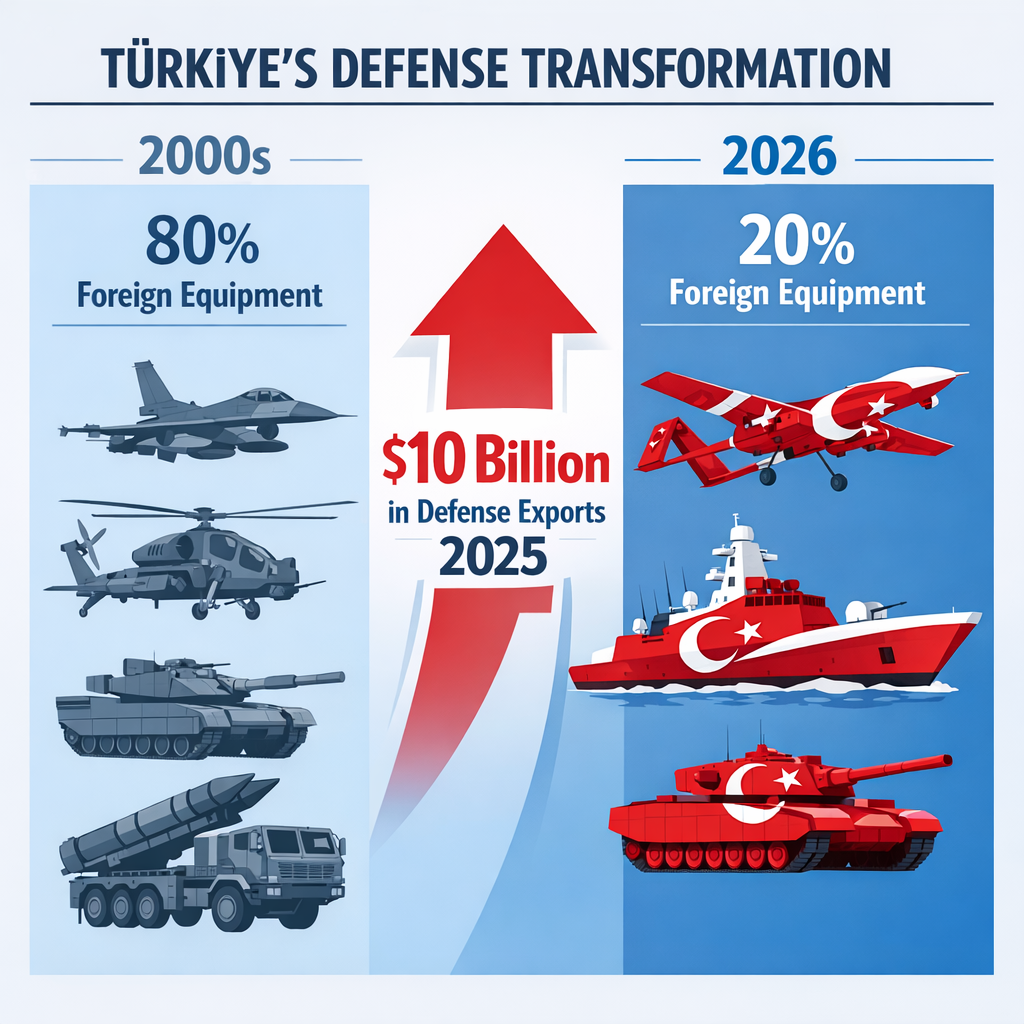
The numbers tell a remarkable story. In the early 2000s, approximately 80% of the Turkish Armed Forces’ inventory consisted of foreign equipment. By 2024, that figure had plummeted to around 20%—with plans to reduce it further to 15%.
Türkiye’s defense exports have skyrocketed in parallel. From $5.5 billion in 2023, they surged to $7.2 billion in 2024, and reached a record-breaking $10.054 billion in 2025. By March 2026, monthly exports had hit $884 million—a 147% increase over the previous year.
The crown jewel of this transformation is the Bayraktar TB2 drone, manufactured by Baykar Technologies. The TB2 became a household name during the 2022 Russian invasion of Ukraine, where it destroyed Russian tanks and armored vehicles with devastating effectiveness. Footage of TB2 strikes went viral, providing some of the most compelling “sales videos” any defense company could hope for.
Today, Baykar controls an estimated 65% of the global UAV export market, ahead of China, Israel, and the United States. The TB2 has been exported to 34 countries, including six NATO allies and four EU member states. By December 2024, TB2 drones had completed 1 million flight hours globally.
Baykar’s success extends beyond drones. In 2024, the company reported that 90% of its $1.8 billion in revenues came from exports. The company now has production capacity for 250 TB2s annually, with plans to increase to 500.
But Türkiye’s defense renaissance isn’t limited to drones. The country now produces its own main battle tank (the Altay), corvettes (Ada-class ships exported to Pakistan, Malaysia, and Ukraine), fast attack craft, armored vehicles, missiles, and even its first indigenous communications satellite, TÜRKSAT 6A.
In August 2025, Türkiye unveiled the “Steel Dome” integrated air defense system—a $460 million project developed entirely by Turkish defense electronics company Aselsan. The system, consisting of 47 vehicles, now shields 783,000 square kilometers of Turkish airspace.
“No country that cannot develop its own radar and air defense system can look to its future with confidence,” President Erdoğan declared at the system’s unveiling.
The Geopolitical Tightrope
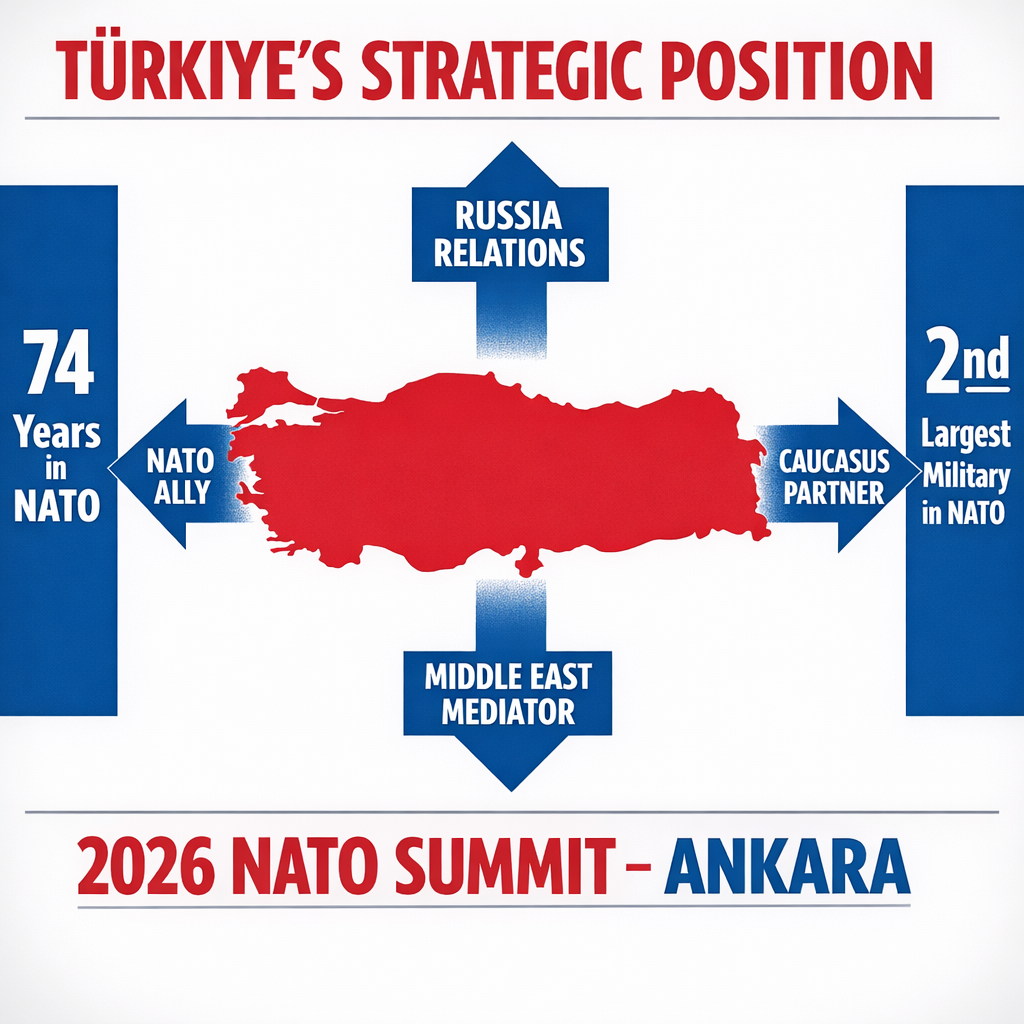
Türkiye’s geographic position—straddling Europe, Asia, and the Middle East—has always been both blessing and curse. The 1936 Montreux Convention gave Türkiye control over the Dardanelles and Bosporus straits, making it the gatekeeper to the Black Sea. But this strategic location has also made Türkiye a perpetual “mediator” caught between competing powers.
Nowhere is this more evident than in Türkiye’s approach to the war in Ukraine.
While Türkiye has condemned Russia’s invasion and provided critical military aid to Ukraine—including those famous TB2 drones—it has refused to join Western sanctions against Moscow. Turkish experts describe their position as “pro-Kyiv, but not overly anti-Moscow.”
“Türkiye is not reflexively hawkish regarding Russia,” Stimson researchers noted. “Turks do not want the Black Sea to turn into a Russian lake, but they also don’t seek to humiliate Russia or destroy the Russian economy.”
This pragmatic approach has allowed Türkiye to broker critical agreements, including the Black Sea Grain Initiative, which enabled Ukrainian grain exports during the war. As one Turkish official told Stimson: “The Russians are not happy about what we are doing, and the Ukrainians are not happy with what we are doing, which means that it’s good.”
Türkiye’s balancing act aligns increasingly with the Trump administration’s own pragmatic approach to the conflict. But it has put Ankara at odds with many European NATO allies, who view Türkiye’s refusal to fully isolate Russia as a betrayal.
Shut Out of Europe’s Defense Future
Perhaps nowhere is Türkiye’s sense of exclusion more acute than in its relationship with the European Union.
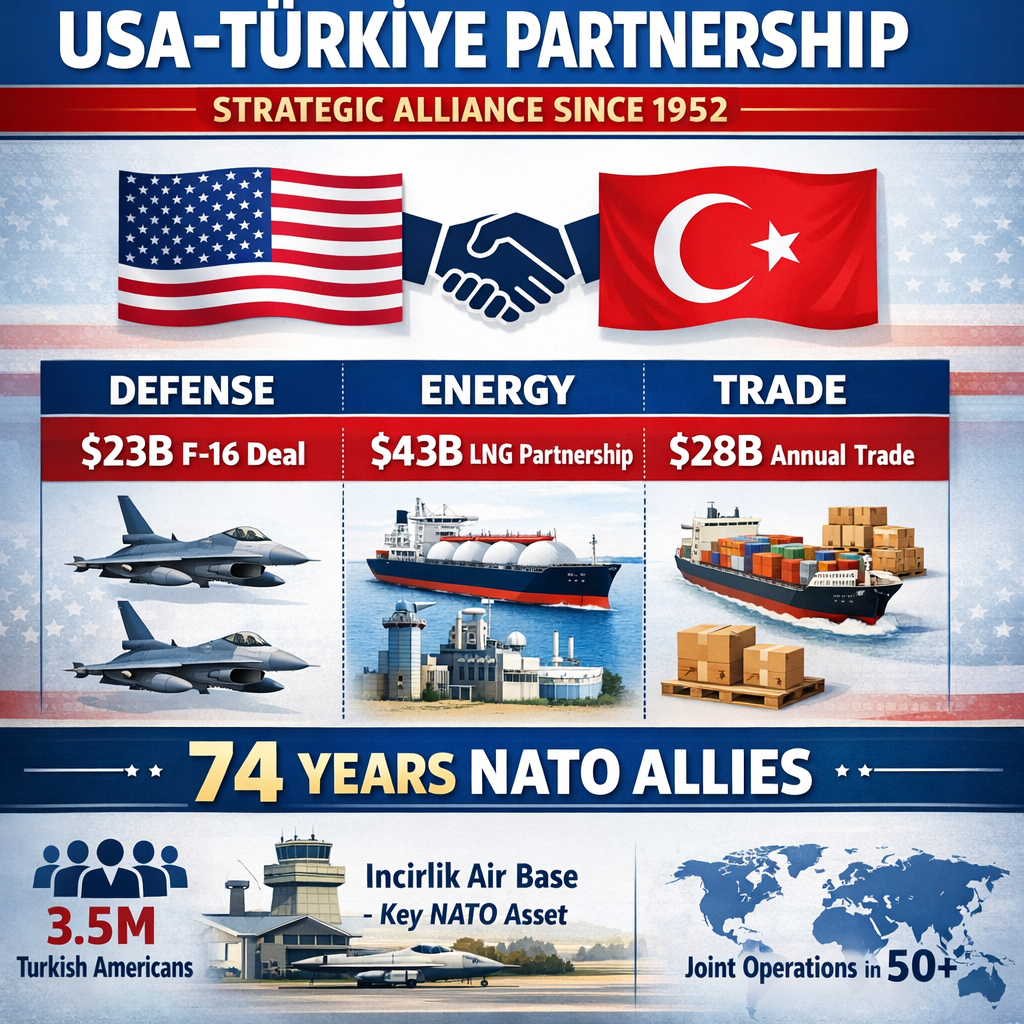
Despite being a NATO member for over 74 years, Türkiye has been systematically excluded from EU defense industrial packages such as Security Action for Europe (SAFE) and Permanent Structured Cooperation (PESCO)—even as Brussels has opened these programs to non-EU countries like Canada, Japan, the United Kingdom, and the United States.
“Türkiye is still reliant on NATO for security, even if Turks do not ‘fully trust it,'” one expert explained to Stimson researchers.
This exclusion has fueled Turkish fears that the future of European security will be built around the EU—which pointedly does not include Türkiye. Ongoing disputes with Greece and Cyprus, and European concerns about Türkiye’s hostility toward Kurdish groups, have only deepened the divide.
Yet here too, Türkiye has found workarounds. In February 2025, Baykar created a joint venture with Italy’s Leonardo, which will allow joint production of drones potentially using SAFE funds. Turkish defense company ASFAT has sold ships to Romania and Indonesia.
“Right now we want F-35s, but in three, four, or five years, we might not need them anymore,” one Turkish interlocutor told Stimson researchers. Another went further: “They are too expensive to buy, and their lifespan updates are too expensive as well.”
The Trump Factor
The election of Donald Trump to a second term has opened a new chapter in U.S.-Turkish relations—one characterized by personal diplomacy between two leaders who share a preference for transactional, leader-to-leader engagement.
During President Erdoğan’s September 2025 White House visit—his first in six years—Trump was effusive in his praise. “The fall of the Assad regime in Syria was Türkiye’s success,” Trump declared, repeatedly lauding Erdoğan’s regional influence.
The meeting yielded concrete results. Turkish Airlines secured a deal to purchase 225 aircraft from Boeing. Türkiye’s Ministry of Energy signed a $43 billion, 20-year LNG agreement with the United States. A civilian nuclear cooperation deal involving small modular reactors was formalized.
Most significantly, Trump signaled openness to lifting CAATSA sanctions and resuming F-35 sales to Türkiye—moves that could fundamentally reset defense cooperation between the two NATO allies.
“If the congressional balance in the U.S. shifts toward the Democrats in the November 2026 midterms, Trump’s hand will be weakened,” noted Turkish analyst Kadir Üstün. “Until then, there is an opportunity for Türkiye to have sanctions lifted and reset defense relations during Trump’s strongest period.”
Trump’s asks of Erdoğan reportedly included reducing Turkish purchases of Russian oil and gas—a significant request, but one framed as negotiation rather than ultimatum. Türkiye imports natural gas from Russia and relies on Russian construction of the Akkuyu nuclear plant, making complete energy independence from Moscow unrealistic in the near term.
The Iran Dilemma
Yet even as U.S.-Turkish cooperation deepens on some fronts, fundamental disagreements persist—none more consequential than Türkiye’s stance on Iran.
When the United States and Israel launched military strikes against Iran on February 28, 2026, Erdoğan publicly condemned both the offensive and Tehran’s retaliation. The following day, he expressed his “sadness” at the elimination of Iran’s Supreme Leader Ali Khamenei and offered “condolences” to the Iranian people.
Türkiye has reportedly denied U.S. forces access to its air, land, and maritime space for operations against Iran—a posture that, as the Foundation for Defense of Democracies noted, is “in profound tension with Turkey’s status as a NATO member and a purported U.S. strategic ally.”
Ankara’s position reflects its preference for regime stability in Tehran over the emergence of a democratic, Western-aligned Iran. A weakened but intact Islamist regime better serves Türkiye’s regional ambitions, Turkish analysts suggest, than a power vacuum or pro-Western government in Tehran.
This stance has alarmed Washington, particularly given Türkiye’s ongoing support for Hamas—designated a terrorist organization by the United States and European Union. Türkiye has provided political and material support to Hamas since 2011, and Erdoğan has been one of Israel’s most vocal critics since the October 7, 2023, attacks.
Azerbaijan and the Expanding Conflict
Türkiye’s regional entanglements became even more complex on March 5, 2026, when Iranian drones struck Azerbaijan’s Nakhchivan region, hitting the international airport and injuring four civilians.
The attack marked a dangerous expansion of the U.S.-Israel-Iran conflict into the Caucasus—and put Türkiye in a precarious position. Under mutual defense agreements, Türkiye has pledged to provide military support if Azerbaijan faces armed aggression. The phrase “one nation, two states” captures the depth of Turkish-Azerbaijani ties.
President Erdoğan condemned the strikes and emphasized Türkiye’s commitment to Azerbaijan’s security. But Türkiye also shares a 530-kilometer border with Iran and imports natural gas from Tehran, making the situation extraordinarily delicate.
Azerbaijan President Ilham Aliyev has instructed military forces to “prepare and implement appropriate retaliatory measures.” If Azerbaijan strikes back, Türkiye could be drawn into a broader regional war—one that would test its NATO obligations, its relationship with Iran, and its carefully cultivated role as regional mediator.
Syria: From Chaos to Opportunity
Türkiye’s most dramatic regional success came in December 2024, when the Bashar al-Assad regime in Syria collapsed after 13 years of civil war. The fall of Assad—long supported by Russia and Iran—represented a geopolitical earthquake, and Türkiye emerged as the primary external power shaping Syria’s future.
Turkish-backed opposition forces, led by Hayat Tahrir al-Sham (HTS) commander Ahmed al-Sharaa, now control much of Syria. Türkiye has provided critical support to the new Syrian government, viewing a stable, conservative Syria as preferable to continued chaos.
“Türkiye sees a stable, yet conservative, Syria as less of a threat than a Syria in chaos,” Stimson researchers noted.
This puts Türkiye at odds with Israel, which is skeptical of al-Sharaa’s jihadist background and has conducted extensive military operations in Syria to prevent the consolidation of a hostile government in Damascus. The potential for Turkish-Israeli conflict in Syria looms large.
Yet the Trump administration has, for now, given al-Sharaa a chance—aligning with Türkiye’s approach. U.S. Special Envoy to the Middle East Steve Witkoff has noted that he regularly consults with Turkish Foreign Minister Hakan Fidan and intelligence chief Ibrahim Kalin on regional security issues.
U.S. Ambassador to Türkiye Tom Barrack has expressed optimism that the reintegration of the Syrian Democratic Forces (SDF)—the Kurdish-led militia that has been a persistent source of U.S.-Turkish tension—into Syrian state security structures could be “substantially achieved by the end of the year.”
If successful, this would remove one of the most contentious issues in U.S.-Turkish relations: American support for Kurdish groups that Türkiye views as extensions of the PKK terrorist organization.
The Kurdish Question
No issue has poisoned U.S.-Turkish relations more persistently than the Kurds.
Since 2015, the United States has trained and armed the Syrian Democratic Forces (SDF), a coalition of militias dominated by the People’s Protection Units (YPG)—the Syrian offshoot of the Kurdistan Workers’ Party (PKK), which has waged a four-decade insurgency against Türkiye.
From Ankara’s perspective, the United States is arming terrorists who kill Turkish soldiers and civilians. From Washington’s perspective, the SDF was an indispensable partner in defeating ISIS and maintaining stability in northeastern Syria.
This fundamental disagreement has survived multiple U.S. administrations. Despite President Trump’s campaign promises to withdraw U.S. troops from Syria, American forces remain—primarily to support the SDF.
Turkish experts interviewed by Stimson tried to rebrand U.S. officials managing the Syria portfolio as “Obama leftovers” to separate the Trump administration from what they view as anti-Türkiye policy. But the policy has remained largely unchanged.
The potential integration of the SDF into a unified Syrian military under Damascus’s control could finally resolve this impasse—or it could simply shift the conflict to a new phase.
The Gülen Factor
Another persistent irritant in U.S.-Turkish relations has been the status of Fethullah Gülen, the Turkish cleric who lived in self-imposed exile in Pennsylvania until his death in October 2024.
Türkiye blamed Gülen and his followers (known as FETÖ) for the bloody July 15, 2016, coup attempt that killed 251 people and wounded more than 2,000. Ankara repeatedly demanded Gülen’s extradition to stand trial, viewing U.S. refusal as evidence of American complicity in the coup.
“The legality of the issue was irrelevant to the Turkish side, especially in the court of public opinion,” noted TRENDS Research & Advisory.
Gülen’s death has removed this particular source of tension, but the underlying mistrust remains. According to polling, the majority of Turks believe the United States was involved in the coup attempt—a perception that has fundamentally shaped Turkish attitudes toward the West.
What Turkish-Americans Need to Know
For the estimated 500,000 Turkish-Americans living in the United States, these developments carry profound implications.
Türkiye is no longer the junior partner in the U.S.-Turkish alliance, dependent on American weapons and diplomatic support. It has become a regional power in its own right—one that Washington needs as much as Ankara needs Washington.
This shift creates both opportunities and challenges for Turkish-Americans seeking to influence U.S. policy.
On one hand, Türkiye’s growing strategic importance gives Turkish-American advocacy organizations like TC-USAPAC greater leverage in Washington. Policymakers increasingly recognize that Türkiye cannot be taken for granted or treated as a subordinate ally.
On the other hand, Türkiye’s support for Hamas, its ambiguous stance on Iran, and its conflicts with Greece and Cyprus continue to generate opposition from powerful lobbying groups representing Israeli, Greek, and Armenian interests.
The personal rapport between Trump and Erdoğan offers a window of opportunity to reset the relationship—but that window may close if Democrats retake Congress in the 2026 midterms or the White House in 2028.
Lessons for Washington
The Stimson Center researchers drew a clear lesson from their conversations in Ankara and Istanbul: “Rather than trying to appease, the Turks built. And, as a result, they are now a stronger player—and a stronger ally.”
This conclusion challenges conventional wisdom about how to manage difficult allies. Sanctions, embargoes, and public criticism were supposed to pressure Türkiye into compliance with Western preferences. Instead, they accelerated Turkish self-reliance and reduced Western leverage.
“Embargoes have paradoxically strengthened Türkiye,” the Stimson report concluded.
Other U.S. allies facing pressure from Washington—from India to Saudi Arabia—are watching closely. If Türkiye can build its own defense industry, cultivate alternative partnerships, and emerge stronger from Western isolation, why can’t they?
For the United States, the challenge is to find a new framework for the alliance—one that acknowledges Türkiye’s strategic autonomy while maintaining cooperation on shared interests.
“Türkiye is seen (and often sees itself) as a ‘mediator,’ at best, and ‘stuck in the middle’ of geopolitical strife, at worst,” Stimson researchers noted. “While Türkiye is not always on the United States’ or Europe’s ‘side,’ that is, in part, because it has not always been invited or allowed to be.”
The Road Ahead
As Türkiye prepares to host the 2026 NATO summit in Ankara—the first time the alliance will meet in the Turkish capital—the symbolism is hard to miss. Türkiye is no longer on the periphery of Western security architecture; it is at the center.
Whether this represents a new era of U.S.-Turkish cooperation or simply a temporary alignment of interests remains to be seen. Much will depend on whether the Trump administration can deliver on promises to lift sanctions and resume F-35 sales—and whether Türkiye is willing to reduce its dependence on Russian energy and moderate its support for groups like Hamas.
What is clear is that the old model—in which Washington dictated terms and Ankara complied—is dead. Türkiye has built an alternative, and it works.
“We came away from these discussions with a clearer sense of how Türkiye has managed to maintain, and even expand, its freedom of maneuver,” the Stimson researchers concluded. “And there’s a lesson here for other U.S. allies scrambling to develop their own defense industries in the face of pressure from Washington.”
For Turkish-Americans, the message is equally clear: Türkiye’s transformation from defense importer to global exporter, from supplicant to power broker, represents both a source of pride and a call to action. As Türkiye navigates between the United States and Europe, between NATO and Russia, between Israel and Iran, the Turkish-American community has a critical role to play in ensuring that Washington understands what Ankara has become—and what it can no longer afford to lose.
Sources:
- Stimson Center: How Türkiye Navigates Between the United States and Europe
- TRENDS Research & Advisory: U.S.-Türkiye Relations in the Second Trump Administration
- Türkiye Today: Türkiye invites Trump to Ankara for bilateral visit and 2026 NATO summit
- Foundation for Defense of Democracies: Backing the Tehran Regime’s Survival, Turkey Condemns U.S. Strikes on Iran
- SETA Foundation: Türkiye-U.S. Relations Poised for Renewal After Erdoğan-Trump Meeting
- Atlantic Council: Experts react: What’s next for US-Turkey ties after Erdoğan’s White House visit?
- C4Defence: Key Developments in the Turkish Defense Industry in 2025
- European Security & Defence: Key programmes bolster Türkiye’s defence-export boom
- The Week: Decoding Türkiye’s quest for self-reliance in the defense industry
- Wikipedia: Baykar Bayraktar TB2