
U.S. Explores Turkey’s Shipyards as It Scrambles to Build a Bigger Navy
WASHINGTON — The United States has begun quiet discussions with Turkey about cooperation in naval shipbuilding, a sign of how urgently Washington is searching for ways to expand and modernize an overstretched fleet as strategic rivalry with China intensifies.
The talks, first reported by Middle East Eye, have included whether Turkish industry could supply ship components and, more ambitiously, whether Turkey could help produce additional frigates as the U.S. Navy confronts what one American official described as a shipbuilding “crisis.” The discussions have been underway since last year, Middle East Eyereported. Middle East Eye
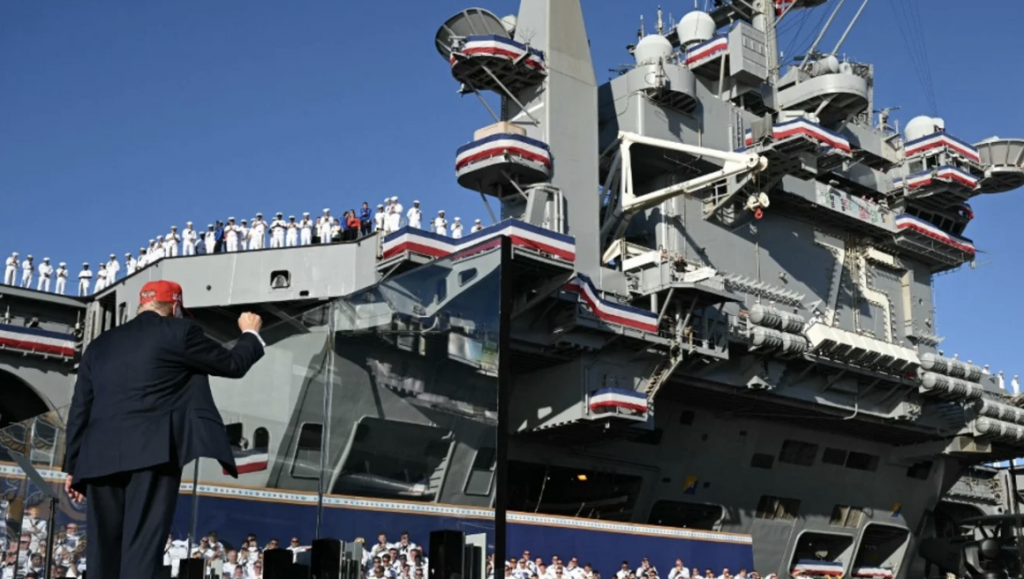
In late January, a delegation from the U.S. Naval Sea Systems Command (NAVSEA) visited Istanbul Naval Shipyard Command, according to a social media post cited by Turkey’s Hürriyet Daily News, an indication that the conversations have moved beyond theory and into site visits and technical exploration. Hürriyet Daily News
A shipbuilding bottleneck — and a search for allies
The timing matters. President Trump has publicly lamented the decline of American shipbuilding capacity and suggested that the United States may need to “use allies” to build ships to overcome shortages, according to Middle East Eye’s account of his January remarks. Middle East Eye
At the same time, the Navy’s own plans have been strained by delays and cost overruns. Middle East Eye reported that in December 2025 the Constellation-class frigate program tied to Italian shipbuilder Fincantieri was canceled — a claim echoed in broader reporting about the fragility of U.S. frigate production. Middle East Eye
The U.S. has already leaned on partners for industrial help in other ways. South Korea’s Hanwha Group bought Philly Shipyard in Philadelphia in late 2024 for $100 million, Middle East Eye noted, reflecting a strategy of using allied know-how — and allied capital — to rebuild capacity on American soil. Middle East Eye
Why Turkey, and what it could offer
Turkey’s pitch is speed and scale. Turkish shipyards can produce more than 30 ships simultaneously for Turkey and export customers, including Pakistan, Middle East Eye reported, and Ankara has invested heavily in indigenous ship design through its MİLGEM (National Warship) program. Middle East Eye
A key advantage, Turkish defense industry analyst Kubilay Yildirim told Middle East Eye, is that the United States is trying to do too many things at once — increase production, develop new designs, and modernize an aging fleet — while lacking enough skilled labor, shipyards, and dry docks. Turkey, he said, could help with “production volume, timelines, risk sharing and workload distribution.” Middle East Eye
Turkey’s shipbuilding ecosystem is also geographically concentrated around Pendik and Tuzla near Istanbul, and in the Yalova region, making it easier to shift capacity quickly, Yildirim said, according to Middle East Eye. Middle East Eye
The obstacles: U.S. law and U.S. politics
Any arrangement that looks like building U.S. Navy warships overseas would run headlong into American law and political reality.
The Maritime Executive, citing the same reporting trail, pointed to the Byrnes–Tollefson Amendment (10 U.S.C. § 8679), which restricts construction of U.S. naval vessels and major components in foreign shipyards — a barrier that would require congressional action to change. The Maritime Executive
There is also the question of Turkey’s place in Washington’s sanctions landscape. Congress imposed sanctions on Ankara under CAATSA after Turkey purchased the Russian S-400 air defense system in 2019, Middle East Eye noted, and deeper defense cooperation could face scrutiny on Capitol Hill. Middle East Eye
Still, some U.S. officials appear to see shipbuilding as a way to strengthen bilateral ties “while working around the sanctions,” according to a former U.S. official quoted by Middle East Eye. Middle East Eye
What this means for Turkish Americans
For Turkish Americans — especially those watching U.S.-Turkey relations swing between strategic cooperation and political friction — these talks are a reminder of how quickly geopolitics can elevate industrial capabilities into diplomatic leverage.
If cooperation remains limited to components, modular construction, or technical collaboration, it could offer a practical path to deepen NATO interoperability while sidestepping the most controversial question: whether U.S. warships should be built outside the United States. But if the discussions move toward full-hull construction abroad, the fight will likely shift from shipyards to Congress — where sanctions, national security arguments, and domestic jobs politics collide.
For now, the reporting suggests the process is exploratory: conversations, visits, and proposals — not signed contracts.