
Why the Debate Over F-35s to Turkey Has Become a Flashpoint in U.S. Foreign Policy
January 2026
The question of whether the United States should sell its most advanced fighter jets to a long-standing NATO ally has suddenly become one of the most fraught issues in American foreign policy — one that exposes deep strategic fault lines in the Middle East, within NATO, and inside Washington itself.
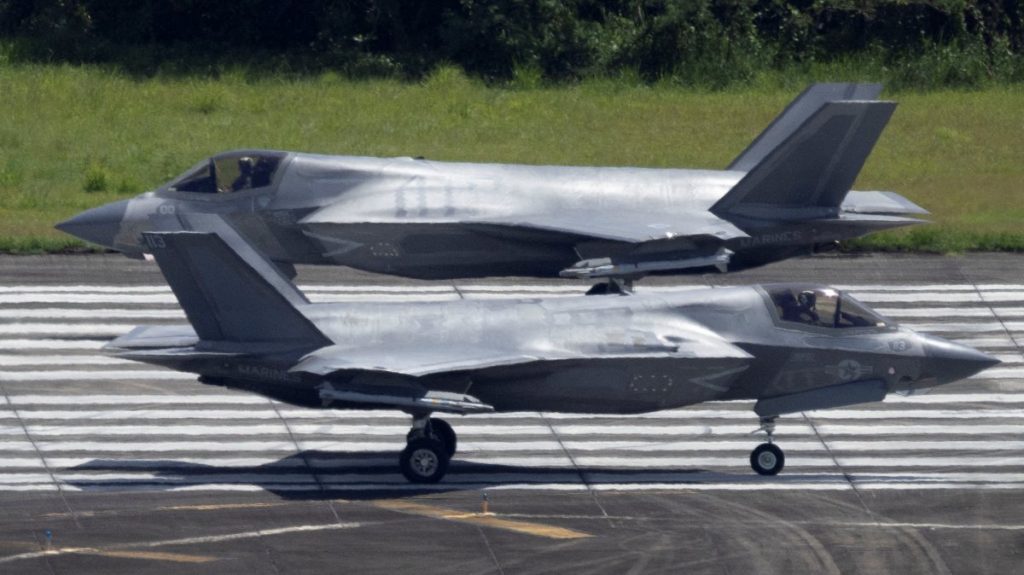
At the heart of the controversy is the Lockheed Martin F-35 Lightning II, a fifth-generation stealth fighter jet whose combination of stealth, sensors and networking capabilities makes it the centerpiece of U.S. and allied air power for decades to come. But Turkey — once a partner in the F-35 program — has not flown these aircraft since 2019, when it was expelled from the Joint Strike Fighter program after purchasing a Russian S-400 air defense system, a move that alarmed U.S. defense officials.
Now the Trump administration and Ankara are reportedly discussing the possibility of re-entry into the program or a renewed sale of F-35s to Turkey, prompting fierce pushback from analysts, lawmakers and key U.S. allies.
A Partnership Interrupted
Turkey was once slated to buy more than 100 F-35s and played a role in producing components for the aircraft. But its decision to acquire the Russian S-400 system — which Washington said could compromise the F-35’s stealth capabilities if Russian intelligence gains access to its technologies — led to its removal from the program. The United States halted deliveries and severed Turkey’s involvement, even as Ankara had already paid more than $1 billion for jets that it never received.
For years, the issue lay dormant amid broader tensions between Washington and Ankara over Syria, human rights, and Turkey’s closer ties with Russia. In recent weeks, however, renewed talk of lifting sanctions and reconsidering the sale of F-35s has reignited the debate.
Strategic Benefits — and Risks
Proponents of selling F-35s to Turkey argue that it could strengthen NATO’s collective defense, expand allied air capabilities in the eastern Mediterranean, and help anchor Ankara more firmly in the Western alliance at a time of global instability. Some military analysts contend that having F-35s based in Turkey could help deter aggression from Iran and pose a strategic presence across key regional flashpoints.
But critics — including senior defense analysts and many lawmakers — warn that the risks outweigh the potential advantages. They argue that Turkey’s inconsistent foreign policy, its continued possession of Russian defense systems, and repeated strategic divergences from U.S. priorities undermine confidence that Ankara can be entrusted with the most sensitive and advanced Western military technology.
“If you reintroduce F-35s into Turkey without addressing these structural issues, you risk undermining U.S. interests and security for decades,” one prominent analyst wrote recently, characterizing such a sale as a strategic mistake.
Israel’s Veto Power and Regional Balance
Perhaps no reaction has been more consequential than that from Israel, the United States’ closest military partner in the Middle East. Under U.S. law, Washington is obliged to ensure that Israel maintains a “Qualitative Military Edge” over potential adversaries — a legal and strategic commitment dating back decades.
Israeli officials have signaled that they would likely block any transfer of F-35 technology to Turkey, citing concerns that Ankara’s hostile rhetoric toward Jerusalem and its support for rival factions in Syria and elsewhere would threaten Israel’s security advantage. Israel also maintains that much of the F-35’s sensitive technologies incorporate systems produced in cooperation with Israeli defense firms — giving Jerusalem practical leverage over exports.
Israeli Prime Minister Benjamin Netanyahu has described the possibility of an F-35 sale to Turkey as “very remote,” even more problematic than recent U.S. arms sales to Saudi Arabia. He warned that such a move could erode regional stability and undermine cooperation with key partners.
Domestic U.S. Politics and Congressional Resistance
The debate has also spilled into U.S. politics. A bipartisan group of lawmakers has urged U.S. Secretary of State Marco Rubio to resist Turkey’s return to the F-35 program unless Ankara first resolves the S-400 issue and demonstrates clear commitment to shared security goals. Many members of Congress view Turkey’s continued possession of Russian systems as incompatible with access to F-35 technology.
In the broader context of U.S.–Turkey relations — already strained by disputes over Syria, human rights concerns, migration pressure on NATO’s southeastern flank, and differing approaches to Russia — the F-35 issue has become a proxy battle over trust and strategic alignment.
A Test of Washington’s Strategic Judgement
The debate goes beyond one aircraft sale. It forces a stark question: Can the United States reconcile long-standing alliances with shifting geopolitical realities?
For decades, Turkey was considered a steady pillar of Western defense architecture — a bridge between East and West, a locus for U.S. bases, and a partner against Soviet influence. Today, its independent foreign policy, engagement with Russia, and periodic irritation of Israel and Arab partners have blurred that image.
A sale of the F-35 would signal not just a transactional arms deal, but a strategic judgment about trust, alliance cohesion, and U.S. priorities in a fluid global order.
Whether Washington ultimately moves forward or pulls back, the debate over Turkey and the F-35 will reverberate far beyond Ankara and Washington, reshaping how allies and adversaries alike gauge American commitments and calculations in an unpredictable era.