
World Leaders Consider Trump’s “Board of Peace,” as Western Allies Hold Back — and Türkiye Signs On
The newest diplomatic club in President Trump’s Washington is not built around treaties, parliaments, or the United Nations. It is built around a document, a fee schedule, and a seat at a table chaired — by design — by Trump himself.
According to Middle East Eye, leaders including Israeli Prime Minister Benjamin Netanyahu, Egyptian President Abdel Fattah el‑Sisi, and Türkiye’s President Recep Tayyip Erdoğan have accepted invitations to join Trump’s so‑called “Board of Peace,” an initiative described as initially focused on Gaza and then other crises. Erdoğan said Türkiye’s foreign minister, Hakan Fidan, would represent him at a signing ceremony in Davos.
But as some governments move quickly toward participation, others — particularly in Europe — are signaling unease, declining to join or refusing to endorse the concept as presented. The split has turned what was pitched as a peacemaking mechanism into a test of how much global diplomacy will be re-centered around leader-to-leader deals in Trump’s second term — and what that means for U.S. power, the UN system, and American diaspora communities caught in the political crosswinds.
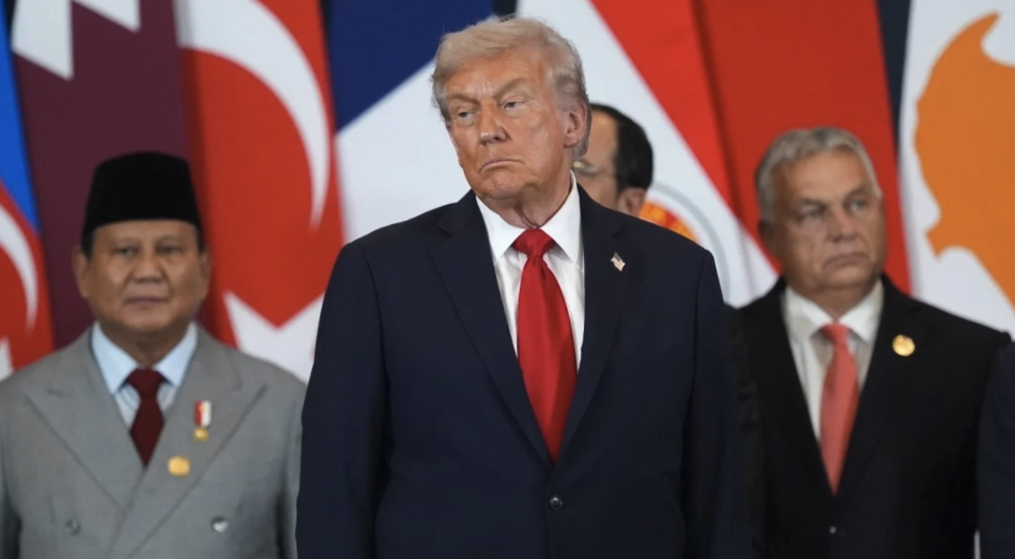
What is the “Board of Peace”?
Public descriptions vary by outlet, but several elements recur across reporting:
- The “Board of Peace” is presented as a Trump-led international initiative, launched around the World Economic Forum in Davos, with an initial mandate tied to Gaza and reconstruction/management concepts that emerged after ceasefire diplomacy. See reporting from NBC News, Reuters, and BBC.
- Membership and structure are controversial. Middle East Eye reports a proposed $1 billion fee for permanent membership and that Trump would chair the body “for life.” Middle East Eye. Other outlets also describe the fee concept and the governance concerns around it. NBC News, Reuters.
- The initiative has sparked warnings that it could undercut existing multilateral mechanisms. Middle East Eye reports UN concern about undermining UN work. Middle East Eye.
Who is joining — and who is staying away?
Middle East Eye reports that Egypt, Israel, and Türkiye are in, and that other governments — including Hungary, the United Arab Emirates, and Pakistan — have also accepted, with additional confirmations listed. It also reports that a Turkish official said the first three years of membership would be free of charge for Türkiye. Middle East Eye
Meanwhile, some U.S. partners appear cautious or opposed:
- France’s entourage said it could not give a favorable response “at this stage,” and Norway said it would not participate, per Middle East Eye. Middle East Eye
- Broader reporting has described hesitation and refusals among Western allies, with concerns including legitimacy, Russia’s potential presence, and overlap with existing institutions. The Hill, BBC, Reuters.
One flashpoint is Russia: Middle East Eye notes that inviting Vladimir Putin provoked outrage. Middle East Eye Other outlets similarly flag the Putin question as a central political obstacle for some governments considering participation. BBC, Reuters
Why the U.S. is doing this — and what it signals
Read one way, the Board is a branding exercise: Trump creating a stage where he is not merely convening peace talks, but sitting at the head of a standing body whose legitimacy flows from his personal authority.
Read another way, it is a strategic bet: that in an era of stalled institutions and permanent vetoes, a “coalition of joiners” — even if imperfect — can produce money, leverage, and decisions faster than the UN Security Council or traditional diplomacy.
Either way, the initiative signals a familiar Trump doctrine: diplomacy as a sequence of deals, managed through direct relationships among heads of state, rather than slow coordination through institutions. Reporting around Davos describes the Board as explicitly ambitious — and explicitly polarizing. NBC News
What it could mean for Türkiye
For Ankara, joining offers potential benefits with clear logic:
- Access and influence: If Trump is building a parallel channel for crisis management, membership is a way to ensure Türkiye is in the room when Gaza’s future — and adjacent regional issues — are discussed.
- Regional leverage: Türkiye has long tried to convert geography and relationships into diplomatic weight across the Middle East. A Trump-designed forum could be a new venue to do that.
- Optics in Washington: For Türkiye’s leadership, being framed as a “peace” participant rather than a perennial “problem ally” can matter domestically and internationally.
But there are risks. If the Board becomes viewed in Western capitals as a legitimacy-laundering mechanism for controversial actors, membership could come with reputational costs — and renewed scrutiny from lawmakers, media, and advocacy groups.
What it means for the United States
For the U.S., three implications stand out:
A new channel that can bypass friction — and oversight.
If decisions and commitments are made through an informal or semi-formal body centered on a single leader, the result can be speed. But it can also mean less transparency and fewer guardrails. Concerns about the Board’s relationship to existing institutions have already been raised in public reporting. Middle East EyeA test of alliance cohesion.
The visible divergence between joiners and abstainers is itself a geopolitical fact. If key European governments decline, the Board may harden a two-track system: one anchored in traditional institutions, another orbiting Trump’s dealmaking.A funding model that invites political blowback.
The reported $1 billion permanent membership fee concept is unusually blunt. It may appeal to Trump’s view that allies should “pay,” but it also invites suspicion: is this diplomacy, or a pay-to-play structure dressed as peacebuilding? Middle East Eye, NBC News
What it means for Turkish Americans
For Turkish Americans — especially civic, business, and advocacy leaders — the Board is likely to change the context in which Türkiye-related issues are discussed in the U.S.
- Higher visibility, sharper narratives. If Türkiye is publicly aligned with a Trump-led initiative that some allies reject, Türkiye will become a more frequent subject in U.S. political debate — and diaspora communities often feel that attention first.
- A premium on “U.S. interests” framing. In polarized environments, identity-based arguments tend to backfire. Turkish Americans advocating on policy will be more effective emphasizing U.S. interests: stability, counterterrorism, alliance management, and credible reconstruction oversight — not ethnic grievance politics.
- More scrutiny of “who’s in the room.” If the Board includes leaders whom many Americans view as beyond the pale, diaspora communities linked (fairly or unfairly) to “member states” can face guilt-by-association dynamics. The antidote is clarity: focus on transparency, rule-of-law standards, and outcomes.
What TCUSAPAC readers should watch next
- Whether official texts (charter, governance rules, funding mechanisms) are published and how binding they are. (Reuters has published explainers on structure and signatories.) Reuters
- Which major U.S. allies ultimately join or refuse — and whether participation splits NATO and EU partners further. The Hill
- Whether Türkiye’s participation stays symbolic (a signature and meetings) or becomes operational (reconstruction roles, security arrangements, aid coordination).