
Türkiye’s Energy Realignment Reshapes U.S. Strategy and Europe’s Gas Future
ISTANBUL — Türkiye is quietly executing one of the most consequential energy pivots in Europe, a shift that carries far-reaching implications for U.S. foreign policy, transatlantic energy security, and the diminishing influence of Russia and Iran in European gas markets.
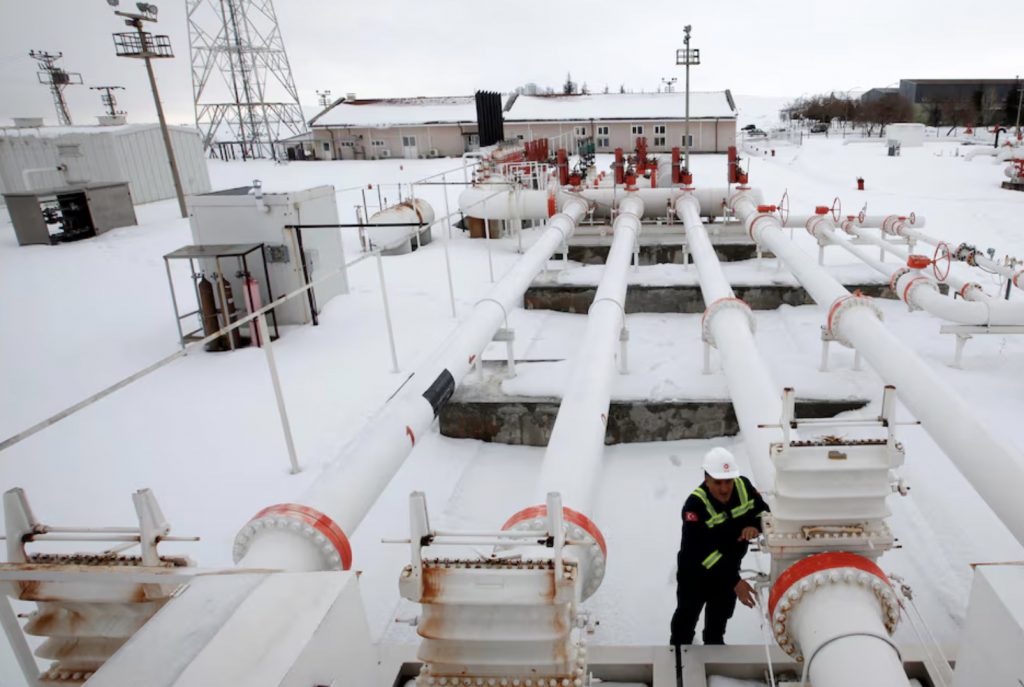
Long regarded as Russia’s last major European gas customer, Türkiye is moving rapidly to reduce its dependence on pipeline gas from Moscow and Tehran. By the late 2020s, Turkish officials and industry analysts project that more than half of the country’s natural gas needs could be met through domestic production and liquefied natural gas (LNG) imports, dramatically narrowing the role of Russian and Iranian supplies.
For Washington, this transition represents more than an energy story — it is a strategic realignment.
A Strategic Opening for U.S.–Türkiye Cooperation
The United States has long encouraged allies to diversify away from Russian and Iranian energy, particularly after Moscow’s invasion of Ukraine and amid continued concerns over Iran’s regional destabilization efforts. Türkiye’s recalibration aligns closely with these objectives, opening new pathways for U.S.–Türkiye energy cooperation, especially through LNG exports from American producers.
Recent long-term LNG agreements between Turkish buyers and U.S. suppliers underscore this evolving partnership. These deals not only strengthen Türkiye’s energy security but also support American energy exporters at a time when U.S. LNG has become a central tool of global energy diplomacy.
From a U.S. policy perspective, Türkiye’s diversification reduces exposure to sanctioned actors while reinforcing NATO’s collective resilience against energy coercion — a vulnerability Russia has repeatedly exploited in Europe.
Declining Russian and Iranian Leverage
Russian pipeline gas, once accounting for more than 60 percent of Türkiye’s imports, has already fallen to roughly one-third of total supply. Iran’s role is even smaller, and its pipeline contract with Türkiye is set to expire soon. While Ankara has not ruled out future agreements with either country, officials signal that any extensions would likely be shorter, more flexible, and limited in volume.
This matters because Türkiye has served as one of the last remaining gateways for Russian gas into Europe, particularly as the European Union accelerates its plan to fully phase out Russian pipeline and LNG imports by 2027. As Türkiye pivots, Moscow and Tehran face shrinking options — economically and geopolitically.
Türkiye as an Energy Hub, Not a Dependency
Central to Ankara’s strategy is its ambition to become a regional energy hub, rather than a captive consumer. Expanded LNG terminals, floating storage regasification units (FSRUs), and new offshore gas discoveries in the Black Sea have given Türkiye unprecedented flexibility.
By the end of the decade, combined domestic production and LNG capacity could exceed half of Türkiye’s projected demand — allowing Ankara not only to meet its own needs but potentially to re-export gas to neighboring markets, further integrating Türkiye into Europe’s post-Russian energy architecture.
This evolution enhances Türkiye’s strategic autonomy while reinforcing its relevance to U.S. and European policymakers seeking reliable partners in a fractured global energy system.
Why This Matters for Turkish Americans and U.S. Policymakers
For the Turkish-American community and organizations like TC-USA PAC, Türkiye’s energy pivot highlights an important narrative often overlooked in Washington: Türkiye is not merely a passive actor balancing between East and West, but an active player reshaping Europe’s energy future in ways that align with long-standing U.S. interests.
As Congress debates sanctions, energy security, and NATO burden-sharing, Türkiye’s diversification offers a compelling example of strategic alignment — even amid broader diplomatic disagreements. Recognizing and supporting this transition could strengthen bilateral trust and create durable channels for cooperation in energy, security, and economic policy.
In an era of geopolitical fragmentation, Türkiye’s gas shift underscores a broader truth: energy choices are foreign policy choices — and Ankara’s latest move may prove to be one of the most consequential in the region.
Sources
Reuters, “Turkey’s gas shift threatens Russia and Iran’s last big European market,” October 8, 2025
Reuters reporting on Türkiye’s LNG expansion, pipeline contracts, and domestic gas production
Council of the European Union, provisional agreement to phase out Russian gas imports by 2027
Industry and market analysis cited by Reuters on U.S. LNG exports and Türkiye’s energy infrastructure growth