
Erdoğan Installs New Leadership at Turkey’s Central Bank — A Strategic Pivot With Global Ambitions
ANKARA — In a move that underscores both continuity and change at the heart of Türkiye’s economic management, President Recep Tayyip Erdoğan has appointed two new deputy governors to the Central Bank of the Republic of Türkiye (TCMB), signaling a potentially pivotal moment for monetary policy and market confidence. Source:
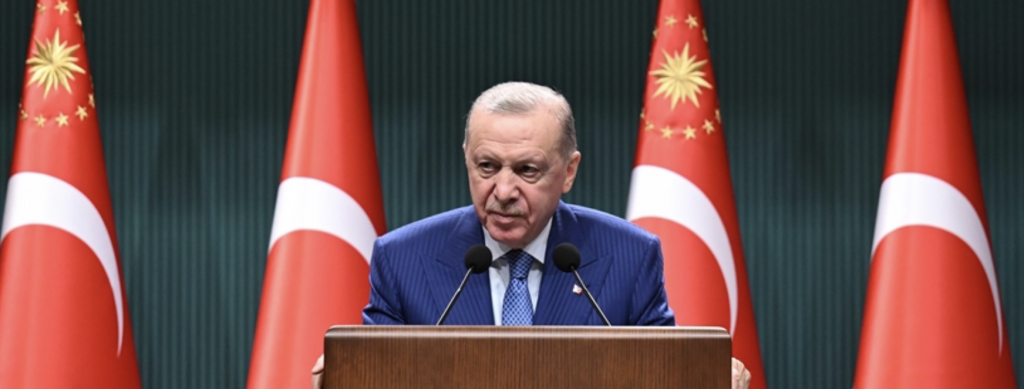
In a decree published in the Official Gazette on February 3, 2026, Erdoğan named Fatma Özkul and Gazi İshak Karaas the newest deputies to the central bank, filling out the institution’s top leadership team. Both appointments take effect immediately under Turkish law, which empowers the presidency to shape senior central bank leadership.
New Faces, Established Roles
Fatma Özkul rises from within the bank’s own ranks. A member of the Monetary Policy Committee (MPC), she has been directly involved in shaping the TCMB’s interest rate decisions and inflation forecasting. Her elevation suggests continuity in policy priorities, particularly as Türkiye navigates persistent inflation pressure and seeks credibility with investors after years of unconventional monetary policy.
Contrastingly, Gazi İshak Kara brings substantial international experience to Ankara. He has served for years on the staff of the Federal Reserve Board of Governors in Washington, D.C., most recently as chief of the Financial Stability Assessment Section and earlier as a principal economist. His appointment reflects Erdoğan’s apparent desire to mix domestic policy experience with global expertise — a signal to markets that Türkiye is serious about anchoring stability within an economy that has seen volatility in recent years.
Context: Markets, Policy, and Erdoğan’s Economic Agenda
The TCMB has been a focal point of debate in Turkey’s economy for several years. Under Erdoğan’s leadership, the bank has at times pursued unorthodox policies, including low interest rates in the face of high inflation — a strategy that drew criticism from economists and pressured the Turkish lira. The tenure of previous governors, including Hafize Gaye Erkan — who briefly reversed that approach with steep rate hikes — illustrated the tensions at the top of Turkish monetary policy.
Since February 2024, the bank has been led by Governor Fatih Karahan, a Turkish economist with international experience including work at the Federal Reserve and private sector roles — a background similar to that of Kara. This continuity may reassure international investors who had grown wary of frequent personnel changes at the bank’s leadership levels.
By adding Özkul and Kara to the central bank’s executive bench, Erdoğan is likely seeking a balance between internal expertise on Türkiye’s economy and external credibility — a blend that could help restore confidence among foreign capital while maintaining Ankara’s policy prerogatives.
What It Means for Policy and Markets
Investors and analysts will be watching how the new leadership influences monetary policy, particularly around inflation expectations and the central bank’s communications with markets. Türkiye’s inflation has remained sticky above targets in recent years, and policymakers will need both credibility and coherence to bring it closer to acceptable levels without derailing growth.
Kara’s Fed background may help in this regard — his technical expertise and familiarity with global best practices could signal a tilt toward more orthodox inflation targeting. Meanwhile, Özkul’s institutional knowledge ensures continuity in the internal policy calculus.
For business leaders, foreign investors, and Turks abroad tracking Türkiye’s economic trajectory, these appointments are more than bureaucratic reshuffles: they are barometers of confidence and stability in an increasingly interconnected global financial landscape.