
A Small Nuclear Grant Opens a Larger Door for U.S.–Turkiye Cooperation
An agreement to study advanced reactors offers a hopeful path toward energy security, technological partnership and closer ties between two longtime allies.
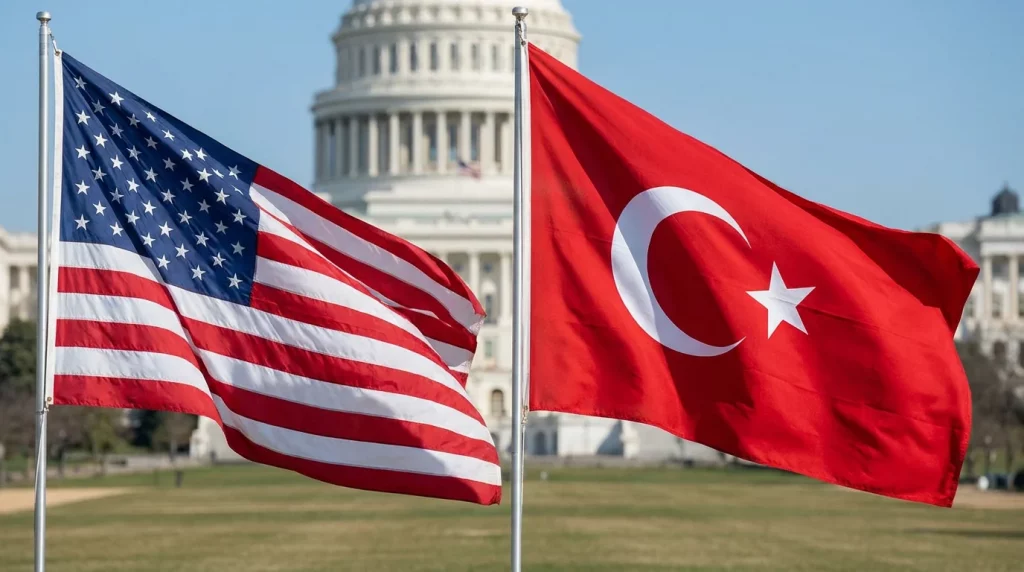
A roughly $2 million nuclear-energy initiative will not transform a country’s electricity supply overnight. But a new agreement between the United States and Turkiye could help shape something that lasts considerably longer: a partnership built around the technologies, expertise and institutions needed to power the coming decades. Announced on September 22, the agreement brings together the U.S. Trade and Development Agency, known as USTDA, and TÜNAŞ, Turkiye’s state-owned nuclear development company. It funds technical assistance to establish a regulatory, institutional and financial roadmap for potential deployment of small modular reactors by Turkish private companies.
For Turkish Americans, it is an encouraging example of the two countries investing in a shared future. Its significance lies in the practical work it begins—and the opportunities that could follow if the findings support moving forward.
From diplomatic framework to technical work
According to Turkiye’s Ministry of Energy and Natural Resources, the approximately $2 million study will take at least a year. It will evaluate American small modular reactor designs and Generation IV reactor technologies, examining costs, licensing, supply chains, financing, safety, emergency planning and site selection. The ministry describes the initiative as following the strategic civil nuclear cooperation memorandum signed in September 2025.
This is a meaningful progression: a broad diplomatic commitment is being followed by funded analysis.
It is also an early step. The announced agreement does not establish that a particular reactor has been selected, that construction financing is secured or that a plant has received regulatory approval. Those decisions would require further work.
That sequence is a reason for measured optimism. Careful evaluation allows governments and businesses to determine which technologies fit a country’s needs before committing far larger sums.
Why smaller reactors attract attention
The International Atomic Energy Agency defines small modular reactors, or SMRs, as reactors producing up to 300 megawatts of electricity per unit. Their modular approach allows components and systems to be manufactured in factories and transported for installation. Depending on the design, they could serve electricity grids, industrial facilities or locations poorly suited to larger plants. The attraction is flexibility. Developers hope standardized production and repeated construction can make nuclear projects easier to deliver, while allowing generating capacity to grow in stages.
SMRs also offer a potential source of dependable, low-carbon power alongside renewable energy. But their economic competitiveness still needs to be demonstrated in practice. A smaller reactor does not automatically mean cheaper electricity. That makes the new study particularly useful: it creates a process for testing the promise against financial and technical realities.
What could change for Turkiye
The agreement expands Turkiye’s options as it develops its nuclear-energy sector. Al-Monitor places the initiative within Ankara’s effort to diversify its nuclear partnerships beyond Russia, which is building the Akkuyu nuclear power plant. American cooperation offers an additional potential route for technology, expertise and future investment.
Diversification can strengthen a country’s negotiating position and reduce concentration in its supply relationships. It does not eliminate dependence on outside partners: nuclear projects still require dependable fuel supplies, specialized components, maintenance and long-term technical support. The opportunity, therefore, is to build a more resilient network of partnerships while developing domestic capabilities. If viable projects eventually follow, potential benefits could include skilled employment, supplier development and greater experience in advanced engineering. Those outcomes will depend on the commercial agreements, training commitments and local participation ultimately negotiated.
Why it matters to the United States—and the world
Washington has a clear commercial interest. USTDA says its assistance will assess how American reactor designs could meet Turkiye’s needs, creating an early entry point for U.S. nuclear companies. The agency also says it has approved funding for a Turkish nuclear-energy delegation to visit the United States in 2027 to examine American technology, manufacturing, operations and regulation. Such cooperation could create business relationships extending well beyond a single equipment purchase. Nuclear projects can involve years of engineering, training, fuel services and operational support. The broader significance is international. Countries are searching for ways to meet rising electricity demand while improving energy security and limiting emissions. The International Energy Agency identifies a potential role for SMRs, while emphasizing the importance of financing, workforce preparation, supply chains and effective policy. Successful cooperation between the United States and Turkiye could contribute to that effort by demonstrating how countries can evaluate emerging technologies together. Its value would come from sound decisions and reliable performance, rather than the announcement alone.
An opening for Turkish Americans
For Turkish Americans, the agreement offers a constructive subject around which to build professional and civic connections. Engineers, researchers, educators and business owners could help connect institutions, organize technical discussions and introduce students to careers in energy and advanced manufacturing. These are potential avenues for participation, rather than employment or scholarship programs already created by this grant. Community organizations could invite independent specialists to explain the technology, the economics and the public responsibilities involved. Such conversations would help make a complex development accessible while giving younger Turkish Americans a clearer view of fields in which their skills may matter.
The most useful community contribution would combine enthusiasm with informed questions. Supporting cooperation and expecting accountability belong together.
What to watch next
Several developments will show whether the initiative is gaining substance.
The study’s findings. Which designs appear technically suitable and financially credible? Will the conclusions, assumptions and major uncertainties be explained publicly?
Actual project commitments. A study, a vendor agreement, a construction license and an operating power plant represent different milestones. Each deserves accurate reporting.
Safety and public confidence. Any proposed project should face rigorous scrutiny of site conditions, earthquake risks, emergency arrangements, cooling requirements and radioactive-waste management.
Fuel and supply-chain resilience. Diversification should extend beyond the reactor supplier to the services and materials required throughout a plant’s life.
Workforce and business opportunities. Watch for specific training partnerships, university collaborations and procurement notices. Those are stronger evidence of opportunity than broad promises about future jobs.
For Turkish American organizations, a practical starting point would be a public briefing featuring energy researchers and industry specialists, followed by regular updates tied to verified milestones.
The hopeful message is straightforward: the United States and Turkiye have chosen to do practical work together in a field central to their long-term prosperity. The grant is modest, but the questions it funds are consequential. Answering them well could lay the foundation for cleaner power, stronger institutions and a more durable partnership.