
Turkey’s Expanding Middle East Role Brings New Opportunities—and Risks—for U.S. Relations
A defense agreement with Saudi Arabia and Pakistan, tensions with Israel, and growing responsibilities in Syria are raising the stakes for Ankara. For Turkish Americans, the challenge is understanding what is actually changing—and separating developments from political rhetoric.
News analysis prepared for TCUSPAC’s Turkish American readership | October 15, 2026
Turkey’s effort to become a more influential Middle Eastern power is moving beyond diplomacy and defense exports toward a harder test: whether Ankara can assume greater security responsibilities without becoming entangled in additional conflicts. NPR’s September 29 analysis described Turkey as positioning itself for a regional order in which Washington may play a smaller security role. Subsequent reporting has added a concrete development: On October 5, Turkey, Saudi Arabia and Pakistan agreed to activate collective deterrence measures under their new defense agreement and arrange the rapid deployment of agreed military forces and capabilities to Saudi Arabia.
For Turkish Americans, the significance is not that Turkey has suddenly replaced the United States or abandoned NATO. Neither conclusion is supported by the reporting reviewed. Rather, Turkey is seeking more influence through overlapping partnerships—and those partnerships could create both opportunities for cooperation with Washington and new sources of friction.
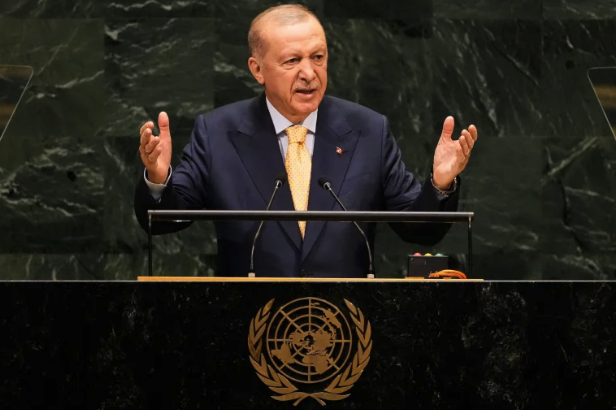
The foundation is the Mecca Joint Defense Agreement, signed by Turkey, Saudi Arabia and Pakistan on August 7.
According to reporting and published analyses, the agreement includes language treating an armed attack against one member as an attack against all three. Its strategic appeal is straightforward: Saudi Arabia brings financial and energy resources, Turkey brings a substantial military and expanding defense industry, and Pakistan brings significant military capabilities and the status of a nuclear-armed state. But those assets should not be confused with an already integrated military alliance. An August Atlantic Council assessment emphasized that the agreement does not amount to a NATO-style organization. Analysis published by the Middle East Council on Global Affairs likewise described it as a framework for consultation, coordination and deterrence—not an automatic commitment to an identical military response in every crisis.
The distinction became especially important on October 5.
Al Jazeera reported that an emergency ministerial meeting in Riyadh approved collective deterrence measures following Houthi attacks against Saudi Arabia. A joint statement quoted in that report said the countries would provide agreed forces and capabilities and ensure their rapid deployment, subject to approved arrangements and national laws. That establishes a deployment decision—not proof that every promised deployment has been completed or that Turkey has entered an offensive war in Yemen. The report did not establish the full composition, timing or operational limits of Turkey’s contribution.
Turkey’s influence is growing, but its responsibilities are growing too
NPR identified several foundations of Turkey’s regional position: its defense industry, overseas military presence, influence in post-Assad Syria, cultural reach and efforts to mediate international conflicts. These are meaningful advantages. They also come with limits. NPR’s reporting highlighted inflation, currency weakness and energy costs as constraints on Ankara’s ambitions. Security commitments abroad require resources at a time when Turkey faces substantial economic pressures at home.
There is also a diplomatic trade-off. A country seeking to mediate regional disputes may find that role harder to maintain when it is simultaneously making military commitments to one participant. Common-sense analysis: More influence does not necessarily mean more freedom of action. Sometimes it means more obligations, more exposure and more difficult choices. The useful question is therefore not simply whether Turkey is becoming stronger. It is whether its new commitments produce greater stability at a sustainable cost.
Syria remains a particularly dangerous point of friction
NPR described Syria as a central arena of Turkish influence following the collapse of Bashar al-Assad’s government in 2024. It also reported that Turkish and Israeli objectives there are increasingly in conflict. Ankara’s interest in helping shape Syria’s security institutions can collide with Israel’s determination to prevent military developments it considers threatening. That does not make a Turkish-Israeli war inevitable. It does make communication, deconfliction and clear limits on military activity increasingly important. Notably, an August analysis from Israel’s Institute for National Security Studies recommended maintaining open channels with Turkey and avoiding overt opposition to the Mecca agreement that could strengthen the participants’ cohesion. That assessment is a reminder that Israeli policy debate is not uniform, just as Turkish or American policy debate is not uniform.
Common-sense analysis: Threatening statements deserve attention, but rhetoric is not the same as a decision to fight. Deployments, strikes, operational coordination and diplomatic arrangements are more useful indicators of risk.
A smaller U.S. footprint does not necessarily mean an American exit
NPR’s central argument concerns the possibility of declining U.S. regional influence and a reduced American security footprint. That is an assessment of direction—not evidence that Washington has ended its regional role. Atlantic Council contributors offered another interpretation: Regional security cooperation could fit an American preference for greater burden-sharing rather than represent a rejection of the United States. Both possibilities matter. If Turkey’s partnerships help protect infrastructure, reduce attacks and contain escalation, Washington could see practical benefits. If those partnerships widen conflicts or produce confrontations involving American partners, they could become another source of tension.
The decisive issue is what the arrangements do—not merely what they are called.
What this means for Turkish Americans
The immediate implications are primarily informational and civic. The developments reviewed do not, by themselves, establish changes to Turkish Americans’ rights, citizenship status or everyday legal obligations. They could, however, shape the environment in which Turkey and Turkish Americans are discussed.
First, expect competing narratives. Turkey may be presented as a useful security partner, an independent regional power, or an increasingly difficult ally. Each description should be tested against specific conduct rather than accepted as a complete explanation.
Second, distinguish a government from a community. Turkish Americans do not share one political outlook and should not be presumed to support or oppose every decision made in Ankara. Criticism of Turkish government policy is legitimate; assigning collective responsibility to people of Turkish heritage is not.
Third, stronger Turkish defense ties do not automatically translate into benefits for diaspora businesses.Commercial opportunities may develop, but an announced partnership is not the same as an awarded contract, approved transaction or accessible business opportunity.
Fourth, personal relationships between presidents are not a substitute for durable institutions. NPR discussed the importance of President Trump’s relationship with President Erdoğan. Such access may help manage a crisis, but it cannot guarantee lasting alignment across governments, legislatures and security institutions.
What grassroots organizations should watch
Community organizations can serve readers best by tracking verifiable developments rather than amplifying dramatic predictions.
The agreement’s actual commitments. Look for published treaty provisions, parliamentary action and official explanations of what assistance is required—and under what circumstances.
Decisions versus completed deployments. Distinguish an announcement of support from confirmed personnel, equipment, missions and operating locations.
Defensive assistance versus an expanding combat role. Air defense, training, intelligence support and offensive operations are not interchangeable.
Concrete U.S. policy changes. Watch official decisions concerning military cooperation, arms transfers, sanctions or regional force posture. Political commentary alone does not establish a policy change.
Turkish-Israeli crisis management in Syria. Confirmed incidents, communication arrangements and efforts to prevent accidental confrontation matter more than provocative headlines.
Misleading nuclear claims. Pakistan’s participation does not, on the evidence reviewed, establish an automatic nuclear guarantee for Turkey or Saudi Arabia.
Spillover into community relations. Correct factual errors without turning overseas disputes into hostility toward Jewish, Arab, Kurdish, Armenian, Greek, Pakistani or other neighbors.
Grassroots communications should also make their own role clear: distinguish independent community analysis from statements issued by governments, political parties or outside organizations.
The bottom line
Turkey’s expanding role could make it a more valuable security partner—or expose it to commitments that are expensive, politically divisive and difficult to control. Those outcomes are not predetermined.
For Turkish Americans, the soundest approach is neither automatic celebration nor automatic alarm. It is to ask practical questions: What was agreed? What has actually happened? Does it reduce the risk of war? What are the costs? And how does it affect U.S.-Turkey cooperation?
The most useful community response is informed, independent and precise: recognize legitimate cooperation, scrutinize escalation and reject the idea that Americans of Turkish heritage must answer collectively for decisions made abroad.
Sources
This article synthesizes the reporting and commentary below; it is not based on original interviews. The analysis and grassroots watch points are editorial assessments. Research reviewed through October 15, 2026; the full agreement and deployment implementation were not independently verified.
NPR — Hadeel Al-Shalchi, September 29, 2026: “As the U.S. signals a smaller Middle East footprint, Turkey is ready to step in.” Reporting and analysis on Turkey’s ambitions, economic constraints, Syria and relations with Israel.
Al Jazeera — October 5, 2026: “Turkiye, Pakistan agree Saudi Arabia military deployment under Mecca pact.”Reporting on activation of deterrence measures and announced deployment commitments.
Atlantic Council — Allison Minor, Michael Kugelman and Rich Outzen, August 7, 2026: “Why Saudi Arabia, Pakistan, and Turkey just signed a defense pact.” Expert assessments of the participants’ interests and the agreement’s limitations.
Middle East Council on Global Affairs — Ali Bakir, August 12, 2026: “What Is the Mecca Joint Defense Pact—and What It Is Not?” Commentary on the framework’s rationale and its relationship to existing security arrangements.
Institute for National Security Studies — Yoel Guzansky and Gallia Lindenstrauss, August 20, 2026: “The Mecca Agreement: Real Substance or Mere Intent?” An Israeli strategic perspective on implementation, divergent interests and the limits of nuclear-deterrence claims.