
Built in America, Flying for Turkiye: A Landmark Boeing Deal Strengthens a Shared Future
Turkish Airlines’ order for 100 aircraft, with options for 50 more, connects American manufacturing with Turkiye’s aviation ambitions—and gives Turkish Americans a compelling story of cooperation.
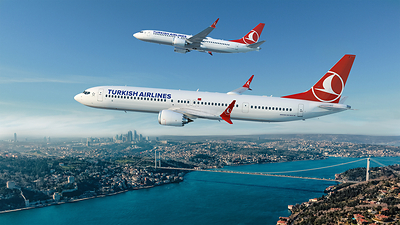
A major aircraft agreement is bringing the economic relationship between the United States and Turkiye into sharper focus: American-built airplanes supporting the growth of a Turkish airline, with industrial cooperation extending the partnership beyond the purchase itself. On September 23, Boeing and Turkish Airlines finalized an agreement for 100 Boeing 737-8 aircraft, with options for another 50 737 MAX jets. Boeing described it as Turkish Airlines’ largest single-aisle order from the manufacturer. The agreement also allows substitutions for the larger 737-10 model.
For Turkish American readers, the significance reaches beyond aviation. The transaction offers a concrete example of how the two countries’ commercial ambitions can reinforce one another—and how cooperation can create lasting economic connections.
A commitment years in the making
The announcement concluded negotiations that began in 2025. Reuters reported on September 15 that the purchase had been delayed by disagreements involving engine-maintenance arrangements, before negotiations moved toward completion. Turkish Airlines’ September 23 disclosure to Turkiye’s Public Disclosure Platform places deliveries between 2033 and 2037. That schedule makes this a commitment to the airline’s next decade of operations, rather than an immediate fleet expansion.
For businesses on both sides, such long planning horizons matter. Aircraft orders can anchor relationships involving production, financing, maintenance and technical support over many years. Their eventual benefits depend on successful delivery and execution, but the agreement establishes a substantial foundation. American manufacturing meets Turkish aviation ambition – For the United States, the transaction represents a major export commitment. The U.S. Department of Commerce estimates that the Turkish Airlines contract supports 101,000 American jobs. That is the department’s estimate of employment supported—not a count of newly created positions.
For Turkish Airlines, the purchase supports its plans to strengthen short- and medium-haul operations through Istanbul. Boeing says the agreement also includes industrial participation supporting Turkiye’s aviation sector, although its announcement does not disclose detailed work allocations or their financial value. That industrial dimension deserves attention. Anadolu reported that a related cooperation framework focuses on capability development, value creation and business opportunities. Specific projects and contracts will show how those objectives translate into results. The potential is encouraging: a large aircraft purchase could help sustain American production while opening additional avenues for Turkish aviation expertise and business participation.
Why Turkish Americans should care
For Turkish Americans, this agreement offers a clear way to explain the economic value of the bilateral relationship. The story is accessible: a Turkish carrier is making a substantial commitment to American aircraft, while the companies pursue cooperation intended to benefit Turkiye’s aviation industry. It illustrates how trade can connect the interests of workers, businesses and travelers across borders. That matters in public discussions often dominated by diplomatic disagreements. Commercial partnerships give the relationship additional depth. They create practical reasons for companies and institutions to remain engaged, even when governments face difficult policy questions. Turkish American professionals can help make those connections more visible. Engineers, educators and business owners could organize discussions about aerospace careers, introduce students to the industry and follow emerging supplier opportunities. These would be community initiatives inspired by the agreement; the order itself does not establish a Turkish American hiring or scholarship program. For civic organizations, the strongest message is grounded in shared interests: cooperation between the United States and Turkiye can support American exports while contributing to Turkish commercial growth.
What readers should know—and watch next
Three distinctions will help readers follow the story accurately.
The agreement contains 100 firm orders and 50 options. The additional aircraft should not be described as confirmed purchases unless the options are exercised.
Deliveries are scheduled for 2033–2037. The announcement does not promise immediate changes to passengers’ travel options.
The new aircraft are intended for short- and medium-haul operations. Their relevance to many U.S.-based travelers would therefore be through connections beyond Istanbul, rather than an announced expansion of nonstop transatlantic service. The order does not guarantee lower fares or particular new routes.
The next developments worth watching are specific industrial-participation projects, supplier agreements, training initiatives and progress toward delivery. Those milestones will reveal how broadly the partnership’s benefits spread.
For Turkish Americans, there is good reason to welcome the agreement. It offers a tangible example of two countries investing in a commercial relationship that can serve both—and a reminder that some of the strongest international connections are built through the work people do together.
Sources
- Boeing: Official order announcement, September 23, 2026
- Turkish Airlines: Public disclosure confirming order and delivery schedule
- U.S. Department of Commerce: Commercial agreements and employment estimates
- Anadolu: Order details and industrial cooperation
- Reuters: Negotiations leading to the finalized agreement