
Europe’s Quiet Pivot Toward Türkiye Has Begun — And the Drone Deal With Italy Proves It
For years, Türkiye’s relationship with parts of Europe and Washington was often framed through friction: sanctions disputes, NATO disagreements, F-35 tensions, Sweden’s accession debate, and competing policies in the Eastern Mediterranean. Now, something remarkable is happening beneath the surface of global headlines. Europe is beginning to turn toward Türkiye not as a diplomatic problem — but as a strategic necessity. The clearest sign yet emerged in April, when reports revealed that Italy is preparing to move forward with acquiring Türkiye’s Bayraktar TB3 naval combat drones, deepening a rapidly expanding defense partnership between Rome and Ankara. According to Al-Monitor, the discussions reflect far more than a weapons purchase. They represent a broader geopolitical recalibration unfolding across NATO as Europe reassesses its dependence on the United States, its vulnerabilities after Ukraine, and the future of modern warfare.
At the center of this shift is the Bayraktar TB3 — Türkiye’s next-generation naval drone capable of operating from short-runway aircraft carriers like the TCG Anadolu. Unlike traditional drones designed for land operations, the TB3 was built for maritime warfare, long-range surveillance, precision strikes, and integrated NATO operations.
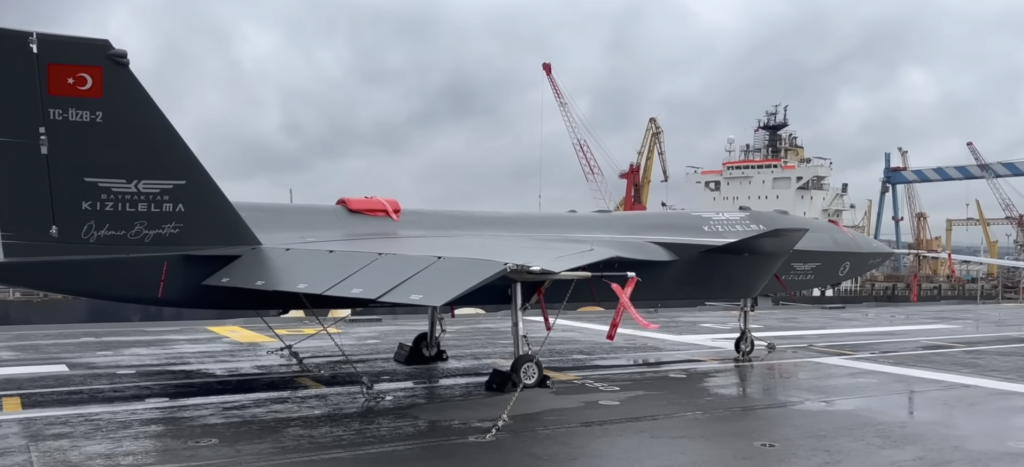
European militaries are scrambling to modernize after watching the wars in Ukraine and the Middle East fundamentally alter battlefield realities. Cheap, agile, AI-assisted drone systems are increasingly outperforming older billion-dollar platforms in both cost and flexibility.
Turkish drones, once dismissed by some Western analysts as regional tools, are now viewed as combat-proven systems capable of reshaping NATO operations. What makes this development particularly significant is timing. The emerging Italy-Türkiye defense axis comes during growing uncertainty about America’s long-term role inside NATO. Across Europe, governments are quietly preparing for a future where Washington may become less predictable, less interventionist, or more selective in its military commitments. As a result, European states are accelerating indigenous defense cooperation — and Türkiye is becoming increasingly central to that calculation. This is not merely about drones. It is about industrial power, geopolitical leverage, and technological independence. Italian defense giant Leonardo has already moved toward deeper cooperation with Turkish drone manufacturer Baykar. Analysts increasingly believe the partnership could evolve into broader joint production, AI warfare systems, maritime surveillance integration, and future unmanned fighter programs. For Turkish Americans watching developments in Washington, this moment matters enormously.
For decades, Türkiye’s strategic value inside NATO was often reduced to geography: controlling the Bosporus, bordering the Middle East, balancing Russia, hosting NATO infrastructure. But the Italy-TB3 deal signals something different. Türkiye is no longer simply guarding NATO’s southeastern flank. It is increasingly shaping NATO’s technological future. And Europe knows it. The symbolism surrounding the TB3 is especially powerful because it reflects how quickly Türkiye’s defense industry has evolved. Just twenty years ago, Türkiye relied heavily on foreign military suppliers and faced repeated arms restrictions from allies. Today, Turkish defense firms export drones, naval systems, armored vehicles, missiles, and electronic warfare platforms across Europe, Africa, Central Asia, and the Gulf.
What once looked impossible is now reality: A major NATO member is turning to Türkiye for next-generation military technology during one of the most unstable security periods since the Cold War. The implications stretch far beyond defense contracts. As Europe rearms and NATO adapts to new global threats, countries capable of producing scalable autonomous systems, AI-supported combat platforms, and affordable drone fleets will gain extraordinary influence inside the alliance. Türkiye is rapidly becoming one of those countries. That shift also changes political conversations in Washington.
For years, critics frequently portrayed Türkiye as drifting away from the West. Yet Italy’s growing partnership with Ankara tells a different story: even amid disagreements, Europe increasingly sees Türkiye as indispensable to NATO’s future military architecture. The drone revolution is forcing governments to rethink old assumptions. And increasingly, one of those assumptions is this: Türkiye is no longer simply part of NATO’s defense system. It is becoming one of the countries helping redesign it.