
When a Turkish Student Became America’s Political Fault Line
For many Turkish Americans watching from afar, the image was difficult to forget: a Turkish doctoral student from Tufts University, walking near her Massachusetts home, suddenly detained by federal immigration agents after co-authoring an opinion piece criticizing the war in Gaza.
That student was Rümeysa Öztürk — and over the last year, her case quietly evolved into something much larger than a campus controversy. It became a national test of free speech, immigration authority, academic freedom, and the increasingly tense political atmosphere surrounding the Israel–Palestine conflict in the United States.
According to multiple reports, Öztürk’s visa was revoked after she co-authored a student newspaper op-ed calling on Tufts University to reconsider ties with organizations connected to Israel during the Gaza war. Federal authorities later accused her of activities allegedly linked to support for Hamas, though courts repeatedly noted that the government struggled to present concrete evidence beyond her public activism and writing.
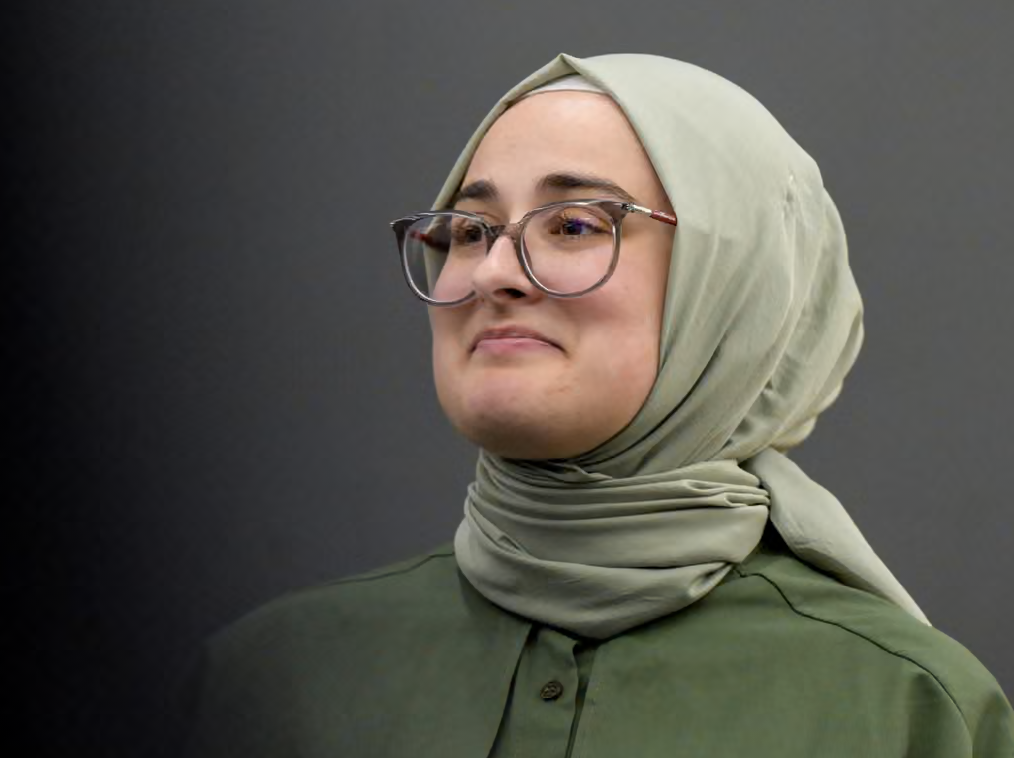
Her detention quickly sparked outrage among civil liberties groups, university communities, immigrant advocates, and even some Jewish organizations that argued criticism of Israeli government policies should not automatically be equated with extremism or antisemitism. Demonstrations emerged across Boston-area campuses, and legal organizations including the ACLU framed the case as a dangerous expansion of political retaliation through immigration enforcement
What made the story especially significant for Turkish Americans was not simply that the student at the center of the storm was Turkish. It was that her case exposed how quickly international students can become entangled in America’s domestic political battles — even when no criminal charges are filed. Over time, federal judges began pushing back. An immigration court blocked deportation proceedings against Öztürk in early 2026, with one judge reportedly concluding that the Department of Homeland Security had failed to establish legal grounds for removal.
But the story did not end there. The Trump administration continued appealing parts of the case while simultaneously escalating broader efforts against pro-Palestinian student activism nationwide. Other foreign students and green-card holders connected to Gaza protests also faced investigations, visa scrutiny, or deportation attempts. Critics argued the government was increasingly using immigration law as a political tool to police speech. Supporters of the crackdown countered that national security and antisemitism concerns justified stronger federal action.
Then came another stunning development: judges connected to the Öztürk and Mohsen Mahdawi cases were later dismissed by the Justice Department, triggering new accusations that immigration courts themselves were becoming politicized. Former judges warned publicly that the independence of immigration proceedings could be eroding under political pressure.
By April 2026, Öztürk reached a settlement with the U.S. government and returned to Türkiye after completing her PhD. Her legal team stated that the agreement resolved ongoing immigration proceedings and allowed her to leave voluntarily without further obstruction. In public remarks, she described the experience as “state-imposed violence and hostility,” while insisting that her advocacy had focused on human rights and Palestinian civilian suffering.
For many Turkish Americans, the case raised uncomfortable but necessary questions.
Can political expression by foreign students now place immigration status at risk in the United States? Where is the line between national security enforcement and suppression of dissent? And perhaps most importantly: if immigration systems begin evaluating political viewpoints, what protections remain for international scholars, researchers, and students?
The Öztürk case also revealed a broader reality that many immigrant communities increasingly recognize: American domestic polarization is no longer confined to elections or cable television. Universities, immigration courts, social media activity, and even student journalism are now battlegrounds in a larger ideological struggle over identity, speech, and foreign policy.
Regardless of political position, the story of Rümeysa Öztürk has become more than an immigration dispute. It is now part of a defining national debate about the future of dissent in America — and about whether foreign students can still participate openly in political discourse without fear that their visas, careers, or freedom may suddenly hang in the balance.