
Turkey Tries to Pull Washington and Tehran Back From the Brink as Europe Labels Iran’s Guard a Terror Group
DUBAI — Turkey is quietly trying to do what few U.S. partners can still attempt with any plausibility: bring American and Iranian officials into the same room before threats harden into actions.
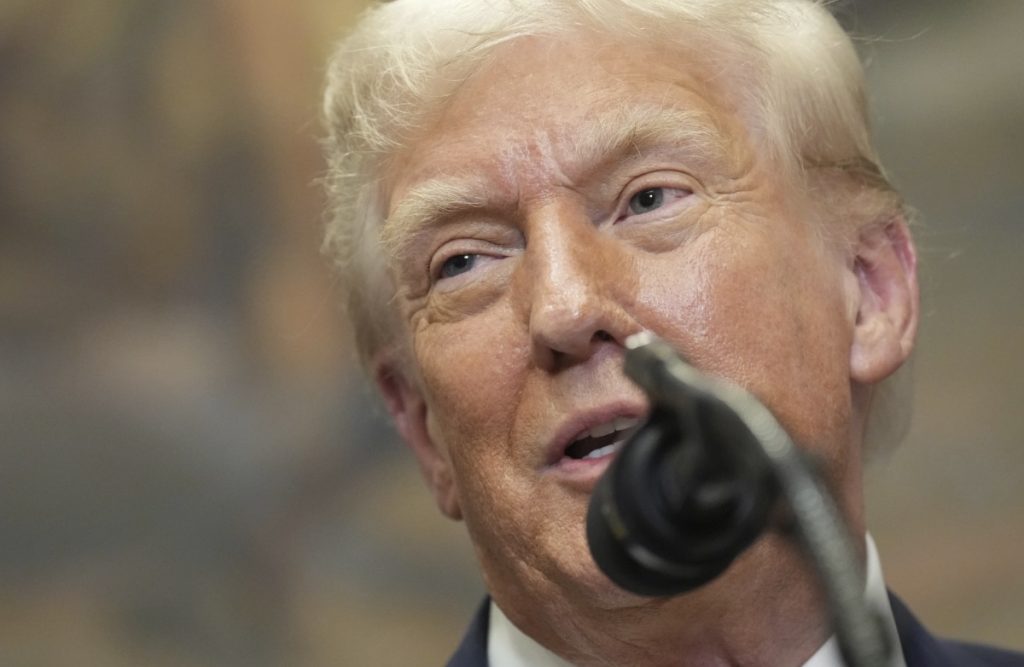
According to reporting by the Associated Press, Turkish officials are seeking to arrange talks as soon as this week between the U.S. special envoy Steve Witkoff and Iranian leaders, amid heightened U.S. military posture in the region and President Donald Trump’s renewed push for a nuclear deal framework. Source
At the same time, the diplomatic temperature is rising sharply between Iran and Europe. Iran says it summoned EU ambassadors in Tehran after the European Union agreed to list the Islamic Revolutionary Guard Corps (IRGC) as a terrorist organization, citing the Guard’s role in a brutal crackdown on nationwide protests. The move is described as largely symbolic but politically significant—tightening isolation and compounding economic pressure.
Iran’s response has been confrontational: officials signaled retaliation, and Iran’s parliament speaker said Tehran now considers EU militaries “terrorist groups” under a domestic law—an escalation that deepens the risk of miscalculation at a moment when the Gulf shipping lanes and airspace are already on edge.
What else has happened in the last 15 days
The past two weeks show a fast-moving chain reaction:
EU designation and sanctions pressure: EU foreign ministers agreed to list the IRGC and approved additional Iran-related measures in response to protest repression.
Iran’s diplomatic counter-moves: Tehran summoned EU ambassadors; European outlets reported the same step and the sharpening rhetoric.
A growing Europe-wide protest spotlight: thousands demonstrated in Berlin in solidarity with Iranian uprisings around the anniversary of Iran’s 1979 revolution.
A wider security warning effect: Europe’s aviation safety agency extended advice for EU airlines to avoid Iranian airspace through March 31, pointing to regional security risks.
Policy analysis hardening in Europe: think tanks are openly framing the IRGC designation as a strategic shift—Europe moving from engagement to leverage.
Why Turkey’s role matters here
Turkey sits in a narrow corridor between influence and exposure: it has relationships with Tehran, deep NATO ties, and direct stakes in regional stability. If Ankara can create a channel for U.S.–Iran contacts—even preliminary—it can reduce the odds that the crisis escalates into a conflict that disrupts energy markets, trade routes, and regional security calculations.
But Turkey’s effort is also a reminder of the limits of diplomacy right now: neither Washington nor Tehran has publicly confirmed participation, and parallel escalations (EU–Iran) can pull the environment toward confrontation even as backchannels try to cool it down.
What this means for Turkish Americans in the U.S.
This story isn’t “far away.” It lands in Washington in very practical ways that affect diaspora communities.
Congressional climate and policy packaging
When Iran tensions spike, U.S. politics tends to bundle issues together—sanctions, terrorism designations, regional basing, Israel–Iran dynamics, and NATO posture. That bundling can indirectly shape debates touching Türkiye (security cooperation, defense sales conditions, and regional strategy) even when Türkiye isn’t the target.Energy prices and economic ripple effects
Any crisis talk around the Gulf—and especially the Strait of Hormuz, which the AP notes is central to global oil flows—raises market anxiety. Higher energy costs can hit household budgets and business costs in the U.S., and it becomes a domestic political issue quickly.Diaspora community safety and “guilt-by-association” narratives
Periods of Middle East escalation often lead to simplified narratives in media and politics. Turkish Americans can find themselves fielding questions—or facing suspicion—about regional events they do not control, especially when “terror” labels dominate headlines. The best defense is disciplined messaging: condemn violence against civilians, emphasize rule-of-law principles, and keep the focus on U.S. interests and de-escalation.Advocacy opportunity: positioning Türkiye as a stabilizer
If Turkey is genuinely facilitating dialogue, Turkish-American civic voices can credibly argue for a U.S. approach that values de-escalation channels and NATO cohesion, not blanket escalation. That is a practical, pro-U.S. stability argument—not a partisan one.