
Why Washington’s Populist Turn Matters to Türkiye: The Risks, the Openings, and the Stakes for Turkish Americans
A new Foreign Policy essay argues that President Donald Trump’s approach to the world is best understood not as a uniquely American doctrine, but as part of a broader populist style of foreign policy also associated with leaders such as Recep Tayyip Erdoğan, Viktor Orbán, and Narendra Modi. The article’s authors identify seven recurring traits in that style: personalized rule, media-driven political theater, attacks on “corrupt elites,” nostalgia-heavy historical storytelling, revisionism, transactional pressure tactics, and the effort to turn foreign policy into domestic political gain. Whether one agrees fully with that framework or not, the argument matters because it offers a useful lens for understanding how Washington may now deal with allies, rivals, and middle powers like Türkiye.
For Türkiye, this is not an abstract academic debate. Ankara has spent years building a more autonomous, more transactional, and more flexible foreign policy—one that tries to preserve NATO membership while also keeping channels open to Russia, Gulf states, Central Asia, and regional conflict actors. Analysts across major policy institutions have described this as Türkiye’s push for “strategic autonomy,” while Reuters reporting in recent weeks has shown Ankara actively trying to mediate between Washington and Tehran during the current regional crisis. That means the same global environment described in the Foreign Policy article is already shaping Türkiye’s real choices in real time.
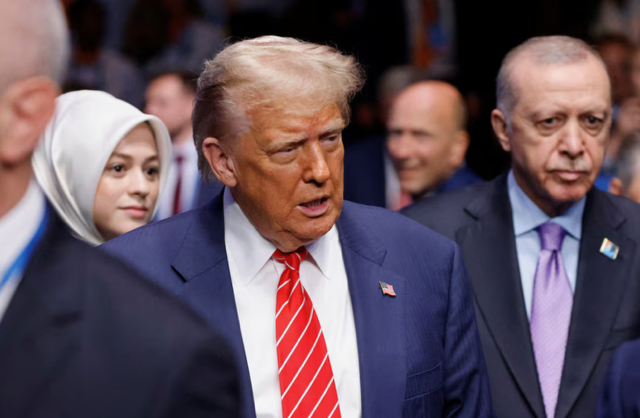
The reason this should catch the attention of Turkish Americans is simple: when both Washington and Ankara operate in more personalized, more transactional ways, bilateral ties can move faster—but they can also become more fragile. Reuters has reported that the Trump-Erdoğan relationship reopened talks on sanctions relief, defense cooperation, F-16s, and even possible movement on the F-35 issue, while long-running disputes still remain unresolved. In other words, personal chemistry at the top can create openings, but it does not erase structural disagreements.
That is why the Foreign Policy thesis is important for Türkiye. If populist foreign policy relies heavily on spectacle, leverage, and leader-to-leader bargaining, Türkiye may find short-term room to maneuver. Ankara has often been most effective when it can position itself as indispensable: a NATO ally, a regional military power, an energy corridor, a mediator, and a state that can talk to camps that do not talk to each other. Recent Reuters coverage of Türkiye’s role in relaying messages between Iran and the United States fits that model almost perfectly.
There are real advantages for Türkiye in such an environment. One is diplomatic relevance. In a more fragmented world, countries that can speak to multiple sides gain value, and Ankara has tried to turn that into influence. Another is bargaining power: transactional U.S. policy can create opportunities for Türkiye to seek movement on defense restrictions, sanctions, trade, and strategic recognition. A third is symbolic status. Erdoğan’s longstanding argument that the global system is unfair to middle powers fits neatly into a world where the old rules are weakening and regional powers want a bigger say.
But the costs could be just as serious. A foreign policy built around strong leaders and constant leverage is inherently volatile. The same style that creates openings can also produce sudden reversals, public disputes, tariff threats, sanctions risk, and market anxiety. Research and policy analysis on Türkiye’s external posture have repeatedly warned that greater assertiveness can narrow Ankara’s room for maneuver, raise dependence on outside powers, and strain relations with Western allies. Reuters reporting this month has also shown how regional instability is already feeding back into Türkiye’s economy, financial markets, and policy decisions.
That is the core tension for Türkiye. Strategic autonomy can increase room for action, but it can also become strategic overextension. A country can gain visibility without gaining stability. It can win tactical concessions without securing durable alignment. And it can look powerful abroad while carrying heavier economic and political costs at home. Several analysts have made essentially this point: Türkiye’s ambition to act independently is real, but so are the limits imposed by economics, geography, and alliance structures.
For Turkish Americans, the implications are especially important because this community lives at the intersection of both political systems. When U.S.-Türkiye ties improve, that can mean a better environment for advocacy, business, educational exchange, travel, and community visibility. Reuters has reported movement on tariffs, trade, energy cooperation, visa issues with Europe that affect broader mobility discussions, and continuing defense talks that shape the tone of the relationship. A healthier bilateral climate usually gives Turkish Americans more room to engage constructively in Washington without constantly playing defense.
At the same time, when relations become too personalized, diaspora communities can be squeezed by the politics of image and loyalty. Turkish Americans may find themselves navigating sharper debates over democracy, populism, nationalism, defense policy, sanctions, and the future of the alliance. In that environment, community advocacy becomes more—not less—important. It is not enough to rely on leader-to-leader rapport. Turkish Americans need institutions, policy literacy, congressional relationships, and a consistent public voice that can explain why a strong U.S.-Türkiye relationship still matters beyond personalities. That conclusion follows directly from the pattern described in the Foreign Policy analysis and from the unresolved disputes Reuters says continue to sit beneath the surface of the bilateral relationship.
The bottom line is this: the rise of populist foreign policy may create moments of opportunity for Türkiye, but it also raises the premium on caution. Ankara can benefit from a world in which middle powers matter more, mediation matters more, and hierarchy matters less. But if diplomacy becomes too theatrical and too transactional, short-term gains may come at the price of long-term trust. For Turkish Americans, that means this is not just a story about Trump, Erdoğan, or theory. It is a story about whether U.S.-Türkiye ties will be shaped by durable institutions and shared interests—or by the moods, needs, and political incentives of powerful men.
Source:
Foreign Policy, “The Seven Pillars of Populist Foreign Policy,” February 19, 2026.
Reuters reporting on U.S.-Türkiye relations, defense talks, sanctions, trade, and mediation efforts.
Carnegie, Brookings, CFR, and related academic analysis on Türkiye’s strategic autonomy and foreign-policy ambitions.