
U.S. Moves Toward Defense Reset With Türkiye, but Congress Still Holds the Key
The Trump administration’s decision to advance a proposed sale of U.S.-made fighter-jet engines to Türkiye has opened the most significant new chapter in U.S.-Türkiye defense relations in years. It has also reopened old disagreements in Washington over the Russian S-400 air-defense system, Türkiye’s exclusion from the F-35 program, congressional oversight, and the future direction of a vital NATO alliance.
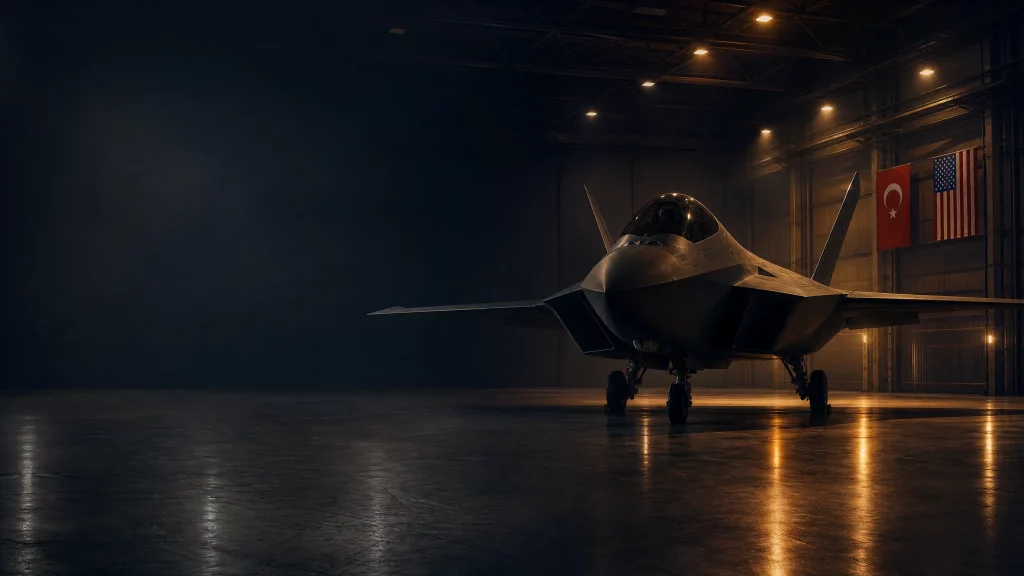
The proposed package—reported to be worth more than $700 million—would include General Electric F110 engines and associated defense articles intended for Türkiye’s KAAN national fighter aircraft program. The engines are important because KAAN, Türkiye’s domestically developed fifth-generation fighter, needs a reliable powerplant for its early production aircraft while Türkiye develops an indigenous engine. For Ankara, the proposal is not merely an arms transaction. It is a strategic test of whether the United States is ready to restore long-term defense-industrial cooperation with a major NATO ally. For Washington, it is an attempt to balance two competing priorities: maintaining close ties with a strategically located and militarily capable ally, while addressing congressional and security concerns that have accumulated over the past decade.
President Donald Trump has publicly described Türkiye as a strong and important NATO member. At the NATO summit in Ankara, Trump said the United States would move to lift CAATSA sanctions on Türkiye and indicated that a future F-35 sale was “certainly something” his administration would consider. Those remarks mark a notably warmer tone. But they do not yet amount to a final agreement on F-35 aircraft, a completed sanctions-relief process, or a publicly verified settlement of the S-400 dispute.
The Engine Sale Is Real Progress—But It Is Not an F-35 Deal
The engine package is widely seen as the most achievable first step in a broader reset. Türkiye’s KAAN program is designed to give the country greater long-term independence in defense production. The aircraft has become a major national industrial project, with potential implications for Türkiye’s defense exports, technological base, and place within NATO’s broader defense-industrial capacity. U.S.-made F110 engines would allow KAAN’s development and early production plans to continue while Türkiye works toward an indigenous engine. Without those engines, the program could face delays or a more difficult search for alternatives.
The proposed sale therefore has strategic value for both sides. Türkiye gains a path to keep its flagship aircraft program moving. The United States preserves influence over a significant allied defense program rather than pushing Türkiye toward greater reliance on non-U.S. suppliers.
Still, the engine sale should not be confused with Türkiye’s readmission to the F-35 program. The F-35 question remains substantially more difficult because it is tied to U.S. law, congressional sentiment, and the unresolved status of the S-400 system.
Why the S-400 Continues to Block the F-35 Path
The core dispute began when Türkiye reached an agreement with Russia in 2017 to purchase the S-400 air-defense system. The first components arrived in 2019. The United States objected on the grounds that the S-400, if operated near the F-35, could create intelligence and security risks for the advanced stealth aircraft and its NATO partners. Washington removed Türkiye from the F-35 program in 2019. In 2020, the United States imposed sanctions under CAATSA—the Countering America’s Adversaries Through Sanctions Act—on Türkiye’s Presidency of Defense Industries, known as SSB.
Congress also established legal restrictions that prevent the transfer of F-35 aircraft to Türkiye while it retains the S-400 system.
That legal and political reality has not disappeared. Even if the Trump administration favors a reset, any durable return to F-35 cooperation would require an arrangement that satisfies U.S. security requirements and attracts enough congressional support to survive political opposition. Possible ideas have been discussed publicly over recent years, including removing the S-400 from operational use, placing it in storage, transferring it elsewhere, or putting it under a tightly controlled arrangement. However, there is no publicly confirmed agreement showing that Türkiye and the United States have resolved the matter.
Where the United States Stands
The U.S. position is now more nuanced than it was five years ago. Washington continues to treat the S-400 as a serious concern and maintains that it is incompatible with F-35 access. Congress remains particularly skeptical, with lawmakers raising questions about security, regional disputes, U.S. partners in the Eastern Mediterranean, and Türkiye’s relationship with Russia. At the same time, the Trump administration is emphasizing the strategic value of Türkiye as a NATO ally. The State Department has described Türkiye as a strong contributor to NATO missions and operations. The administration’s willingness to advance the F110 engine package and signal possible CAATSA relief indicates that it sees a stronger bilateral relationship as serving U.S. interests. This is a practical recognition of geography and military reality. Türkiye sits at the crossroads of Europe, the Black Sea, the Caucasus, the Middle East, and the Eastern Mediterranean. It controls access to the Turkish Straits under the Montreux Convention, hosts major NATO infrastructure, maintains one of NATO’s largest armed forces, and has growing defense-production capacity.
The United States does not have to agree with every Turkish policy to recognize that Türkiye is too important to treat only as a problem. A functioning alliance requires serious disagreement when necessary, but also regular engagement on shared security interests.
Where President Trump Stands
Trump appears to favor an approach centered on rebuilding working ties with President Recep Tayyip Erdoğan and reducing friction between the two countries. His public language suggests he sees Türkiye as an ally that should be brought closer to the United States rather than left at a distance. His decision to support progress on the F110 engine sale, signal sanctions relief, and leave open the possibility of future F-35 sales is consistent with that approach. However, the president faces constraints. Congress can investigate, delay, condition, or seek to block defense transactions. Existing law concerning the S-400 and F-35 program cannot simply be ignored. Pentagon, State Department, intelligence-community, and NATO security concerns must also be addressed.
The practical outcome is that Trump can create political momentum, but he cannot guarantee an F-35 breakthrough without a credible solution to the S-400 issue and sustained congressional engagement.
Five Years of U.S.-Türkiye Relations: What Has Changed
The last five years have been marked by both tension and gradual areas of cooperation. The relationship entered the 2020s under heavy strain. Türkiye had been removed from the F-35 program, CAATSA sanctions had been imposed, and disagreements extended beyond defense procurement. They included policy in Syria, U.S. ties with Kurdish-led forces in Syria, disputes in the Eastern Mediterranean, relations with Greece and Cyprus, differing approaches toward Russia, and later disagreements involving Israel and Gaza.
Yet the relationship did not collapse. Türkiye continued to play a central role in NATO. It remained important to Black Sea security, especially after Russia’s full-scale invasion of Ukraine. Türkiye helped facilitate diplomatic engagement and played a notable role in managing access through the Turkish Straits. Ankara’s approval of Finland’s and Sweden’s NATO membership process, though delayed and contested, also underscored the country’s leverage inside the alliance.
Meanwhile, Türkiye continued building its domestic defense industry. Its Bayraktar TB2 drone became internationally prominent, while KAAN became the centerpiece of Türkiye’s effort to build an advanced national combat-aircraft capability.
The U.S. approval of a major F-16 modernization and aircraft package in 2024 was an earlier sign that defense ties could move forward despite deep disagreements. The proposed F110 engine package represents another, potentially larger step because it touches Türkiye’s long-term defense-industrial ambitions.
The relationship is therefore neither fully repaired nor permanently broken. It is evolving from a period dominated by sanctions and exclusion toward a more transactional, strategic, and interest-based engagement.
What Has Improved
Several developments have improved the environment for renewed cooperation. Türkiye’s importance to NATO has become more visible because of instability across the Black Sea region, the war in Ukraine, tensions involving Iran and Israel, migration pressures, and the changing security environment in the Middle East.
The United States has also shown greater willingness to distinguish between areas of disagreement and areas where cooperation serves both countries’ interests. Defense manufacturing, alliance readiness, deterrence, energy security, counterterrorism, and regional stability are all areas where interests overlap.
Türkiye’s growing domestic defense capacity gives Ankara more options, but it also creates an opportunity for U.S. companies and institutions to remain connected to a major allied defense ecosystem. The F110 discussion is a clear example: cooperation would help KAAN move forward, but it would also maintain a U.S. role in a program that might otherwise become less connected to American technology and standards.
Personal diplomacy between Trump and Erdoğan may also create room for decisions that were difficult under a more distant relationship. Personal rapport alone cannot solve legal or institutional disputes, but it can help create the political space for negotiation.
What Could Still Go Wrong
The main risk is that expectations rise faster than the negotiations can deliver.
If Türkiye and the United States fail to establish a credible resolution for the S-400, F-35 progress may remain blocked regardless of improved rhetoric. If Congress concludes that the administration is bypassing normal review or ignoring regional-security concerns, resistance to arms sales could harden.
A separate risk is that public debate turns into a zero-sum argument: either Türkiye receives everything it seeks immediately, or the alliance is judged a failure. That approach would be counterproductive. The relationship is more likely to improve through staged steps—engine exports, sanctions adjustments, technical security arrangements, and continued congressional consultation—than through one sweeping announcement. The best outcome would be a transparent agreement that allows the F110 sale to proceed, produces a verifiable S-400 arrangement, ends or narrows CAATSA restrictions, and creates a legal pathway for future F-35 cooperation. That would strengthen NATO interoperability while respecting the legitimate security concerns that caused the rupture. The worst outcome would be a collapse of talks, deeper congressional opposition, and a renewed cycle of mistrust that pushes Türkiye and the United States toward more distant defense relationships.
What This Means for Turkish Americans
For Turkish Americans, this is not simply a debate about aircraft. It is a test of whether Washington and Ankara can build a stable relationship based on shared interests, mutual respect, and honest discussion of disagreements. A healthier U.S.-Türkiye relationship can benefit both societies through stronger trade, technology cooperation, education, investment, tourism, defense-industry partnerships, and people-to-people ties. It can also reduce the tendency for Türkiye to be discussed in American politics only through conflict or crisis.
Turkish Americans can play a constructive role by staying informed, engaging elected representatives respectfully, and supporting fact-based advocacy. Community members should encourage policymakers to recognize Türkiye’s strategic role, its NATO contributions, the importance of a strong U.S.-Türkiye partnership, and the need for practical answers to the S-400 issue.
The most effective message is not that the United States should overlook every disagreement. It is that both countries have too much at stake to allow disagreements to become permanent estrangement.
Bottom Line
The F110 engine sale and Trump’s public comments represent a meaningful opening in U.S.-Türkiye relations. Türkiye’s location, military strength, NATO role, and growing defense-industrial capacity make it a strategically indispensable partner for the United States. But an opening is not yet a settlement. The future of the F-35 issue will depend on whether Ankara and Washington can resolve the S-400 problem in a manner that meets legal, technical, and political requirements—and whether Congress is willing to support the next phase of cooperation. For now, the direction of travel is more positive than it has been in years. The work required to turn that momentum into a durable alliance reset, however, remains unfinished.

Sources
Fox News: “Trump’s Turkey arms sale proposal sparks congressional questions before NATO summit” reported on the proposed more-than-$700 million defense package, congressional objections, the F110 engine sale, and the administration’s view of Türkiye as a significant NATO contributor.
Reuters: “U.S. to move forward with Türkiye jet engine sales ahead of NATO summit, sources say” reported on the administration’s plans to move ahead with the engine transaction and the wider diplomatic context before the Ankara summit.
The Hill: “Trump’s Türkiye NATO F-35 push faces congressional resistance” reported on congressional opposition, including legislative efforts and concerns related to the S-400 and prospective F-35 policy changes.
PBS NewsHour: Trump says U.S. will lift Türkiye sanctions and consider F-35 sales covered Trump’s statements during his meeting with President Erdoğan.
Al-Monitor: “Trump says U.S. will lift CAATSA sanctions on Turkey, consider F-35 sale” provided further reporting on the summit discussions, CAATSA, and the possible path toward F-35 consideration.
Congressional Research Service: Türkiye—Background and U.S. Relations provides background on U.S.-Türkiye relations, NATO issues, defense ties, congressional concerns, and the S-400 dispute.