
Turkiye’s Defense Rise Opens a New Test for Its American Alliance
An expanding military industry offers opportunities for U.S. cooperation—and gives Turkish Americans a reason to engage more actively in the policy debate.
Turkiye’s growing defense industry is changing the terms of its relationship with Washington. A country long associated with purchasing American military equipment increasingly wants to be recognized as a producer, investor and industrial partner.
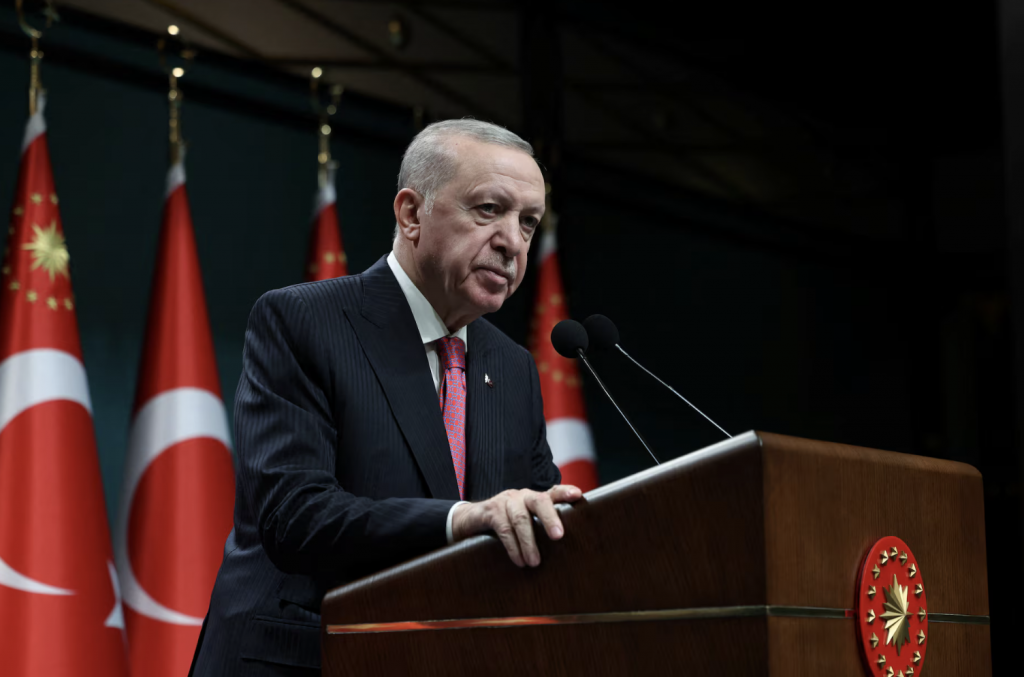
That was the message President Recep Tayyip Erdogan brought to New York in September. Speaking at an event focused on U.S.–Turkiye relations, he called for closer defense cooperation, urged the removal of obstacles between the allies and expressed confidence that Turkiye would enter the ranks of the world’s ten largest defense exporters. His remarks, reported by Middle East Monitor on September 22, presented industrial growth as an opening for a stronger American partnership.
The distinction matters. Turkiye’s expanding capabilities could strengthen NATO’s manufacturing base and create opportunities for American businesses. But industrial success alone cannot settle the political disagreements and security concerns that have constrained the relationship.
For Turkish Americans, the moment presents an opportunity to help shape a more informed discussion—one grounded in American interests, credible evidence and a realistic understanding of both countries.
A growing industry, measured carefully
Independent research supports the broader story of Turkiye’s emergence as an arms supplier.
The Stockholm International Peace Research Institute, or SIPRI, ranked Turkiye 11th among exporters of major arms during 2021–2025. Its export volume increased 122 percent compared with 2016–2020, while its share of global exports rose from 0.9 percent to 1.8 percent. Pakistan, the United Arab Emirates and Ukraine were its largest recipients during the latest five-year period.
Those figures show substantial growth. They also establish an important boundary: Erdogan’s ambition to reach the top ten should be described as a goal, rather than an accomplished ranking.
Financial export figures provide another measure. In early October, Daily Sabah reported that defense-industry chief Haluk Gorgun announced approximately $6.92 billion in defense and aerospace exports for the first nine months of 2026, an increase of 15.6 percent over the corresponding period a year earlier. These are official figures reported by the publication, rather than an independent audit.
The two measurements should not be confused. SIPRI tracks the volume of international transfers of major weapons using its own methodology; national defense and aerospace export totals measure a different, broader category in dollars. Neither should be substituted for the other.
Together, they point toward an industry gaining commercial reach and strategic significance.
What the United States stands to gain
For Washington, the practical question is whether cooperation with Turkiye can help meet American and allied defense needs.
There are already concrete examples.
A U.S. Government Accountability Office decision documents the Army’s November 2024 award of a $435 million contract and delivery order to Repkon USA Defense for the design, construction and commissioning of a TNT production facility in Graham, Kentucky. The decision describes the project as part of efforts to replenish critical American munitions stocks.
Separately, Repkon USA announced in April 2025 that it had acquired General Dynamics’ Garland manufacturing operations in Texas. Its announcement also identified cooperation involving Repkon Holdings in Turkiye and BAE Systems. These developments illustrate how industrial relationships can extend beyond finished weapons sales into manufacturing capacity and production technology.
The opportunity also extends across NATO. At the alliance’s July 2026 defense industry forum in Ankara, Turkiye joined eight other allies in an initiative to develop a prototype for a common 155-millimeter artillery round, intended to improve interchangeability and interoperability.
The implication is practical: deeper cooperation could help allies produce equipment that works together, expand supply options and address manufacturing bottlenecks. Whether particular projects deliver those benefits will depend on cost, security safeguards, production performance and reliable delivery.
The disagreements cannot be wished away
A credible account must also explain why cooperation remains difficult.
The Congressional Research Service traces Turkiye’s removal from the F-35 program in 2019 to its acquisition of Russia’s S-400 air-defense system. American officials cited concerns that the system could expose sensitive information about the aircraft. The acquisition also led to U.S. sanctions against Turkiye’s defense procurement agency and associated officials. CRS describes statutory restrictions on F-35 transfers tied to possession of the S-400.
These issues cannot be resolved through export growth or favorable speeches alone. They require security arrangements that address the underlying concerns and a policy process that accounts for Congress.
For advocates of a stronger relationship, acknowledging those obstacles adds credibility. A serious argument for cooperation should explain how a proposed partnership protects sensitive technology, strengthens allied readiness and serves American interests.
What this means for Turkish Americans
Turkish Americans can contribute something valuable to this debate: professional experience, community relationships and the ability to explain a complicated alliance to audiences that may encounter it mainly through diplomatic disputes.
That role carries a responsibility to distinguish cultural pride from policy evidence. An announced contract is not a completed delivery. A prototype is not an operational fleet. A government forecast is not an independently verified result.
The strongest public case for cooperation will connect specific projects to measurable benefits: American manufacturing activity, dependable supply chains, technological collaboration and NATO readiness. Where benefits remain prospective, they should be described that way.
Turkish Americans also need room for differing views. Supporting a durable U.S.–Turkiye relationship does not require agreement with every decision made in either capital. A community gains influence when it can discuss disagreements honestly while identifying areas where cooperation remains useful.
A proactive grassroots agenda
For TC-USA PAC and Turkish American civic organizations, a constructive next step would be a sustained public-education effort.
Build a concise, regularly updated briefing. Explain Turkiye’s defense capabilities, documented U.S. industrial connections and unresolved policy questions. Link to original records and distinguish export statistics from sales announcements and future targets.
Develop relationships before a crisis. Meet congressional district staff, attend public forums and maintain contact with offices from both parties. Consistent engagement creates opportunities for substantive conversations beyond moments of disagreement.
Bring relevant expertise into the discussion. Engineers, manufacturers, researchers and veterans can help explain production constraints, technology protection and military interoperability. Their contributions should rest on verifiable experience and evidence.
Ask concrete policy questions. Which joint projects would address an identified American need? What safeguards would protect sensitive technology? How would success be measured? These questions give policymakers something useful to evaluate.
Follow through publicly. Track whether announced investments become operating facilities, whether contracts produce deliveries and whether partnerships achieve their stated goals. Credibility grows when advocates examine outcomes as carefully as announcements.
Turkiye’s defense rise creates an opening for a more productive American conversation about the alliance. Turning that opening into durable cooperation will require institutions, businesses and citizens willing to do the patient work between major diplomatic events.
For Turkish Americans, that work can begin locally—with accurate information, informed questions and relationships built to last